The Barony of Baltimore / Calvert
– 3 min read


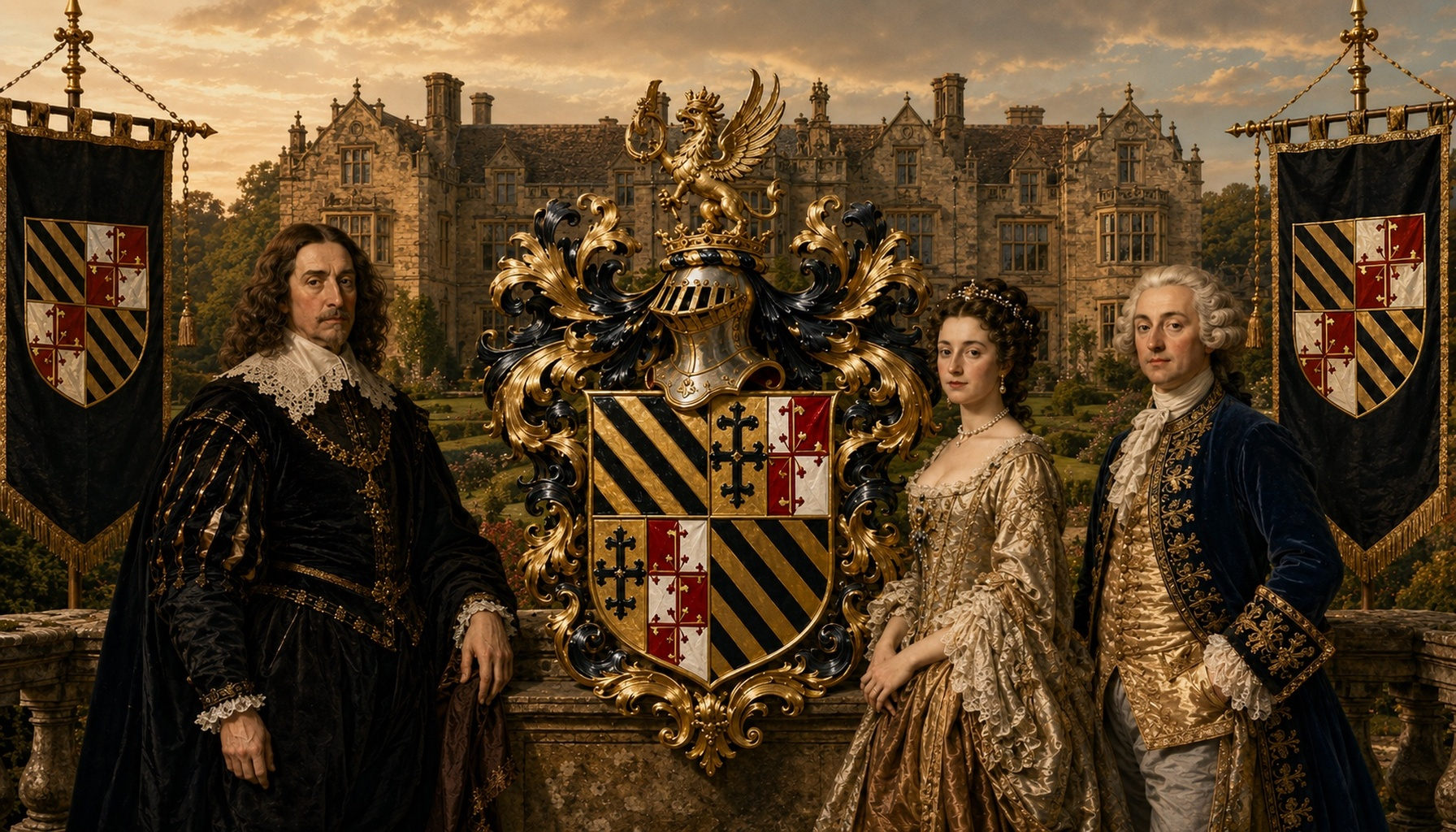
The Barony of Baltimore was an Irish peerage title bound up with the Calvert family, a dynasty that came originally from Yorkshire in northern England and rose in the charged world of late Tudor and early Stuart politics. Their primary linked haplogroup here is R1b1a1b1a1a2c1a1a1a1a1, a branch within the great Atlantic-facing R1b line so common in western Europe. The Calverts are a fine example of how a family could climb by brains, service, court access, and careful positioning: not ancient warrior kings out of mist and legend, but highly effective operators in the age of paperwork, patents, religious tension, and overseas opportunity.
That is what makes them so interesting. George Calvert, 1st Baron Baltimore (1579-1632), made his name in royal administration and became one of the most important projectors of English colonisation in the Atlantic world. His son Cecilius Calvert, 2nd Baron Baltimore (1605-1675), turned Maryland into the family’s great transatlantic venture, while Charles Calvert, 3rd Baron Baltimore (1637-1715), and Philip Calvert, Governor of Maryland (1626-1682), helped shape the colony’s government and political culture. The title itself, taken from Baltimore in County Longford in Ireland, sat at the junction of English monarchy, Irish peerage, and American proprietorship. In other words, this was nobility with one foot in Whitehall and the other in the Chesapeake.
Read more on colonial St. Mary's City
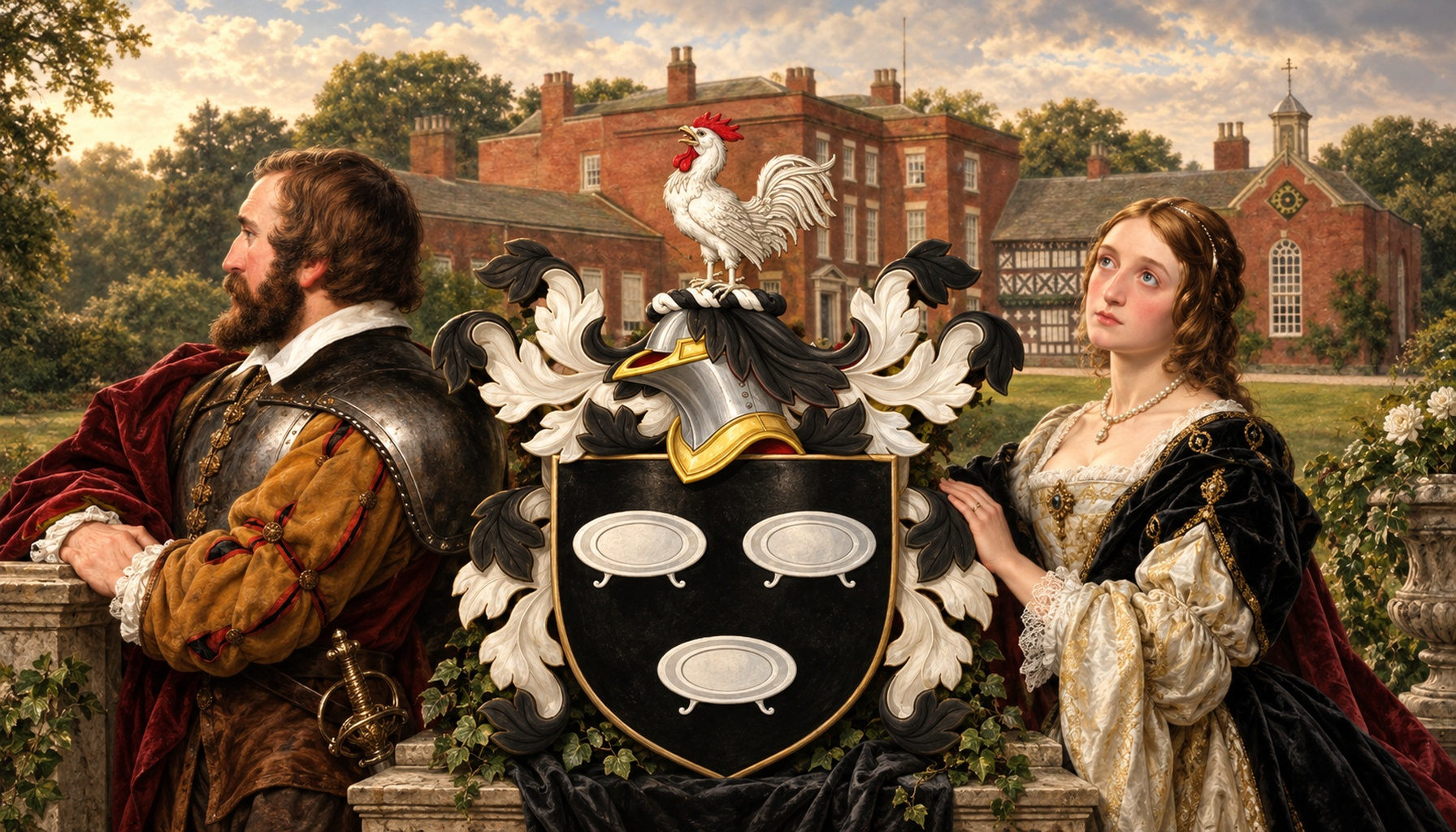
The family’s great location anchor is Kiplin Hall in North Yorkshire, the Jacobean house closely associated with George Calvert. Built in the early 17th century near the village of Kiplin, it stands in a landscape of fields, water, and long northern horizons, exactly the sort of setting that reminds you how many imperial stories began in apparently quiet country houses. Kiplin Hall was constructed around 1620 and is notable for its red-brick Jacobean style, its compact but ambitious design, and its connection to the moment when English gentry families were converting status at home into power abroad. George Calvert lived there during the same years he was moving through the machinery of the Stuart state and pursuing colonial schemes. The house later passed through other hands, but it survives today as a historic property with collections, grounds, and gardens, and it can still be visited. That matters, because Kiplin is not just a pretty building: it is a physical reminder that Maryland’s founding story did not begin on the American shore, but in the political and social world of Yorkshire, Ireland, and the Stuart court.
The haplogroup link R1b1a1b1a1a2c1a1a1a1a1 connects the Calvert story to a much older and wider tapestry of western European paternal history. Related or linked ancient DNA samples carrying this branch or nearby placement include Gallic Cenomani Tribe Horse Co-Burial Italy Verona Seminario Vescovile (3232s), Bronze Age Austria Drasenhofen (DSH008), Medieval Ireland Kilteasheen Roscommon Bishops Seat (KIL033, KIL037, KIL009), Late Iron Age West Yorkshire Wattle Syke (I14347), Iron Age Long Bredy Dorset England (I27382), Iron Age Briton Thornholme East Riding of Yorkshire (I22060), Iron Age Chemin de Coupetz Marne France (I19359), Viking Age Hofstadir Iceland (VK95), Viking Age Faroe Islands Panum (VK24), Medieval Age Faroe Islands Sandoy Church (VK44), and Viking Iceland (FOV-A1). These do not prove direct descent from any one ancient person to the Calverts. What they do show is that the family’s paternal signature sits in a deep historical zone stretching across Iron Age Britain, Gaul, medieval Ireland, and the Norse Atlantic. That is rather fitting for a family whose fame came from linking England, Ireland, and North America across the sea.
Explore Faroese ancestry and DNA
If the Barony of Baltimore and the Calvert family speak to your own roots, this is exactly the kind of story DNA can illuminate: noble ambition, colonial migration, Yorkshire origins, Irish titles, and Atlantic connections carried across generations. Upload your DNA to MyTrueAncestry to see whether you match the Calvert family line, the haplogroup R1b1a1b1a1a2c1a1a1a1a1, or related ancient DNA samples from Britain, Ireland, Gaul, and the Viking world.
Comments