Haplogroup R1b1a1b1a1a2c1a1a1a1
– 5 min read


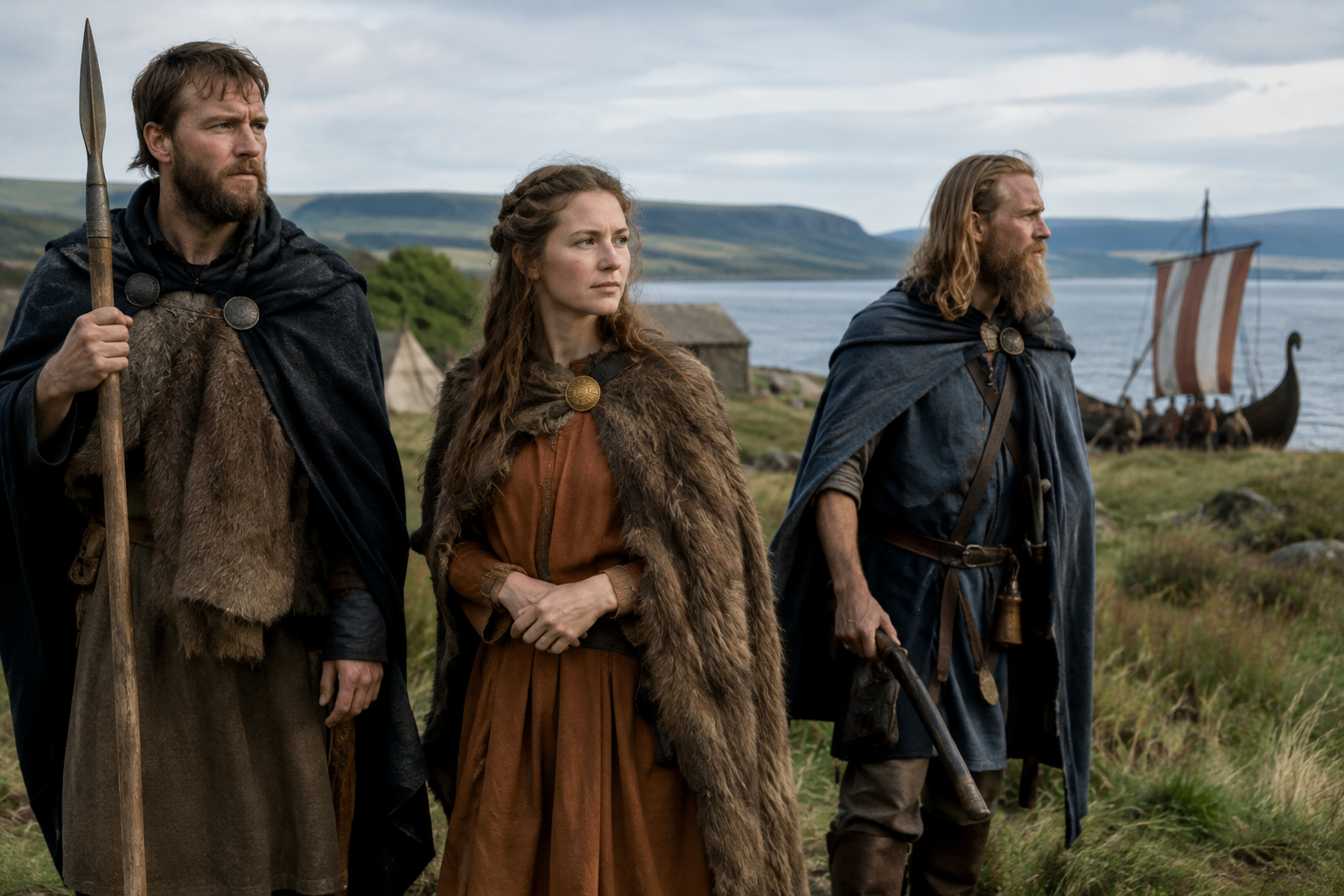
At Wattle Syke in West Yorkshire, one man from around 200 BC carries an unexpectedly modern kind of visibility. Sample I14347, recovered from a Late Iron Age context in northern England, is one of the ancient individuals associated with the Y-DNA lineage R1b1a1b1a1a2c1a1a1a1. That formidable string of letters and numbers is very specific, but the historical point is simpler: it places one direct paternal line inside Iron Age Britain, not as legend or surname tradition, but as excavated human evidence.
That matters because Y-DNA tracks only one line of descent - father to son to son - yet even that narrow thread can illuminate real historical settings. In this case, the picture is not of one dramatic founder or a single migrating hero. Instead, the evidence we have places this lineage, or a reported association with it, in Iron Age England and later in Viking Age Iceland, suggesting a paternal branch that belonged to the long and complicated population history of the North Atlantic world.
R1b1a1b1a1a2c1a1a1a1 is a deeply nested branch within the wider R1b family, one of the major Y-chromosome groupings found across much of western Europe. But it is important not to flatten the tree. The history of broad R1b across millennia is not automatically the history of this exact subclade. What the ancient samples show is something narrower and more useful: a direct paternal line reported in particular individuals from particular places.
So the question is not "where did all R1b men come from?" but rather: where do we actually see this branch appearing in the archaeological record supplied here? The answer begins in later prehistoric Britain, where direct male-line continuity and change have both become much clearer through ancient DNA work. For readers interested in the broader genetic setting of these centuries, this related discussion is especially useful.
The first anchor point is I14347 from Late Iron Age West Yorkshire Wattle Syke, dated here to about 200 BC. Even with limited descriptive detail, the site matters geographically. West Yorkshire sits in a region that was neither isolated nor peripheral in later prehistoric Britain. It belonged to a landscape of farming communities, exchange networks, local political identities, and changing contacts with the rest of Britain and the Continent.
What makes I14347 important for this article is not lavish burial archaeology - none is provided here and none should be invented - but the very fact that this paternal line appears in an excavated Iron Age individual from northern England. Ancient DNA has steadily shown that Iron Age Britain was not a blank prelude to Roman and Anglo-Saxon history. It already contained structured populations and long-established local lineages. A major study of ancient and modern genomes from Britain, published research on Britain's population history, helped frame this wider background by showing both continuity and later regional shifts.
That does not mean I14347 can be turned into a tribal label from classical texts, nor that one burial speaks for all of Yorkshire. It does mean that this branch was present in a real human being living in Iron Age northern England before Rome ever reached the region.
The second British appearance is older and farther south. Sample I27382 comes from Iron Age Long Bredy, Dorset, England, dated here to about 550 BC. Dorset in the first millennium BC was part of a very active zone of later prehistoric life, one with strong regional traditions and, over time, growing links across the Channel.
Placed beside the Yorkshire individual, Long Bredy gives this haplogroup a useful second setting. We are no longer looking at a single local curiosity. We have a reported presence in southern England by the mid-first millennium BC and in northern England some centuries later. That is still a tiny sample size, and tiny sample sizes should stay tiny in our interpretations. But it is enough to suggest that this paternal branch belonged to the wider British Iron Age population rather than to one narrowly confined enclave.
There is another reason Long Bredy is interesting. Later prehistoric Britain was not genetically frozen. Communities moved, married, traded, and absorbed newcomers at different scales. A Y-chromosome lineage found in two different English regions may reflect deep local continuity, movement within Britain, or both. The evidence does not let us choose a single neat story, which is exactly why the archaeology remains so compelling.
Roman and early medieval Britain DNA
The latest sample in this small cluster is FOV-A1, listed simply as Viking Iceland and dated to about AD 1270. That date is already post-settlement Iceland rather than the first burst of ninth-century colonization, but the setting is still unmistakably North Atlantic and historically Norse.
This is where the article becomes especially interesting, because Iceland was famously founded by migrants whose ancestry drew heavily on Scandinavia and the British Isles. Ancient DNA research on Icelandic and Viking Age populations has repeatedly shown that the settlement world of the North Atlantic was not ethnically simple. Men and women arrived through different routes and in different proportions, and the islands became a meeting ground for lineages from across the Viking sphere. An earlier large-scale study of Viking genomics, research examining Viking Age population history, is part of the wider scholarly backdrop for that picture.
FOV-A1 should not be treated as proof that one named Iron Age Briton fathered medieval Icelanders, nor that every instance of this branch in Iceland must have come from Britain. But when set beside I14347 and I27382, the Icelandic sample fits a plausible historical world in which paternal lines present in Britain also moved into Norse Atlantic networks. That is exactly the kind of pattern ancient DNA is good at revealing: not mythic origins, but historically legible connections.
North Atlantic Viking settlers
Individually, these samples are modest pieces of evidence. Together, they sketch a useful arc. The branch R1b1a1b1a1a2c1a1a1a1 is associated here with two Iron Age English individuals separated by region and date, and then with one later Icelandic individual in a Norse world deeply entangled with Britain and Ireland.
That combination is more informative than a single glamorous discovery would be. It suggests durability across time, but also movement across seaways. It places this paternal line in the sort of historical settings where later British and North Atlantic identities were formed: not all at once, and not along one clean ethnic boundary, but through long continuities mixed with episodes of migration and resettlement.
If you want a wider North Sea frame for that process, this related article gives valuable context for how Britain was shaped by repeated movements around its maritime edges.
North Sea migrations to Britain
If your paternal line falls under R1b1a1b1a1a2c1a1a1a1, these ancient samples point toward a branch already present in Iron Age England and later visible in the Norse Atlantic world. That is not a promise of descent from any one excavated man, and it is not a shortcut to a tribe, clan, or noble house. What it does offer is something better grounded: your direct male line belongs to a branch that has turned up in real archaeological people living in Britain before Rome and in Iceland after the Viking expansion had remade the map of the North Atlantic.






Comments