Haplogroup R1b1a1b1a1a1e2a

– 6 min read


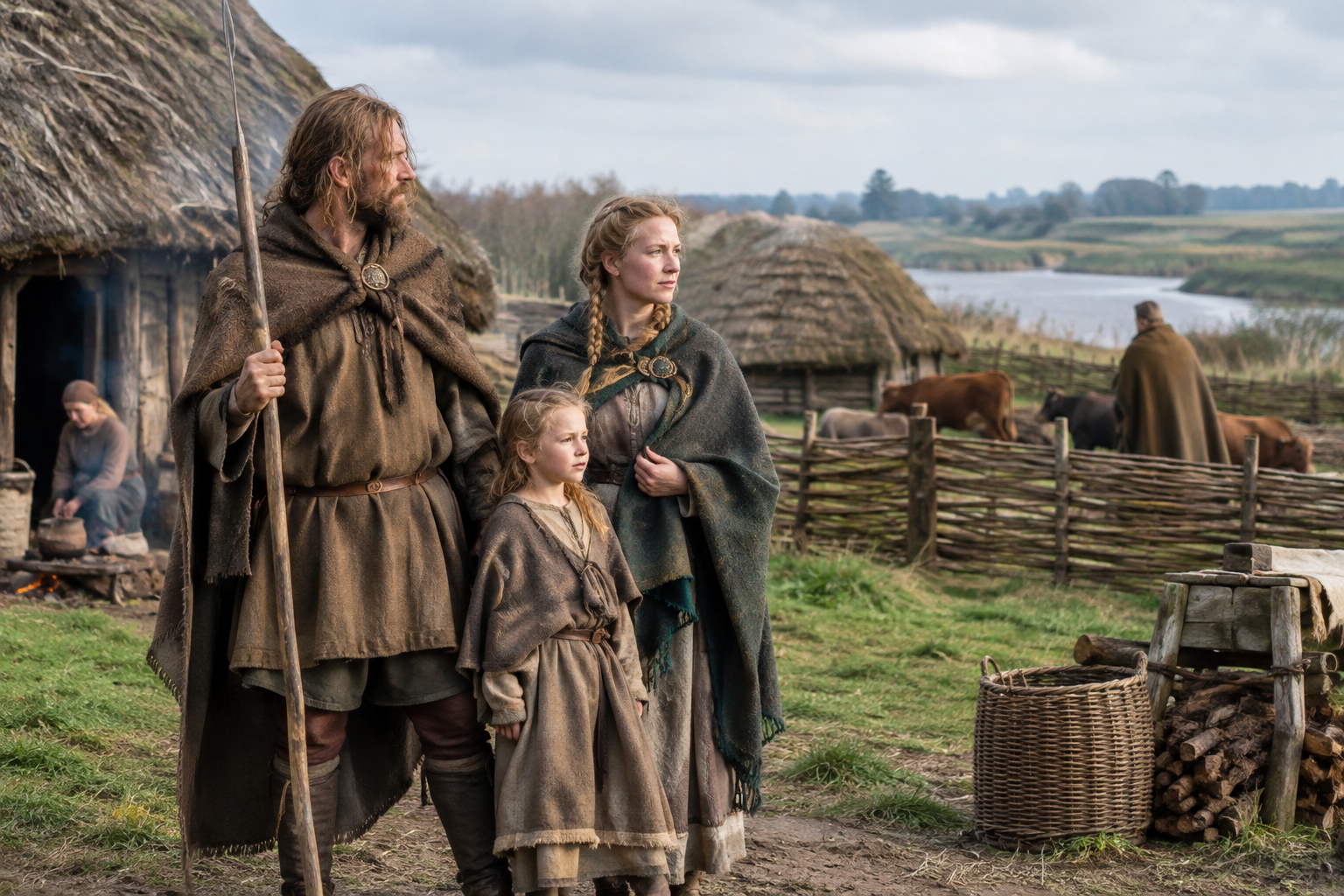
Some Y-DNA haplogroups arrive in history with trumpets: they are broad, famous, and easy to place in a grand map of migrations. Others come to us in a quieter way, through a narrower branch and a smaller trail of evidence. R1b1a1b1a1a1e2a belongs to that second category. It sits deep within the larger R1b family of Y-chromosome lineages, a major paternal clade found across much of western Europe, but this particular subclade is far more specific. That matters, because the deeper one goes into the Y-tree, the closer one gets to a more local and more historically bounded paternal story.
It is worth saying at once what a Y-DNA haplogroup can and cannot tell us. A haplogroup traces one direct paternal line only: father to father to father, across many generations. It does not describe a person's whole ancestry, still less their culture, language, or identity. But used carefully, especially alongside archaeology and ancient DNA, it can illuminate something very human: how particular male lines moved, survived, and became part of later populations.
For a subclade as specific as R1b1a1b1a1a1e2a, caution is essential. We should not simply pour the entire prehistory of broad R1b into this one smaller vessel and pretend it fits neatly. What can responsibly be said is that this lineage belongs within the western Eurasian and especially European R1b world, and that its historical significance emerges most clearly when we see it in real archaeological contexts.
The parent haplogroup R1b is one of the best-known paternal lineages in Europe. In broad terms, ancient DNA has shown that branches of R1b became especially important in later prehistoric and historic Europe, with different subclades appearing in different regions and periods. Some are associated with Bronze Age population changes, others with Iron Age and later historical communities. But a narrow branch like R1b1a1b1a1a1e2a should be handled more modestly. Its significance lies less in sweeping civilizational claims than in where and when it turns up.
That is one reason early medieval England matters here. The centuries after the end of Roman rule were not a simple replacement of one people by another. They were a complicated age of migration, settlement, intermarriage, continuity, and local adaptation. Ancient DNA has been particularly helpful in showing just how mixed and regionally varied that process was.
Explore Anglo-Saxon Migration DNA
That wider context matters because a paternal lineage does not travel by itself. It travels with households, kin groups, military followings, settlers, and sons who inherit not only a Y-chromosome but land, loyalties, and local ties. In post-Roman Britain, lineages from continental North Sea populations became part of new English-speaking societies, while older British ancestry also persisted. The result was not a single genetic event but a patchwork.
The clearest anchor supplied for this haplogroup is HAD009, an Early Anglo Saxon Period individual from Hatherdene Close, Cambridgeshire, England, dated to 500 AD. That bare catalogue description is already evocative. Around 500 AD, Cambridgeshire stood in a landscape being reshaped after Rome: fields still remembered older systems, rivers still connected communities, and burial grounds were beginning to reflect new political and cultural arrangements.
HAD009 matters not because he can be turned into a mascot for a modern identity, but because he places this paternal branch in a real human setting. Here is a man from early medieval eastern England, buried in a period often associated with Anglo-Saxon settlement and the making of new regional populations. If R1b1a1b1a1a1e2a appears in such a burial, that tells us this lineage was part of the male ancestry present in that world.
What it does not tell us is that every bearer of this haplogroup today descends from that one man, or that HAD009 belonged to a neatly defined ethnic bloc. Archaeology has taught us to be suspicious of tidy labels. A burial in early Anglo-Saxon England is evidence for time, place, and context. It is not a magical certificate of identity.
Still, there is something compelling in the precision of ancient DNA. Medieval chronicles talk in sweeping terms about peoples and kingdoms; a burial like HAD009 reminds us that history was actually lived one body at a time. And Y-DNA lets us follow one paternal thread through that crowded loom.
Read Roman and Early Medieval Britain DNA
Cambridgeshire is not a romantic frontier in the usual storybook sense, but historically it was exactly the sort of place where lineages could spread, persist, and become rooted. Eastern England faced the North Sea world. It was connected to movement from the continent, to river transport inland, and to the gradual formation of early English kingdoms. If a paternal branch like R1b1a1b1a1a1e2a appears here in 500 AD, that fits a larger picture in which eastern Britain was one of the key zones of early medieval demographic change.
There is a useful lesson here for anyone interested in paternal ancestry. We often want a haplogroup to point to a single origin story: Celtic, Saxon, Viking, Norman, or something equally crisp. Real history is less obedient. The same broad paternal family can appear in different cultural settings over time, and narrow branches may survive through local continuity as much as through dramatic migration. Ancient DNA works best when it complicates the old stereotypes rather than decorating them.
Readers interested in Cambridgeshire's longer biohistorical record may also enjoy how later ancient DNA from the same county has been used to reconstruct changing lives and populations across the medieval centuries.
Discover Cambridgeshire Through DNA
The supplied noble connection brings us north, to Clan Skene and Skene Castle in Aberdeenshire. Here the mood of the story changes. We move from an excavated grave in Cambridgeshire to the long memory of a Scottish landed family, a place where myth, genealogy, politics, and architecture have all settled on the same estate.
Skene Castle, as described in the supplied material, reaches back to the early medieval lands of the Skenes. Even the name carries a legend, perhaps from a knife or sgian. That is a very Scottish sort of memory: half etymology, half family theatre, with a weapon gleaming somewhere in the background. Over time the family seat developed from an older stronghold into the later baronial house more familiar today. Like so many noble residences, it was not static. It was rebuilt, restyled, and drawn into the changing fashions and power structures of Scotland itself.
That is what makes the castle historically interesting in a DNA article. Not because its stones can prove a haplogroup - they cannot - but because families like the Skenes show how paternal lines, whether or not genetically tested, were socially imagined and politically preserved. Land, inheritance, alliance, service, and status were all organized around lines of descent, though real pedigrees were often messier than heraldry liked to admit.
So if we set HAD009 beside Clan Skene, we are not claiming direct descent from an early Anglo-Saxon man in Cambridgeshire to a later Aberdeenshire clan. That would be irresponsible. What we can say is that both belong to the wider history of paternal lineages in Britain: one visible archaeologically in the early medieval east, the other preserved historically in the noble landscape of medieval and later Scotland. Genetics and castle history illuminate different parts of the same long problem - how male lines endure, fragment, and are remembered.
Explore the Story of Clan Skene
R1b1a1b1a1a1e2a is historically interesting precisely because it is so specific. A broad haplogroup can tell us about continental-scale patterns. A narrower one can sometimes bring us closer to the texture of regional history, though usually with fewer data points. In this case, the best evidence supplied places the lineage in early medieval England, in the person of HAD009, during the formative centuries after Rome.
That does not make the haplogroup "Anglo-Saxon" in any absolute sense, nor does it assign it to a clan, a castle, or a noble surname by default. Haplogroups are lineages, not identities. But they are still valuable. They help us see that the making of Britain and Scotland was not just a story of kings, battles, and charters. It was also a story of fathers and sons, some buried in small cemeteries, others remembered in family seats like Skene Castle.
If you are drawn to the meeting point of archaeology, noble history, and genetics, northern Britain offers many other examples of how place and kinship linger together over long periods.
Explore Northern Scotland Kinship
That is perhaps the real fascination of a haplogroup like R1b1a1b1a1a1e2a. It reminds us that ancient DNA does not just identify old bones; it reopens old landscapes. A burial from 500 AD in Cambridgeshire and the long memory of Clan Skene in Aberdeenshire are not the same kind of evidence, but together they show how paternal ancestry can be studied through both science and history.
Upload your DNA to MyTrueAncestry to explore whether your results show similarities to ancient individuals, archaeological cultures, and historical populations. Those matches can offer remarkable clues about your deeper past, even if they do not by themselves prove direct descent from any specific ancient person or noble family.






Comments