Haplogroup R1b1a1b1a1a1c2c1

– 6 min read


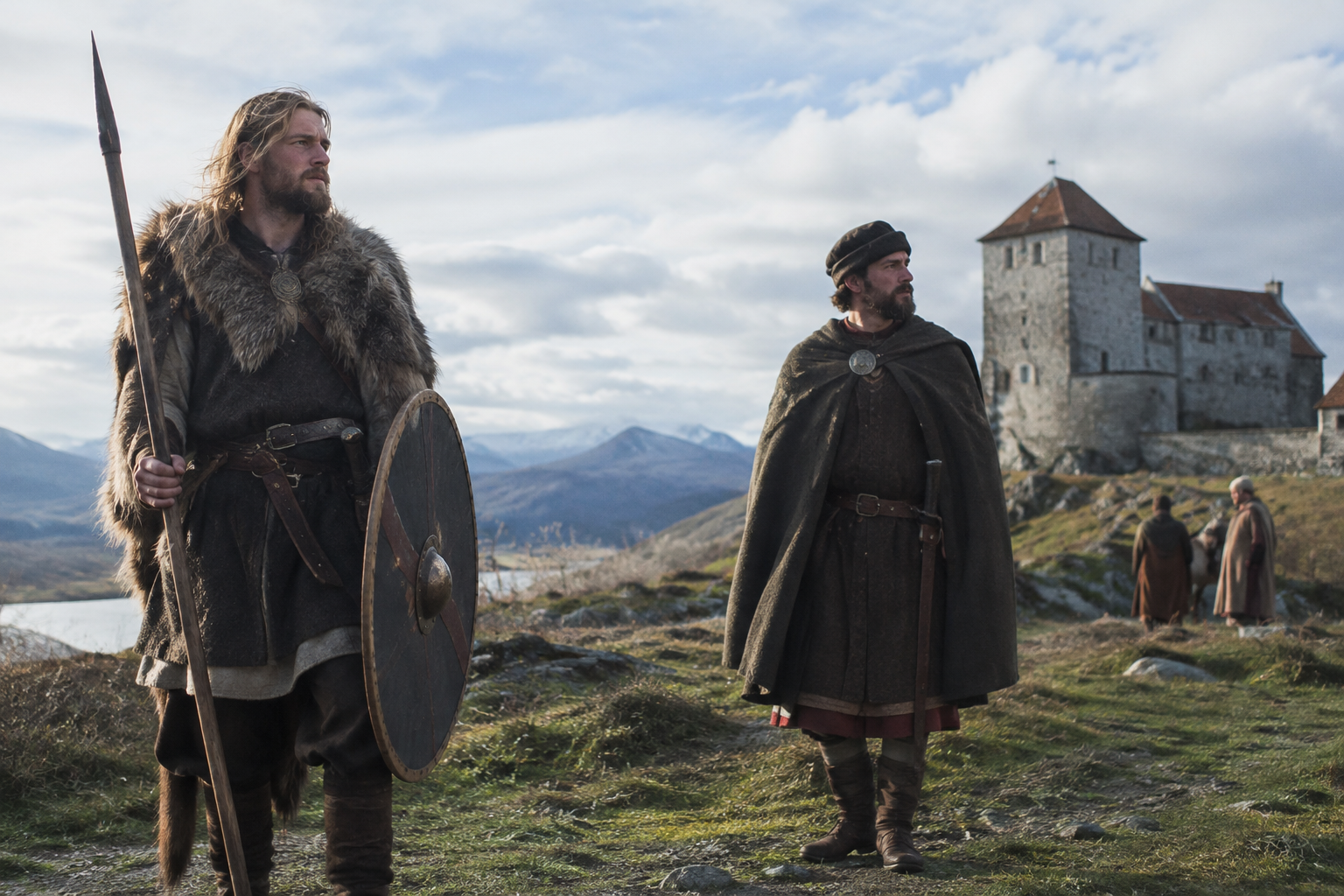
Some Y-chromosome lineages are easy to describe in broad, sweeping terms. This one is not. Haplogroup R1b1a1b1a1a1c2c1 sits deep inside the immense and much-studied R1b family tree, and that is precisely what makes it interesting. It reminds us that ancient paternal ancestry is usually not a story of one famous tribe marching neatly across a map, but of branching male lines passing through many different societies, languages, and political worlds.
In practical terms, a Y-DNA haplogroup traces one narrow line of descent: father to son, back through time. It does not describe a person's whole ancestry, culture, or identity. Still, these paternal markers can be remarkably useful. When archaeologists recover ancient DNA from burials in places as far apart as Iceland and Bavaria, and when later historical memory preserves clans in Scotland with their houses and estates, genetics gives us a way to place those fragments into a longer human story without pretending they are all one family tree.
The broader haplogroup R1b is one of the best known Y-chromosome lineages in western Eurasia, especially in Europe. Its deeper branches are tied, at a broad level, to major prehistoric and later historic population movements across Europe. But caution matters here. The history of R1b1a1b1a1a1c2c1 cannot simply be equated with the whole history of R1b. A narrow downstream branch represents a much later and more specific slice of that larger paternal inheritance.
What we can say responsibly is that this lineage belongs to a paternal framework that became important across parts of Europe over long stretches of prehistory and history. By the Middle Ages, branches of R1b appear in many regions and among populations shaped by local continuity, migration, elite mobility, trade, war, and marriage. That makes a medieval appearance of this subclade in northern and central Europe historically plausible, but each ancient sample still has to be treated on its own terms.
For readers interested in the bigger archaeological backdrop behind major European population shifts, this broader context is worth exploring further.
Explore Central European Ancient DNA
The supplied ancient DNA evidence for this haplogroup is striking because it comes from two men living at almost the same time, yet in very different settings.
One is VK102, from Viking Age Hofstadir Iceland, dated to 1050 AD. The other is Petersberg, from Medieval Upper Bavaria Germany, dated to 1068 AD. Those dates place both individuals in the 11th century, but the worlds they inhabited were not identical. Hofstadir belongs to the North Atlantic frontier of the Viking Age and its aftermath, a landscape shaped by seaborne settlement, farmsteads, church formation, and ties back to Scandinavia and the British Isles. Upper Bavaria, by contrast, belonged to the densely peopled political and ecclesiastical networks of the medieval German lands.
That matters because it shows how a paternal lineage could appear within very different social environments. One branch of the same wider male-line inheritance can turn up in an island society at the edge of the known Norse world and in a continental setting within the Holy Roman Empire. This is not proof that these two men were closely related in a genealogical sense. Shared haplogroup does not mean shared surname, shared dynasty, or even recent common ancestry. But it does suggest that this paternal branch had already spread through more than one medieval population zone.
VK102 is especially evocative because Iceland is such a sharp test case for migration history. Medieval Icelandic society was founded by settlers whose ancestry came largely from Scandinavia, with important contributions from the British Isles as well. A paternal lineage found there invites questions about which male lines crossed the sea and endured in that insular world.
Readers drawn to the Icelandic angle may enjoy a related piece on the genetic history of the island and what large-scale genomic work can reveal there.
Petersberg, in Upper Bavaria, offers a different kind of clue. Bavaria in the 11th century was no remote fringe. It was part of a politically connected central European zone shaped by monasteries, local lordship, military obligations, and movement along river valleys and alpine approaches. A lineage found there may reflect long local continuity, movement within German-speaking lands, or older continental patterns that predate the medieval period entirely. Ancient DNA rarely gives a single dramatic answer. More often, it places a man in a real landscape and reminds us how crowded the map of medieval Europe already was.
If we step back from the two 11th-century burials, a larger pattern comes into view. Much of Europe's paternal landscape was shaped over millennia by repeated episodes of movement and mixture: early farmers, later Bronze Age transformations, regional Iron Age developments, and the mobility of Roman and post-Roman centuries. Branches of R1b became embedded in many of those later populations, but not in one simple or exclusive way.
By the early Middle Ages, the North Sea world, the German lands, and the Atlantic fringe were deeply interconnected. Men moved as settlers, raiders, traders, clerics, soldiers, retainers, and husbands. A paternal subclade turning up in Iceland and Bavaria within a generation or two of each other is a nice example of that wider entanglement. It does not tell us whether the line reached Iceland directly from Scandinavia, from a Scandinavian-derived population in the British Isles, or by some other route. Nor does the Bavarian sample announce itself as "German" in any modern ethnic sense. Ancient DNA is not a national passport. It is evidence for biological ancestry within historical populations that were often more fluid than later identities suggest.
If you want a wider look at how ancient DNA has transformed our understanding of these questions, MyTrueAncestry has an excellent overview of the field itself.
Discover How Archaeogenetics Works
This brings us from excavated skeletons to the historical landscape of Scotland, where families preserved their identities not in laboratory labels but in names, lands, and houses. The supplied noble association here is Clan Innes, linked to Innes House in Moray, Scotland. The building described in the input was constructed in the 1600s for the Innes family on the site of an earlier medieval seat, and it developed into one of the grand lairdly houses of the north, with towers, courtyards, and richly carved stonework.
It is a fine reminder that lineages survive not only in chromosomes but in architecture. Innes House represented the confidence of a family tied to royal service and local power. Over time it was altered and enlarged, mirroring changes in fashion and fortune, before periods of neglect gave way to later recognition of its historical importance. In other words, it followed a very Scottish rhythm: medieval roots, early modern display, decline, recovery, and memory.
We must be careful here. The presence of Clan Innes in an article about haplogroup R1b1a1b1a1a1c2c1 does not prove that every man of that name belonged to this haplogroup, nor that the family descends from either VK102 or Petersberg. What it does offer is a historically meaningful regional frame. Northern Scotland, like Iceland and the North Sea world more generally, was shaped by long interaction among native, Norse, and wider British influences. A paternal lineage that appears in medieval northern Europe belongs in that conversation, even when documentary genealogy and genetic genealogy cannot be perfectly joined.
For readers interested in the clan itself, there is a dedicated community article worth following.
Explore the Story of Clan Innes
The second supplied family entry, Clan Paden, does not include usable historical location data beyond a placeholder request for more information. So the responsible course is not to embroider it with invented geography or legend. That too is part of good genetic history: knowing when the evidence is thin and resisting the temptation to fill the gap with romance.
The most interesting thing about R1b1a1b1a1a1c2c1 is not that it unlocks a single dramatic origin story. It is that it shows how one paternal branch can move through different layers of European history: deep R1b prehistory in the background, then medieval appearances in Iceland and Bavaria, and later historical associations in regions such as Moray where family memory became attached to houses, estates, and clan identity.
Ancient DNA and written history do different jobs. Chronicles, charters, and family traditions tell us who claimed land, who served kings, and who built houses like Innes House. Y-DNA tells us about direct paternal lines, sometimes surviving where documents are silent. Neither source is sufficient on its own. Together, though, they allow us to ask better questions about continuity, movement, and identity.
So if this haplogroup appears in your own results, the best way to think about it is not as a badge of fixed ethnicity or a shortcut to noble descent. Think of it instead as a thread in a much larger historical fabric: one male line among many, passing through real communities from medieval Iceland to Upper Bavaria and, in historical imagination at least, into the landed world of northern Scotland.
MyTrueAncestry lets you compare your DNA with ancient individuals and historical populations, offering a fresh way to place your family story beside archaeology and recorded history. Those matches can be fascinating windows into the past, even when they do not prove direct descent from a particular ancient person or noble house.






Comments