Haplogroup R1b1a1b1a1a1c2b3b

– 9 min read


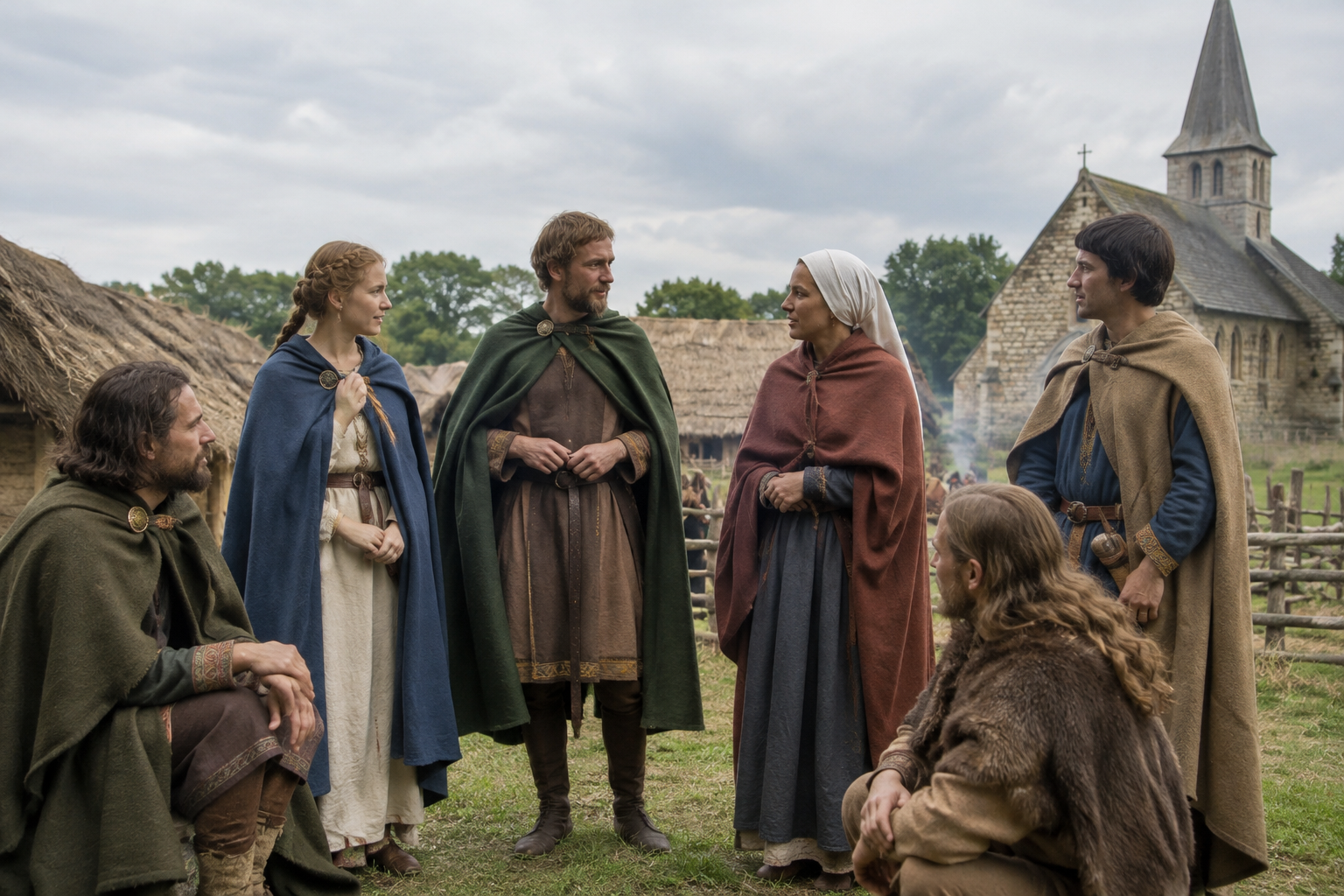
Some Y-DNA lineages announce themselves with a grand, famous label. Others arrive wearing a string of letters and numbers so forbidding that one is tempted to back away quietly. Haplogroup R1b1a1b1a1a1c2b3b is very much in the second category. But behind that elaborate name lies a rather human story: men buried in Iron Age Yorkshire, in early medieval Germany, in Anglo-Saxon Cambridgeshire, in medieval Belgium, and in the northern Netherlands all help show how one paternal branch can appear across centuries of northwestern European history.
It is worth saying at the outset what a Y-DNA haplogroup can and cannot do. Y-DNA traces a direct paternal line only: father to son to son. It does not describe a person's whole ancestry, culture, language, or identity. Nor does a shared haplogroup prove close relationship between two men separated by a thousand years. What it does offer is something wonderfully precise and oddly intimate: a way of following one thin line of descent through the archaeological record, and watching it turn up in places where history is already busy with migration, conquest, settlement, and local continuity.
This branch sits within the wider R1b family, one of the major Y-chromosome groupings found in Europe today and frequently encountered in ancient DNA from western Europe. For a very specific subclade such as R1b1a1b1a1a1c2b3b, one has to be careful. The great age and spread of broader R1b cannot simply be projected onto this narrower twig as if nothing changed along the way. Still, the evidence supplied here places this lineage in a strikingly coherent zone: Britain, the Low Countries, and parts of early medieval Germanic Europe.
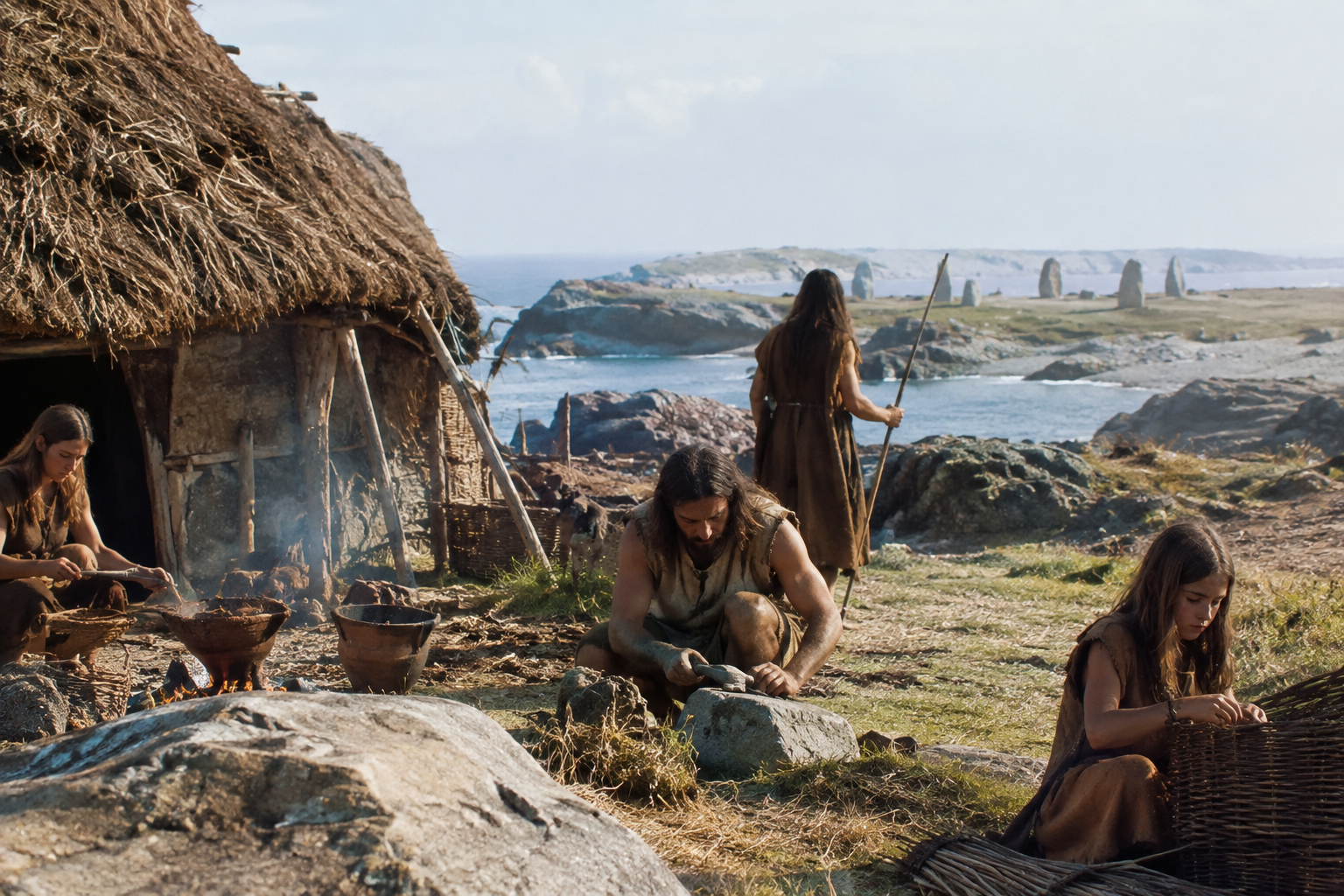
That geography matters. It is the world of North Sea crossings, river routes, changing kingdoms, and communities that were never as isolated as older national histories sometimes liked to imagine. In this landscape, paternal lines could persist locally for long periods, while also being carried by mobility: traders, settlers, warbands, farmers, and families moving between neighboring regions over generations.
Readers interested in the larger archaeological background to this sort of northwestern European population history may enjoy this wider look at the region before the medieval period:
Explore the Rhine-Meuse deep past
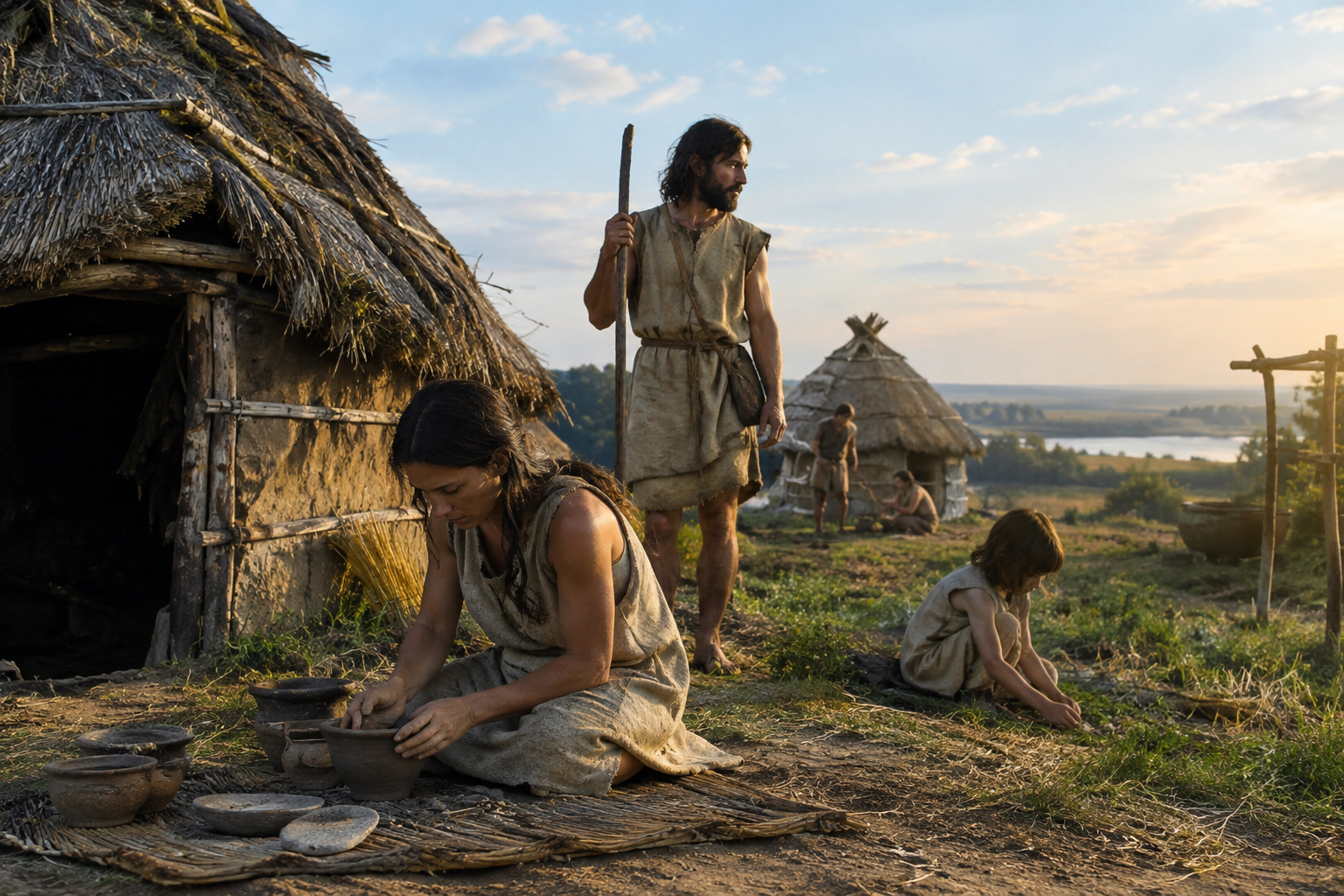
The earliest supplied anchors for this haplogroup come from East Yorkshire, and they are especially interesting because they place the lineage in Britain well before the Anglo-Saxon period. At Pocklington, two individuals appear in Iron Age contexts: I21952, described as a Celtic Briton from Iron Age England East Yorkshire Pocklington, dated to 225 BC, and I21639, described as Celtic Parisi from Iron Age England East Yorkshire Pocklington, dated to 275 BC.
Now, one must not over-polish the label "Celtic" until it shines too brightly. Archaeology, language, and DNA are related but not interchangeable. Yet these Yorkshire finds do show that this paternal branch, or a very close related lineage, was present in Iron Age eastern Britain centuries before Rome, centuries before the Anglo-Saxon settlements, and long before medieval noble houses began keeping records of themselves. In other words, part of the story here may be continuity as much as migration.
Pocklington itself has become one of the more evocative windows onto late pre-Roman Britain, and these individuals sit squarely within debates about local elites, regional identities, and the movement of people and ideas across the North Sea zone. If you want a broader view of how ancient genetics is reshaping ideas about Celtic expansions, this is a natural companion read:
Read about Celtic origins and spread
The early medieval samples show the same paternal thread appearing in a very different political world. In Cambridgeshire, EDI064d from Anglo-Saxon Edix Hill Cambridgeshire, dated to 545 AD, places the lineage in one of the classic settings of post-Roman England. This is precisely the period when Britain was being transformed by migration, acculturation, and the formation of new kingdoms. A Y-line found in an Anglo-Saxon cemetery does not by itself prove whether that line was newly arrived, long-established in Britain, or part of a mixed local community. But it does show the haplogroup participating in that formative early medieval world.
Across the Channel, G63 from Early Medieval Merovingian Germany Lauchheim Mittelhofen, dated to 700 AD, extends the picture into the Frankish sphere. Lauchheim is one of those sites that remind us early medieval Europe was not a dark void between Rome and castles, but a crowded and structured society with cemeteries, status markers, regional identities, and long-distance contacts. The appearance of this lineage there suggests that the paternal branch was not confined to Britain but belonged to a broader northwestern European pool in which local Germanic and post-Roman populations overlapped.
For readers who want more on that messy and fascinating frontier between Roman inheritance and so-called barbarian Europe, this article is especially relevant:
Explore the Roman-German frontier
The Low Countries provide two more valuable points on the map. ST1237, from Medieval Belgium Sint-Truiden Onze-Lieve-Vrouwekerk, dated to 900 AD, places the lineage in a growing ecclesiastical and urban setting in medieval Belgium. Meanwhile GRO013, from Carolingian Era Groningen Netherlands, dated to 1090 AD, shows it again in the northern Netherlands.
Taken together, these samples suggest not a single dramatic migration event, but a recurring presence in the wider North Sea and lower Rhine region over many centuries. This is exactly where historians and archaeologists already expect to see a complicated mixture of continuity and movement: Franks, Saxons, local post-Roman communities, merchants, clerics, and settlers all passing through landscapes tied together by sea and river more than by later national borders.
The point is not that one can draw a neat arrow on a map and declare the matter settled. Ancient Y-DNA rarely behaves so obligingly. The point is that this particular paternal branch appears repeatedly in places that make historical sense together. It looks less like an isolated curiosity and more like part of a durable northwestern European paternal background.
That wider background also helps explain why later documented families can be historically interesting in the story of a haplogroup, even when the evidence stops well short of a neat pedigree from antiquity to the manor house. Once written records begin to thicken, paternal-line associations move from excavated cemeteries into named households, landed estates, and families who left more of a paper trail behind them.
The supplied later association here is the House Croft, an English landed family rooted in Herefordshire. In the context of R1b1a1b1a1a1c2b3b, the Crofts are best understood not as proof of an unbroken known descent from any ancient individual above, but as a historically documented family linked to the same paternal branch in much later centuries. That distinction matters. Haplogroups can connect deep paternal history across time, but they do not by themselves supply the missing generations.
Even so, the Crofts are a good example of how such lineages surface in the world of medieval and early modern society. Herefordshire was a frontier county of unusual importance, tied to the Welsh Marches and shaped by conquest, lordship, military obligation, and service to the Crown. A family established there was not living in a sleepy corner untouched by history, but in a region where authority, landholding, and loyalty were constantly negotiated.
The Crofts themselves became an important local house, their standing built over generations in precisely the sort of setting where paternal continuity could become attached to place, memory, and status. Families like this mattered not because they floated above ordinary history, but because they were woven into it: royal service, local politics, conflict, estate management, and the careful preservation of lineage. In that sense, the association of the House Croft with this haplogroup offers a later, documented glimpse of one paternal line within the broader northwestern European pattern already suggested by the ancient DNA evidence.
What makes this especially engaging is the contrast in scale. At one end are ancient individuals known only by archaeological context and sample identifiers. At the other is a named house with an ancestral seat, local influence, and centuries of remembered presence. The haplogroup does not collapse those worlds into a single family tree, but it does place them in the same long historical frame.
The clearest ancestral stronghold associated with this later family history is Croft Castle in Herefordshire. It began as a Norman stronghold after the Conquest, which immediately places it in one of the great reorganizing moments of English history, when land, lordship, and defense were being recast under new rulers. Over time it became the long home of the Croft family, its fabric preserving medieval roots while later centuries added Tudor and Georgian changes.
That layered building history is rather revealing. Castles and fortified houses were seldom frozen monuments; they were altered as family ambition, comfort, and politics changed. Croft Castle grew from a defensive base into a long-inhabited ancestral seat, showing how a noble residence could move from martial necessity toward status, domesticity, and display without losing the weight of its earlier past. For readers interested in the historical life of a haplogroup, that matters because it ties a later paternal-line association to an actual place where generations of one family lived and were remembered.
The castle also bears marks of the upheavals of the English Civil War, when it was damaged before being rebuilt and altered over subsequent centuries. So this was no untouched relic serenely surviving from Norman days. Like the lineage stories traced by DNA, it passed through rupture, adaptation, and survival. Eventually the property passed to the National Trust in the twentieth century, ensuring that the site itself remains a visible part of the historical landscape.
One should not pretend, of course, that a surviving castle proves anything about ancient genetic descent. What it does provide is something more tangible and perhaps more satisfying: a real setting in which the later history of a family associated with this haplogroup can be located. From Iron Age Yorkshire burials to a Norman-founded Herefordshire stronghold is a large historical leap, but it is precisely that breadth of evidence that makes paternal-line history so compelling.
So where does a house like the House Croft fit into all this? Carefully, and with the brakes on. The supplied association links this haplogroup to the Crofts, whose seat at Croft Castle in Herefordshire began as the family home after the Norman Conquest. Over time it grew from a medieval fortified manor into a substantial country house, with much of the present building reflecting 17th- and 18th-century work while still preserving traces of its older defensive character.
That history alone makes Croft Castle an excellent emblem of how families, places, and memory accumulate layer upon layer. The Crofts were an important local family involved in royal service, politics, and war. Their estate saw the ordinary upheavals of English history: medieval conflict, rebuilding, improvement, and eventually preservation under the National Trust in the 20th century.
But a castle is not a chromosome, and a family tradition is not the same thing as a sequenced ancient genome. The responsible historical point is this: if a haplogroup such as R1b1a1b1a1a1c2b3b has deep roots in Britain and neighboring parts of northwestern Europe, then a later English landed family associated with that branch belongs to a landscape where such paternal continuity is entirely plausible. What the evidence does not prove is that an Iron Age man from Pocklington, or an Anglo-Saxon burial from Edix Hill, was a direct ancestor of the Crofts. Shared haplogroups create historical context, not ready-made pedigrees.
Still, that context is part of the pleasure. Croft Castle stands in Herefordshire as a much later chapter in a story whose earlier pages are scattered across cemeteries and churchyards from Yorkshire to Groningen. If you would like the family history itself in fuller form, here is the related community article:
R1b1a1b1a1a1c2b3b is a good example of what ancient DNA does best when used sensibly. It does not hand us a fairy-tale lineage from an Iron Age chariot burial straight to a named medieval gentleman. Instead, it gives something subtler and, in many ways, more interesting: repeated evidence that one paternal line was present in Iron Age Britain, in Anglo-Saxon England, in Merovingian Germany, and in the medieval Low Countries.
That pattern fits a world of long-term regional connections around the North Sea and the lower Rhine. It hints at continuity in some places, mobility in others, and the stubborn survival of paternal lines through dramatic cultural change. Languages shifted, kingdoms rose and fell, castles replaced timber halls, and yet some Y-chromosome branches kept going, father to son, mostly unnoticed until archaeology and genetics caught up with them.
If this haplogroup appears in your own results, that does not make you a Celt, an Anglo-Saxon, a Frank, or a member of the Croft family. It does place your direct paternal line in a historical conversation that stretches across those worlds. And that, frankly, is quite enough to be getting on with.
To see whether your DNA shows connections to ancient individuals like I21952, I21639, EDI064d, G63, ST1237, or GRO013, upload your results to MyTrueAncestry. Ancient DNA matches can offer a remarkable new angle on family history, even while they stop well short of proving direct descent from any particular ancient person or noble house.

Comments