Haplogroup O2a2b1a1a1a2a

– 6 min read


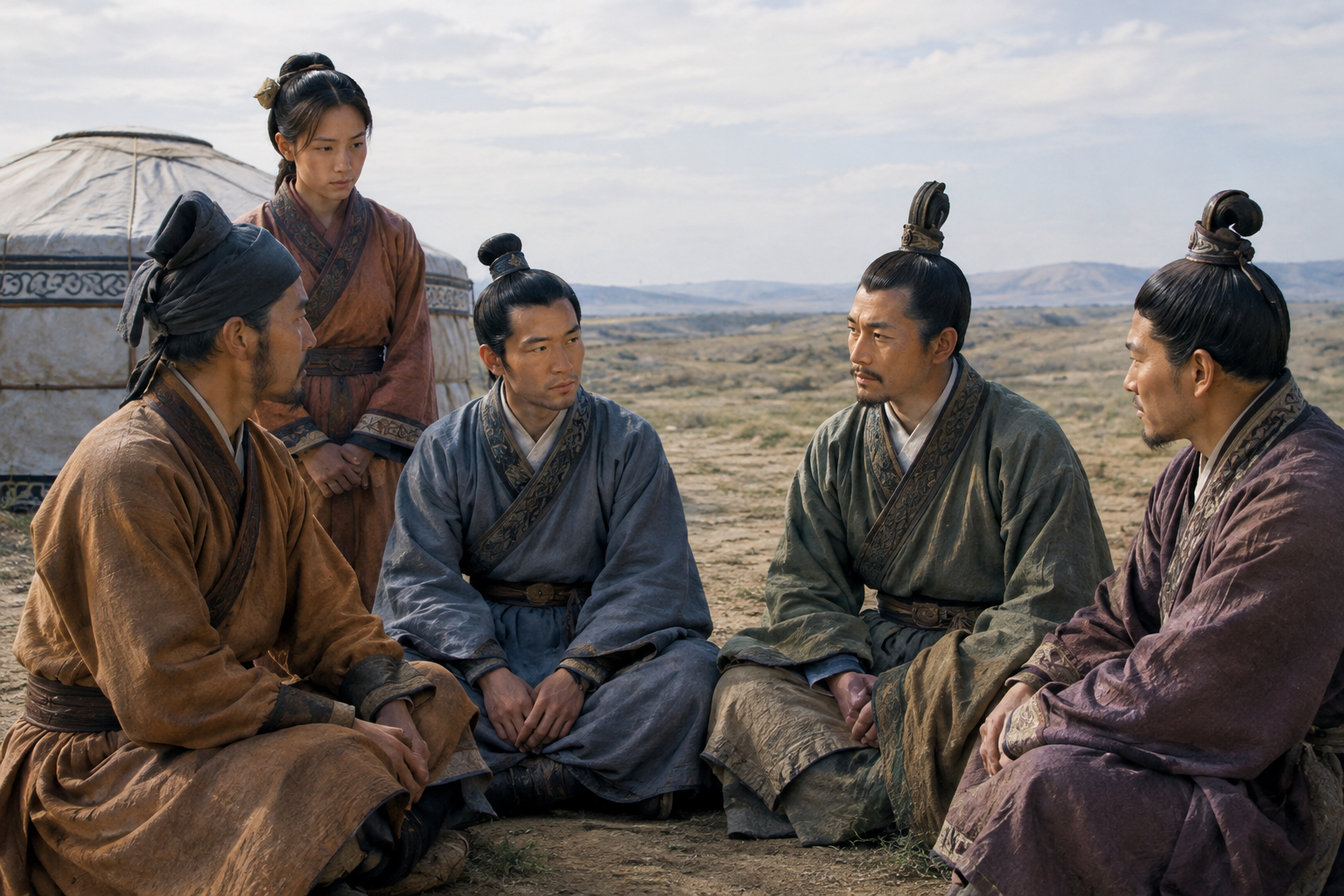
Some Y-chromosome lineages are easiest to understand when they turn up not in an abstract phylogenetic tree, but in the graves of named historical communities. Haplogroup O2a2b1a1a1a2a is one of those cases. It belongs to the wider East Asian branch of the human Y-chromosome tree, and its importance lies not in any romantic fantasy of a single "tribe" or "race," but in how it helps us trace one narrow paternal thread through the long history of northern China.
That needs one immediate caution. A Y-DNA haplogroup follows only the direct paternal line: father to father to father. It does not describe a person's whole ancestry, culture, language, or identity. Even so, when ancient DNA places a paternal lineage in archaeologically and historically meaningful contexts, it gives us something precious: a way of linking burial grounds, regions, clans, and shifting political worlds across centuries.
O2a2b1a1a1a2a is a very specific downstream branch within the broader O haplogroup family, one of the major Y-chromosome lineages of East and Southeast Asia. For a subclade this narrow, scientific restraint matters. We should not lazily pour the entire history of broad haplogroup O into this one twig of the tree. What can be said more safely is that this branch belongs within a paternal landscape long associated with East Asian populations and especially with lineages that became deeply embedded in the demographic history of China.
For historical interpretation, that matters because the Central Plain of northern China was never static. It was a zone of farming expansion, imperial administration, military colonization, migration, and elite family formation. A lineage like O2a2b1a1a1a2a therefore becomes interesting not because it can be pinned to a single ancient "people," but because it appears in settings that help us see continuity and movement within that northern Chinese world.
Readers interested in the deeper background of paternal-line reconstruction across East Asia may also enjoy this broader look at how ancient male lineages help map regional population history.
Explore East Asian Y-DNA History
The supplied ancient samples sketch a suggestive geographical arc. One of them, M39, comes from Western Han Dynasty Qi State Zibo City Linzi and is dated to 100 BC. Linzi, in Shandong, was no obscure outpost. It sat in one of the great settled zones of early imperial China, tied into the world of Han administration, taxation, grain movement, and cultural prestige.
Then, several centuries later, we meet a cluster of Tang-period burials from Ordos Naobaowan: Naobaowan_M3 dated 726 AD, Naobaowan_M5a dated 728 AD, Naobaowan_M4a dated 736 AD, and Naobaowan_M7a dated 739 AD. These are associated in the input with a Chen Clan context in China. The move from Han-era Linzi to Tang-era Ordos is historically evocative. Not because it proves an unbroken family pedigree from one burial to another, but because it places this paternal lineage in both the old agrarian centers of north China and in a frontier-facing region that mattered enormously to Tang imperial power.
Ordos was no backwater either. It lay near the meeting ground of steppe and sown, where Chinese states repeatedly projected authority, settled populations, stationed troops, and negotiated with mobile northern powers. A paternal lineage found there during the Tang period sits in exactly the kind of landscape where imperial expansion, clan identity, and frontier society could intersect.
For a wider look at the archaeology and genetics of that frontier world, this article on the Mongolian steppe provides valuable context.
Explore Steppe and Northern China DNA
The Tang-period Naobaowan samples are especially striking because they are not isolated curiosities. Four male individuals from the same broad burial context and within a relatively tight date range suggest the possibility of a paternal cluster, or at least a recurring lineage within a socially connected group. Again, caution first: shared haplogroup does not by itself prove that all these men were close relatives. But when several men in a historically identified clan burial setting show related paternal signals, ancient DNA begins to illuminate something written history often only hints at: how elite or locally prominent families organized themselves biologically as well as socially.
Naobaowan_M3, Naobaowan_M4a, Naobaowan_M5a, and Naobaowan_M7a belong to the high Tang world, a period when the empire was wealthy, militarily ambitious, and deeply connected to Inner Asia. A clan cemetery in Ordos from the eighth century is therefore not merely local history. It belongs to a larger story of how imperial Chinese families lived in regions shaped by administration, marriage networks, and frontier politics.
This is precisely where archaeogenetics becomes so useful. Texts may remember offices, titles, and ancestral claims; DNA can show whether a cemetery also preserves patterns of paternal continuity, female exogamy, or mixed regional ancestry. Readers who want to go deeper into that specific problem should see the related MyTrueAncestry piece on a Tang clan burial community.
The noble association supplied here is not a stone castle in the European sense, but something just as powerful in Chinese history: an ancestral commandery identity. The Chen Clan of Yingchuan Commandery was tied to one of the great districts of early imperial China, centered on the fertile lands around modern Xuchang in Henan. Yingchuan mattered because it stood in the Central Plain, where agricultural wealth, bureaucratic opportunity, and literary reputation came together.
Under Qin and Han rule, commanderies were not merely map units. They were frameworks of taxation, military manpower, administration, and memory. By the Han period Yingchuan had become famous for producing officials, scholars, and politically influential families. In the late Han, when the dynasty frayed and warlords took over, the region's men and resources became part of the struggle that remade northern China. Cao Cao's home region was nearby, which tells you at once the sort of political environment we are dealing with: dense, ambitious, dangerous, and central to state power.
That commandery identity endured even as dynasties rose and fell. In Chinese elite culture, to be "of Yingchuan" was not simply to have a postal address. It was a claim to standing, education, and historical depth. If Tang-period Chen clan burials in Ordos are set beside the older prestige of Yingchuan, one plausible historical picture emerges: not proof of a single genealogical line from Henan to Ordos, but a strong example of how elite northern Chinese paternal lineages could be rooted in the Central Plain while appearing in frontier regions through service, settlement, and imperial expansion.
For readers interested in the clan itself, MyTrueAncestry has a directly relevant companion article.
It is worth pausing over the language of power. In much of Europe, noble memory gathers around castles. In early and medieval China, the equivalent historical gravity often lay elsewhere: commandery seats, walled cities, county centers, ancestral halls, and famed home districts. Yingchuan Commandery functioned as one of those ancestral strongholds. Its authority was administrative, agrarian, and cultural before it was romantic.
That does not make it less vivid. On the contrary, it asks us to imagine a different sort of noble landscape: not a hilltop keep, but a rich plain crossed by roads, granaries, offices, schools, and households whose sons entered state service. The prestige of Yingchuan was preserved not by battlements alone, but by reputation and record. In that respect, a commandery could outlast many a fortress.
So what can haplogroup O2a2b1a1a1a2a actually tell us? It can place one paternal lineage within the historical world of northern China. It can show that lineages of this branch appear in an early imperial context at Linzi and in Tang-era clan burials in Ordos. It can help frame questions about continuity between the Central Plain and the frontier, about the movement of men through service and settlement, and about how elite family identities were maintained over time.
But it does not prove that a modern tester with this haplogroup descends directly from M39, or from Naobaowan_M3, Naobaowan_M4a, Naobaowan_M5a, or Naobaowan_M7a. Nor does it prove membership in the historical Chen clan, still less in every branch that later used the Chen surname. Ancient DNA gives us context, not magical certainty.
That, really, is the pleasure of it. Genetics does not replace history; it makes history stranger, more concrete, and more human. A commandery in Henan, a burial ground in Ordos, a Han-era man from Linzi: these are not just entries in a database. They are the points at which the paternal past becomes visible.
If you have tested your DNA, MyTrueAncestry can help you explore whether your results show connections to ancient individuals and historical populations like these. Those matches do not automatically prove direct descent or noble family membership, but they can offer a remarkable new perspective on where one small branch of your ancestry fits into the larger human story.






Comments