Haplogroup O2a2b1a1a1a1a1a1
– 5 min read


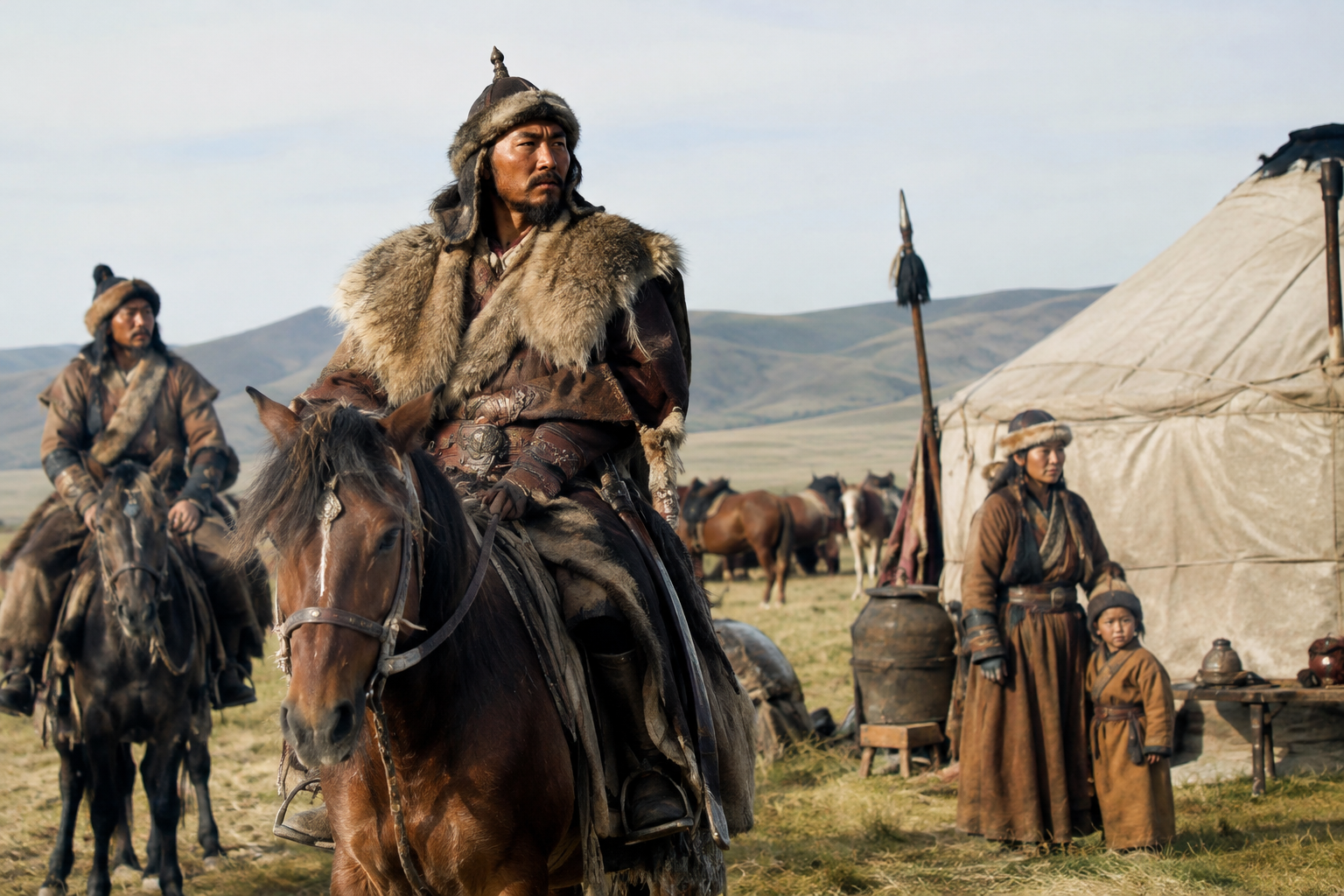
In the first century AD, on the Mongolian steppe, one man buried at Ulaanzuukh now gives us a sharply focused glimpse of a very long paternal line. The ancient individual ULN011, dated to around AD 25 and classified within the Late Xiongnu horizon, has been associated here with the Y-DNA haplogroup O2a2b1a1a1a1a1a1. That may look like a string of letters and numbers only a geneticist could love, but in archaeological terms it matters because it places a specific paternal branch inside one of the most mobile and politically important worlds of ancient Inner Asia.
The fascination of ULN011 is not that he can stand for all Xiongnu men; he plainly cannot. It is that a single excavated person from a real site in Mongolia anchors this lineage in a documented historical setting. Y-DNA traces one direct paternal line only, not a person's whole ancestry, but that one line can still tell us where a branch turns up in the archaeological record and what kinds of societies carried it.
Ulaanzuukh sits within the wider landscape of eastern Mongolia, a region that mattered enormously during the centuries when the Xiongnu confederation shaped politics across the steppe. By the time of the Late Xiongnu period, this was no isolated pastoral backwater. It was part of a connected zone stretching toward northern China, the Altai, and the eastern steppe, where alliances, tribute, warfare, and seasonal movement all helped mix people as well as goods.
ULN011's significance lies in that context. A paternal lineage associated with O2a2b1a1a1a1a1a1 appearing in a Late Xiongnu individual fits the broader picture emerging from ancient DNA: steppe polities were not genetically uniform blocs, but complicated federations drawing in people of varied backgrounds. A genetic study tied to ancient populations of the Mongolian steppe, available in supplementary form here, helped bring that complexity into view, even if any one sample must be handled with care.
That caution is important. The exact article haplogroup is a very narrow twig on a much wider East Asian Y-chromosome tree. Without a directly quoted resolution from a fully accessible report, it is best to say that ULN011 is associated with this branch in the present evidence rather than use him to make grand claims about the full history of the subclade. Archaeology is full of overconfident stories built from too little data; this is more interesting, and more honest, when kept close to the ground.
The broader O lineages are major East Asian paternal branches with deep histories across China, Mongolia, Korea, Southeast Asia, and neighboring regions. But the narrower label O2a2b1a1a1a1a1a1 is not a synonym for all of that history. It marks one highly specific paternal descent line within the larger O framework, and the article's ancient evidence places that line at least once in the orbit of the Late Xiongnu.
That is already useful for family historians. It suggests that this paternal branch belongs to the same enormous historical zone that linked the northern Chinese frontier, the eastern Eurasian steppe, and populations moving between them. It does not mean every man with this haplogroup descends from Xiongnu elites, nor that the branch originated with the Xiongnu themselves. What it does provide is a securely ancient waypoint: this line, or a lineage classified close to it, was present in Mongolia around the turn of the era.
Ancient Y-chromosome work in East Asia has repeatedly shown that paternal history can be patchy, regional, and surprisingly mobile. For readers wanting the wider background on how such lineages appear across time and terrain, MyTrueAncestry's piece on ancient Y chromosomes in East Asia is a helpful companion to this much narrower case.
East Asian Y-Chromosome Migrations
One of the oldest temptations in steppe history is to imagine famous confederations as neatly bounded peoples with a single ancestry. The Xiongnu do not behave like that in the evidence. Archaeology shows a political formation spread across large territories and different local traditions; genetics increasingly supports the same impression, revealing diversity rather than a single paternal stamp.
That makes ULN011 more, not less, informative. If a branch associated with O2a2b1a1a1a1a1a1 appears in this setting, it tells us that the Late Xiongnu world included paternal lines rooted in the broader East Asian genetic landscape. This fits well with other research showing that eastern steppe populations often stood at the meeting point of distinct ancestries and social networks rather than belonging to one isolated biological category.
The result is a more historically plausible picture. Steppe empires and confederations recruited, absorbed, and reorganized communities. A Y-lineage found in such a setting may have reached it through local continuity, alliance-building, frontier incorporation, or older movements across northern East Asia. The archaeological setting matters precisely because it stops us from turning a lineage into a myth.
By about AD 25, Mongolia was entangled with Han China, neighboring steppe groups, and long-distance exchange systems running across Inner Asia. That did not create one blended population overnight, but it did produce a landscape in which lineages could travel with families, military followings, marriage networks, and resettled groups. A paternal branch recorded in this world should therefore be read against mobility, not isolation.
This is where the site name matters as much as the haplogroup name. Ulaanzuukh is not just a dot on a map; it belongs to a region repeatedly shown by archaeology and genetics to have been a corridor of interaction. Readers interested in that broader frontier picture may also want to compare this article with MyTrueAncestry's discussion of prehistoric interactions from Central China to the Mongolian steppe, which helps place later Xiongnu-period evidence in a much deeper geographical frame.
Seen that way, O2a2b1a1a1a1a1a1 is not merely a label from a family-tree chart. It becomes part of the human infrastructure of Inner Asian history: fathers, sons, and male lines carried through societies that were pastoral, political, and deeply interconnected. Even when the ancient record is thin, it shows that such lineages belonged inside the lived reality of the steppe.
Some haplogroup articles can draw on a long chain of ancient finds. This one cannot, at least not yet from the evidence supplied here. But a lone ancient anchor can still be valuable when it is tied to a recognisable place, period, and cultural horizon. ULN011 gives researchers and testers something concrete: a documented occurrence of this paternal branch in Late Xiongnu Mongolia.
That matters especially because East Asian paternal history is being transformed by ancient DNA. Branches once known mainly from modern testing are gradually being pinned to excavated individuals and dated contexts. Each securely placed sample improves the historical map, even when it does not answer every question about origin, spread, or later descendants.
For a parallel look at how ancient DNA is reshaping historical interpretation in later Chinese settings, see MyTrueAncestry's article on Song Dynasty remains. The periods are very different, but the underlying lesson is the same: once a lineage is attached to a real burial, history becomes more precise.
What O2a2b1a1a1a1a1a1 can responsibly suggest, on present evidence, is not a single heroic ancestor or a guaranteed link to a named dynasty. Its strongest ancient signal here is more subtle and more historically solid: this paternal line appears in the orbit of the Late Xiongnu, in Mongolia, around the beginning of the first millennium AD. For someone exploring this haplogroup today, that places one branch of their direct male line within the great frontier world of eastern Inner Asia, where local communities and steppe confederations met, merged, and moved.






Comments