Haplogroup O1b2a1a1

– 5 min read


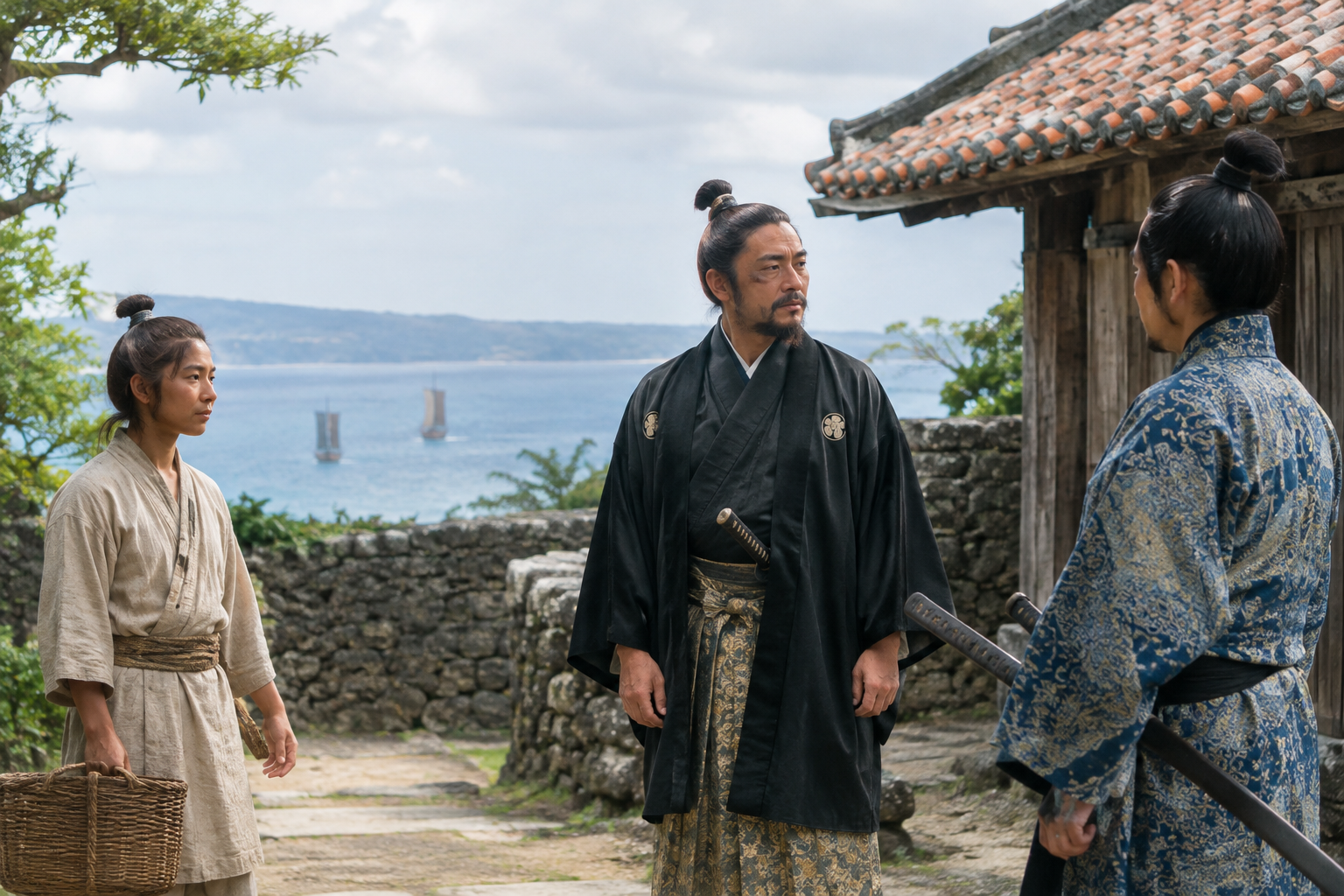
There is something wonderfully stubborn about a Y-chromosome lineage. Kingdoms rise, capitals move, court fashions change, and dynasties rewrite the map, yet a paternal line can persist quietly through all of it. Haplogroup O1b2a1a1 belongs to that kind of long history: one that matters not because it explains everything about a person, but because it preserves one narrow, direct line of male ancestry across centuries.
In East Asia, and especially in the Japanese archipelago and nearby regions, lineages within the wider O haplogroup have been central to discussions of population history. That does not mean a Y-DNA haplogroup equals an ethnicity, a language, or a complete ancestry. It simply traces one paternal thread. But when ancient DNA turns up that thread in real people from real places, the result is unusually vivid. For O1b2a1a1, the supplied evidence points us toward Okinawa and the Ryukyu world, where archaeology and genetics together open a small but revealing window onto continuity across more than a millennium.
O1b2a1a1 is a downstream branch within the broader Y-chromosome haplogroup O, one of the major paternal lineages of East and Southeast Asia. That broad parent lineage has a long and complex history, with many branches spreading in different directions at different times. For that reason, it is important not to project the entire story of haplogroup O onto this one more specific subclade.
What we can say with some confidence is that lineages in this part of the tree are historically significant in East Asia, and they have become especially interesting where ancient DNA allows us to see them in archaeological context. The great value of a subclade like O1b2a1a1 is not that it gives us a simple origin story, but that it helps us trace paternal continuity and regional population structure with more precision than older historical narratives ever could.
That is one reason readers interested in the wider development of East Asian paternal history may want to explore how researchers reconstruct these lineages across time.
Explore East Asian Paternal History
The most revealing evidence supplied here comes not from a royal tomb or a grand court burial, but from Okinawa. That is exactly as it should be. Ancient DNA is often at its best when it reminds us that history was not made only in capitals. Islands, frontier zones, and maritime crossroads can preserve lineages and local histories in especially striking ways.
One key sample is NAG007, listed as Historic Okinawa Japan and dated to 400 AD. Even with limited contextual detail, that alone is remarkable. It places this paternal lineage in Okinawa deep in late antiquity, long before the better-documented political worlds of later Japanese state formation or the Tokugawa order. A sample like NAG007 does not prove uninterrupted descent from one named family to another, still less from one individual to a modern tester. But it does show that this line, or a closely related one, was present in the Ryukyu island world at a significant early date.
Then we move forward dramatically in time to two later samples: NAG036 and NAG039, both listed as Tokugawa Shogunate Okinawa Japan and dated to 1700 AD. These samples matter because they suggest a story not of a fleeting arrival, but of long-term presence. When a paternal lineage appears in the same broad region across such a span, the most cautious reading is regional continuity, whether through stable local descent, repeated related inputs, or a mixture of both.
That is the sort of pattern ancient DNA is particularly good at revealing. Written sources may tell us about rulers, trade, taxation, and diplomacy. Genetics can sometimes show that underneath those changes, some family lines remained in place for centuries.
Readers drawn to this Ryukyu context may also enjoy a deeper look at how ancient genomes from the islands illuminate local continuity and change.
Read About Ancient Ryukyu Genomes
Now, one must be careful here. A lineage found in Okinawa is not automatically a court lineage from the Yamato heartland, nor does a shared haplogroup establish close kinship between island communities and later aristocratic houses. Still, geography and history invite comparison. The Japanese archipelago was never genetically or politically static. It was shaped by regional variation, movement between islands, shifting centers of power, and local populations whose histories were sometimes folded into larger state narratives only later.
That broader context makes O1b2a1a1 historically interesting. A lineage like this can help frame questions about how paternal lines were distributed between mainland Japan and the Ryukyu chain, how much continuity existed in local populations, and how older regional histories sat alongside the expanding institutions of the early and medieval Japanese state.
And ancient DNA is steadily making those questions more answerable. It allows us to compare lineages from different periods rather than relying only on chronicles written from the viewpoint of courts and elites. If you want the larger methodological story of how this kind of work changed the study of the past, there is a useful companion piece on the rise of archaeogenetics itself.
Discover How Archaeogenetics Works
The noble association supplied for this article is the Fujiwara Clan, and with it Fujiwara Palace. Here again, caution is essential. The presence of this family in the input does not, by itself, prove that all Fujiwara males belonged to O1b2a1a1, nor that the Okinawan samples are genealogically connected to them. What it does provide is a historical stage on which to think about how paternal lineages, aristocratic memory, and state formation intersect.
Fujiwara Palace was the first full-scale imperial capital of Japan, built in 694 during the Asuka period. It represented a major experiment in planned rule: broad avenues, formal government offices, and a grand palace designed in conscious dialogue with continental models. It served as the seat of emperors and empresses for only about sixteen years before the capital moved to Heijo-kyo at Nara in 710, but that short life should not mislead us. Some places matter less for their longevity than for the precedent they establish. Fujiwara Palace helped shape the ceremonial and administrative grammar of the early Japanese state.
Archaeologically, it is also a splendid reminder that power leaves traces in the ground. The palace was abandoned, but not erased. Excavation has revealed its vast layout and the city around it, showing Japan in the act of reimagining rulership, urban form, and court ritual. In that sense, Fujiwara Palace is not just a site; it is an argument in timber, earth, and avenue lines about what the state should look like.
For readers interested in how this famous aristocratic house fits into the MyTrueAncestry historical world, there is a dedicated article on the clan itself.
So what does this haplogroup reveal? First, that paternal ancestry can preserve deep regional history even when documents are silent. The appearance of NAG007 in 400 AD and NAG036 and NAG039 in 1700 AD, all in Okinawa, makes O1b2a1a1 a useful marker for thinking about continuity in the Ryukyu islands across a very long span.
Second, it shows why genetics and history are strongest together. DNA alone cannot tell us about rank, language, political allegiance, or personal identity. A palace alone cannot tell us who carried which paternal line. But when archaeology, written history, and ancient DNA are placed side by side, the picture becomes far more interesting. We begin to see not a single grand lineage marching through time, but many overlapping histories: island communities, courtly experiments, local continuities, and later aristocratic memory.
And finally, O1b2a1a1 is a useful reminder of what Y-DNA can and cannot do. It traces one direct paternal line only. It does not represent your whole ancestry, and sharing a haplogroup with an ancient sample or a historically associated noble house does not prove direct descent. What it can do, magnificently, is place your paternal line within a much older human story.
If your own DNA carries a lineage like O1b2a1a1, or one nearby on the Y-tree, MyTrueAncestry can help you explore how your results compare with ancient individuals, archaeological cultures, and historical populations. Those matches may not prove that you descend from a palace aristocrat or a man buried in Okinawa, but they can offer a compelling new perspective on where one branch of your family history may belong in the wider past.






Comments