Haplogroup I1a2a1a1a2b1a

– 6 min read


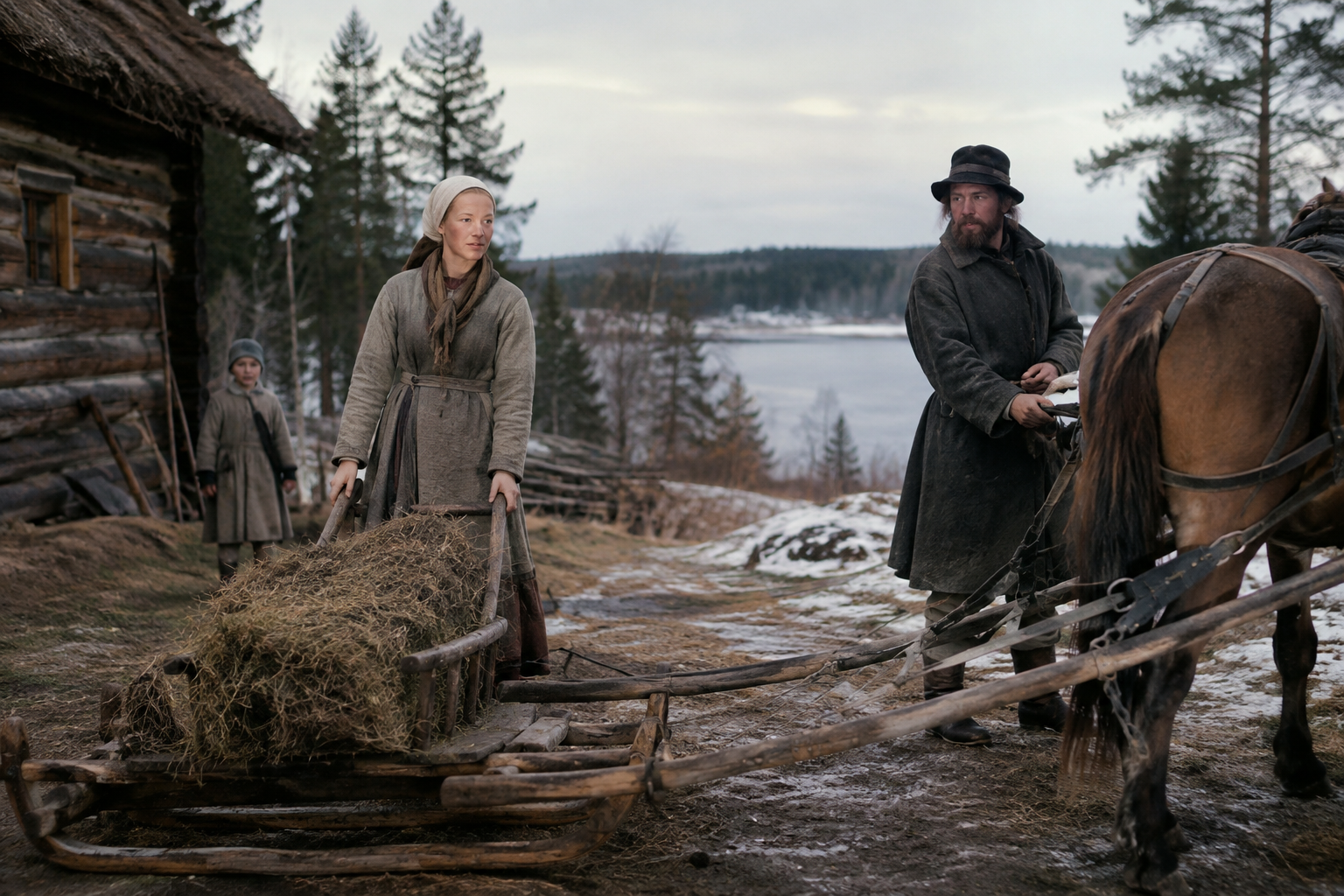
Some Y-DNA haplogroups are famous because they are broad and instantly recognizable. Others are interesting for the opposite reason: they are very narrow branches that bring us into the fine grain of real historical populations. Haplogroup I1a2a1a1a2b1a belongs in that second category. It is a highly specific paternal-line marker within the wider Y-chromosome family tree, and that matters because such branches can sometimes show how an older northern European lineage survived, divided, and reappeared in later regional histories.
To be clear from the start, a Y-DNA haplogroup traces only one line of ancestry: the direct paternal line, father to son across many generations. It does not describe a person's whole ancestry, culture, language, or identity. But when combined with archaeology and historical context, it can still be illuminating. In this case, the supplied evidence points us toward northern Europe, especially the Baltic and Scandinavian world, and then into later historical landscapes stretching from Finland to the Rhineland.
Haplogroup I1a2a1a1a2b1a is a downstream branch of haplogroup I1, a paternal lineage widely associated in broad terms with northern Europe. That broader parent lineage is often discussed in connection with Scandinavian and Germanic-speaking regions, but caution is needed here: the history of a large parent haplogroup cannot simply be copied onto every tiny descendant branch. A narrow subclade like I1a2a1a1a2b1a represents one particular twig on that older tree, not the whole forest.
Even so, the larger setting matters. Ancient DNA has shown that northern European paternal lineages were shaped over long periods by post-Ice Age settlement, later prehistoric population changes, and the social transformations of the Bronze Age, Iron Age, and early medieval centuries. For a specific branch such as this one, the safest approach is not to claim a single dramatic migration, but to place it within that northern European world of mobility, local continuity, and repeated reshaping of communities.
If you want the bigger archaeological backdrop for northwestern Europe, especially the zone around the lower Rhine and Meuse that later fed into many medieval lordships, this related article is a useful companion.
Explore the Rhine-Meuse Deep Past
The most concrete anchor supplied for this haplogroup is an individual from Finland: PKN013, from Post Medieval Finland Tavastia Paelkaene, dated 1750 AD. At first glance, a post-medieval burial may seem rather late for an article about ancient origins. But in fact this is exactly the sort of evidence that shows how paternal lineages persist in place, long after the great headline migrations have come and gone.
Tavastia, in the Finnish interior, is a region with a deep and complicated settlement history. It sits at the meeting point of local continuity, eastern and western contacts, and the long historical interplay of Finnic-speaking communities with the wider Baltic and Scandinavian sphere. A sample such as PKN013 does not prove that the exact branch began in Tavastia, nor does it make this man the ancestor of later families elsewhere. What it does show is that this paternal line, or a very closely related branch, was present in that historical Finnish landscape by 1750 AD.
That matters because Finland has never been genetically or historically isolated in any simple sense. It has been connected by trade, war, church structures, crown administration, and population movement across the Baltic for centuries. A lineage found in Tavastia may reflect local persistence over many generations, or the residue of earlier movements within the north. The value of ancient DNA is that it gives us a person, a place, and a date rather than a vague national label.
Readers interested in how genetics is reshaping our picture of Finland's past will find a close parallel in this community article.
What sort of historical path might connect a northern Y-lineage to the later world of castles and noble houses? Not a straight line, certainly. Europe was never that tidy. The more plausible picture is one of branching regional histories. A paternal lineage can survive through farmers, warriors, townsmen, clergy, tenants, and minor elites without leaving a written surname until very late. Written genealogy and genetic ancestry are related only at certain points; often they move on separate tracks until modern analysis brings them back into view.
For a branch under I1, northern Europe is the natural historical frame. That includes Scandinavia, the Baltic world, and parts of the German-speaking lands influenced by long interaction across the North Sea and Baltic. During the Iron Age and early medieval period, people moved in all sorts of ways: as settlers, traders, military followers, marriage partners, and retainers. Later still, the political map of Europe was overlaid by counties, bishoprics, duchies, and noble territories. The paternal lines did not obey those boundaries; they merely passed through them.
This is where genetics is particularly good at puncturing old certainties. A castle may look immovable, a noble name may seem ancient, but the men who built, served, defended, or inherited such places were products of much older population histories. If you want a broader introduction to how archaeogenetics works in that respect, this is an excellent next read.
See How Ancient DNA Decodes History
The supplied noble connection brings us far from Tavastia, to the Rhineland and to Schloss Burg above the Wupper in Solingen. This great medieval castle was the main seat of the Counts of Berg from the 12th century and became a symbol of their growing regional power. That is precisely the sort of place where dynastic memory and regional identity harden into stone.
Schloss Burg has had the sort of life that many important castles did. It rose with a ruling line, lost political centrality when that line moved on, then suffered damage, neglect, and partial ruin. In the 19th and early 20th centuries it was rebuilt in a romantic historic style by local supporters determined to recover a monument of regional pride. Today it survives not merely as masonry, but as an argument about memory: what later societies choose to preserve, restore, and claim as their inheritance.
The association here is with the House of Meerscheidt-Huellessem, and it is important to frame that carefully. A historical association between a noble house and a Y-DNA haplogroup does not prove that every male member carried that lineage, nor that the house can be traced in an unbroken genetic chain to a specific ancient sample. What it does provide is historical setting. It places the haplogroup in a world of lordship, territory, and family tradition rooted in western Germany.
And this is rather the point. Genetics gives us lineages; castles give us context. One tells us that paternal branches endure across centuries. The other shows us where power, status, and regional memory later gathered around some of those lines, whether or not the documentary and genetic records can be perfectly joined.
For readers who want to follow that family context more closely, MyTrueAncestry has a dedicated article here.
Discover the House of Meerscheidt-Huellessem
So what do we responsibly say about I1a2a1a1a2b1a? We can say that it belongs to a very specific paternal branch inside a wider northern European haplogroup. We can say that the supplied evidence places this lineage in post-medieval Tavastia through the individual PKN013, dated 1750 AD. We can also place the broader story within the long historical zone that links Scandinavia, Finland, the Baltic, and parts of the German-speaking north and west.
What we cannot do is leap from one Finnish burial to a firm claim about the exact origins of a German noble house, or from a castle association to a proved medieval pedigree. Shared haplogroups, especially broad ones, are not proof of close relationship. Even narrow branches need documentary and ideally additional ancient DNA evidence before any precise genealogical claim can be made.
Yet the picture is still compelling. A paternal lineage visible in Finland and associated in historical context with a Rhineland noble setting reminds us that Europe's past was not made of sealed compartments. The same continent that produced inland Finnish communities also produced the Counts of Berg and the stone mass of Schloss Burg. Ancient DNA does not flatten those differences, but it does show that behind them lay older human continuities and movements that written chronicles only partly recorded.
That is one of the pleasures of this kind of work. A haplogroup that looks like a string of letters and numbers turns out to be attached to real places: Paelkaene in Tavastia, Solingen above the Wupper, the regional world of Berg. Once you have those, history stops being abstract.
If your own Y-DNA points to a northern European paternal branch, MyTrueAncestry can help you explore how that line fits into the wider archaeological record, from ancient individuals to later historical populations. Those matches can offer striking clues and historical perspective, even when they do not prove direct descent from a specific ancient person or noble family.
Upload your DNA to see whether your results connect with ancient samples, old regional populations, and the long paternal histories that shaped Europe.






Comments