Haplogroup I1a1b1g3b1a

– 4 min read


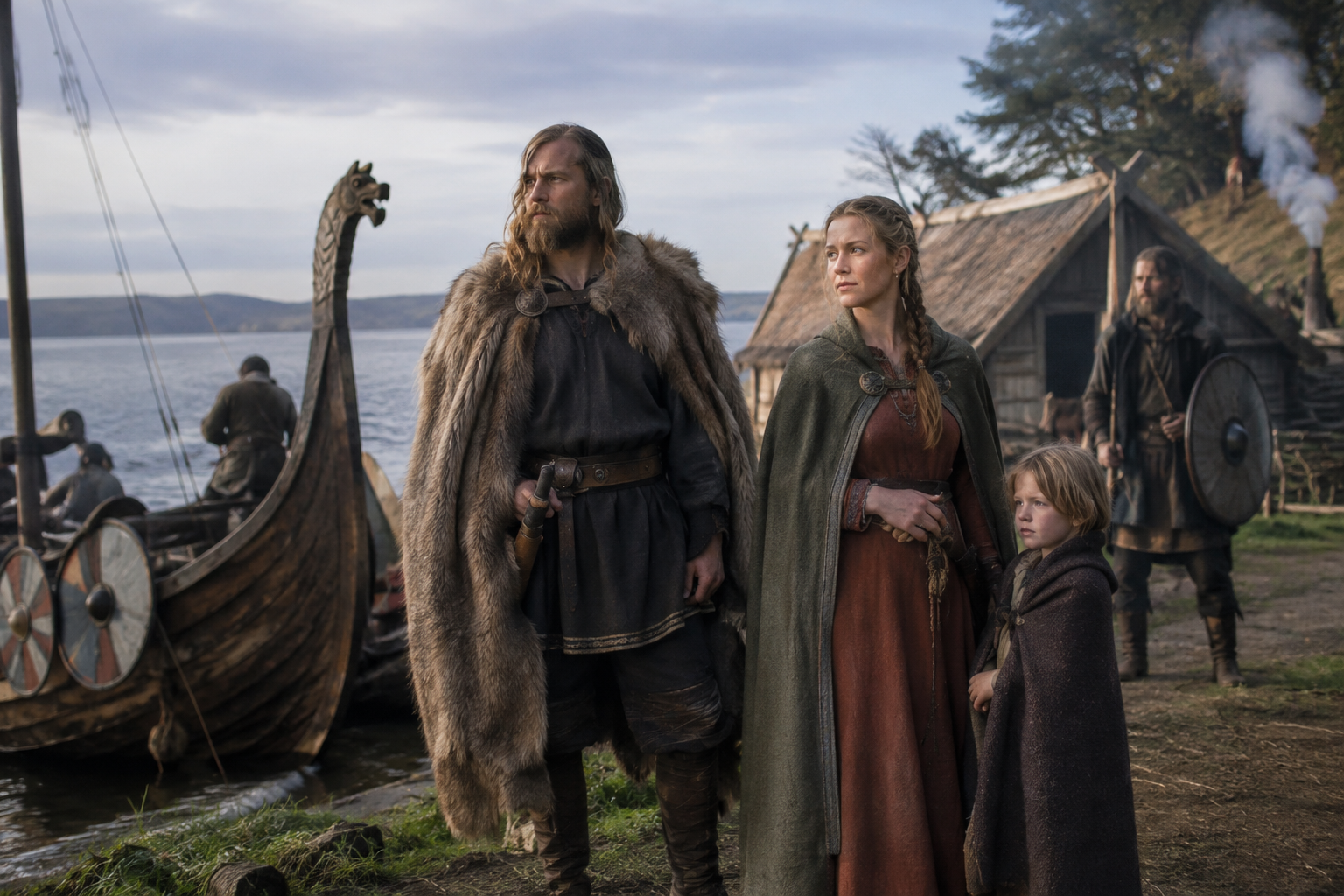
At Galgedil on the Danish island of Funen, one Viking Age burial has become a small but telling witness to paternal history. The individual known as VK279, dated to around AD 925, belongs to a period when Denmark stood at the center of the North Sea world: a place of farms, ships, regional lordship, and widening horizons. In MyTrueAncestry terms, this man is associated with the Y-DNA haplogroup I1a1b1g3b1a, a very specific branch nested within the broader haplogroup I1 that is strongly tied to northern Europe.
That precision matters. Y-DNA follows one direct paternal line only: father to son across many generations. It does not describe a person's whole ancestry, still less his language, identity, or social rank. But when a branch like I1a1b1g3b1a appears in a documented Viking Age burial from Denmark, it gives us something wonderfully concrete: not a legend about Vikings in general, but one excavated man, in one place, at one historical moment.
Funen was no backwater. Sitting between Jutland and Zealand, it lay in the busy maritime zone that linked the Danish islands with the Baltic and the North Sea. By the 10th century, this was a landscape shaped by movement: traders, raiders, settlers, craftsmen, farmers, and families crossing short sea routes that connected Scandinavia to England, Frisia, the Slavic coast, and beyond.
The Galgedil cemetery belongs to that world. Even when a single sample is all that survives in a summary record, the archaeological value is real. A burial like VK279 places the paternal line I1a1b1g3b1a in a historically important Danish setting at the height of the Viking Age, not in saga memory but in excavated human remains.
An ancient DNA study examining Viking Age populations in and around Scandinavia helped make finds like this historically legible, linking graves, genomes, and regional mobility in new ways. For the broader research context behind such work, see this ancient DNA research preprint.
The broader haplogroup I1 is well known in Scandinavia and northern Europe, especially in discussions of Iron Age and Viking Age paternal lines. But the article haplogroup here is not broad I1 in general; it is the much narrower branch I1a1b1g3b1a. That narrower label should be handled carefully. A subclade can represent a relatively small slice of a much larger paternal history, and it cannot simply inherit every grand claim ever made about I1 as a whole.
What we can say securely from VK279 is modest but meaningful. This branch, or an association with it, appears in Viking Age Denmark. That makes it relevant to the historical populations living in the Danish archipelago during the period when Scandinavian expansion, exchange, and settlement were reshaping much of northern Europe.
It is also a reminder that Viking Age Denmark was not just a springboard for movement abroad. It was a home landscape. The men buried there were not abstractions called "Vikings"; they were members of local communities whose descendants could remain nearby, move across the sea, or disappear from the record altogether.
There is a temptation, whenever a Scandinavian Y-line turns up in an ancient grave, to race straight toward heroic claims. Better to resist that. The importance of VK279 lies not in romance but in context. A dated burial from Funen anchors this paternal branch in a society that was historically central to the making of the Viking world.
That matters especially because Denmark in the early 10th century was part of a changing political landscape. Local power was being consolidated, older regional identities persisted, and Christianity was beginning to alter burial customs and public life. A paternal line found in this period therefore sits inside a society in transition, not a frozen "Viking type."
For readers interested in how language spread and population history interacted across Germanic-speaking regions, this broader discussion is useful:
One reason finds like VK279 are so valuable is that they sit within a much longer Scandinavian story. Denmark had already seen profound demographic and cultural changes long before the Viking Age: Mesolithic foragers, incoming Neolithic farmers, later Bronze Age networks, and Iron Age communities all contributed to the population history of the region. A Viking Age Y-line is therefore one chapter in a long northern sequence, not an isolated beginning.
That longer view is particularly useful for anyone trying to understand how a branch such as I1a1b1g3b1a fits into deep time. Haplogroups do not map neatly onto archaeological cultures, and no single burial can stand for all of Denmark. But a Viking Age male line from Funen becomes more informative when set against the island and peninsula histories that came before it.
The deeper prehistoric background to Denmark's population history is explored here:
A man buried on Funen around AD 925 belonged to a world that was geographically small-scale and internationally connected at the same time. Daily life may have been local, but the sea routes were not. Goods, stories, marriage ties, military service, and migration all moved through the Danish straits. That is one reason Scandinavian paternal lines can later appear far from Denmark, in places touched by settlement, trade, or conquest.
Still, it is crucial not to reverse the logic. VK279 does not prove that every later bearer of a similar lineage came from Funen, nor that every carrier of I1a1b1g3b1a must descend from a Viking warrior. What it does show is that this paternal branch was present in a historically central Scandinavian setting during the Viking Age itself. That is already a significant historical anchor.
The wider pattern of movement between Scandinavia and Britain is worth exploring alongside this burial evidence:
The most distinctive thing about haplogroup I1a1b1g3b1a in this case is not that it can be wrapped in myth, but that it can be tied to a real excavated individual: VK279 from Galgedil, on Funen, around AD 925. For someone researching a matching or nearby paternal line today, that does not promise descent from a named dynasty or a famous raider. It offers something better grounded: evidence that this branch belonged to the lived human landscape of Viking Age Denmark, in one of the key regions of the Scandinavian world.






Comments