Haplogroup I1a1b1a1e1

– 5 min read


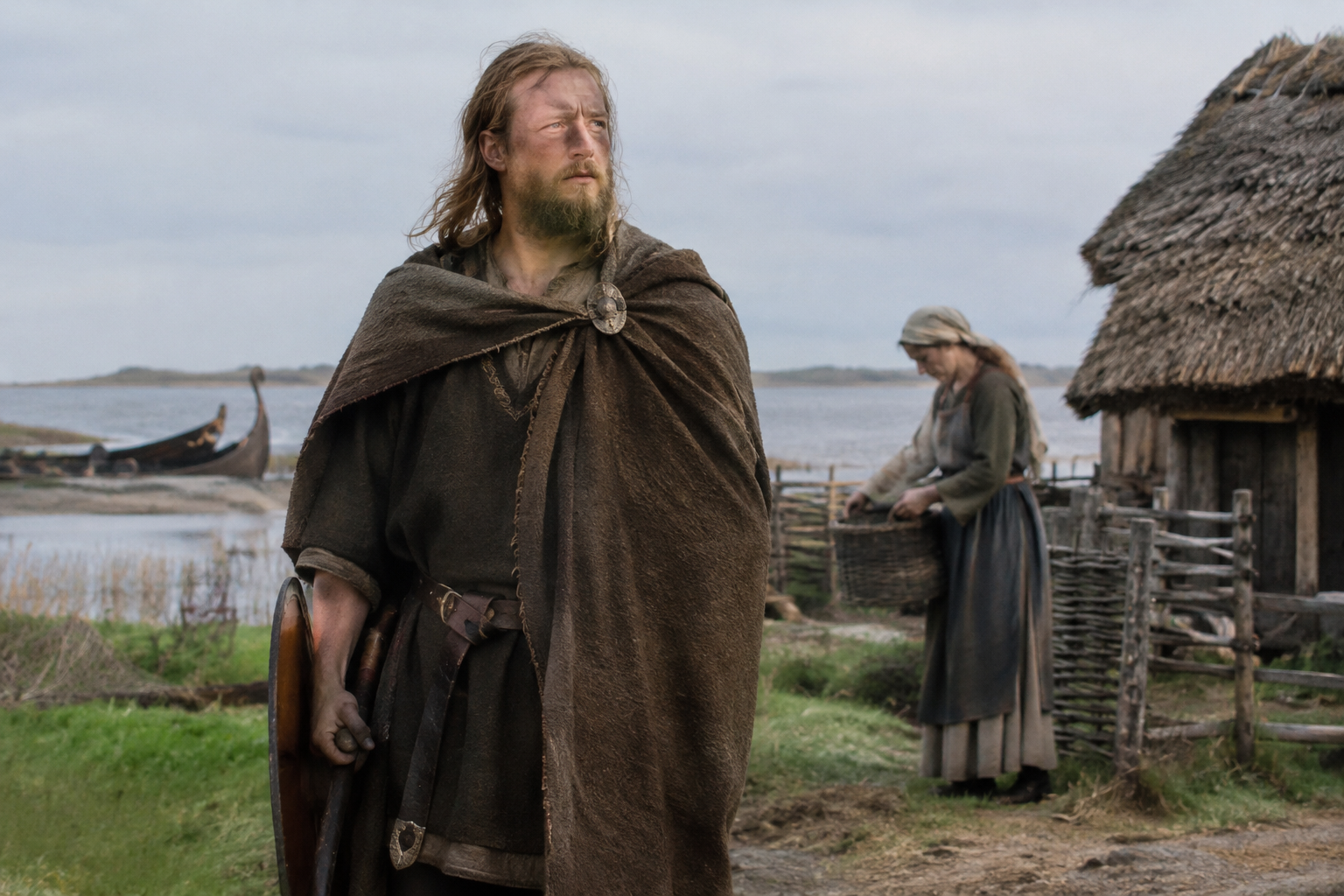
At Hundstrup on Zealand in Denmark, one early Viking Age man has become a useful fixed point for thinking about the Y-DNA haplogroup I1a1b1a1e1. The individual, recorded as VK297 and dated to around AD 750, belongs to a moment just before the Viking world became famous in chronicles and sagas. That date matters. It places him in Scandinavia on the eve of the great outward movement of people, goods, and languages across the North Sea and Baltic.
For anyone carrying I1a1b1a1e1 today, this is the sort of evidence that sharpens the picture. Y-DNA follows one direct paternal line only, not a person's whole ancestry, but it can still anchor that line in a real historical landscape. In this case, the landscape is early medieval Denmark, where one branch of the broader I1 lineage was already present in a society about to leave an outsized mark on European history.
Hundstrup, on the island of Zealand, sits in one of the key zones of later Viking-age power: eastern Denmark, facing both the Baltic and the routes toward the North Sea. A man living there around AD 750 belonged to a world of farms, local elites, exchange networks, and maritime mobility, even if we should not lazily project every later Viking stereotype backward onto him. The point is not that VK297 was necessarily a raider, trader, or chieftain. The point is that his paternal line was present in the demographic setting from which Viking-age expansion emerged.
The haplogroup label here deserves a little care. I1a1b1a1e1 is a narrow branch within the larger Y-DNA haplogroup I1, a lineage long associated in genetic studies with northern Europe, especially Scandinavia. But a broad parent lineage is not the same thing as a specific subclade. What VK297 offers is not a complete history of all I1 men, but a concrete early medieval Scandinavian example connected with this more precise paternal branch.
A large ancient DNA study of Viking-era populations helped bring samples like this into view, showing just how varied and mobile Scandinavian worlds already were by the late first millennium AD. The research preprint linked to these finds can be found here, and it is valuable less for romantic legend than for the sober business of placing named ancient individuals into real genetic and archaeological contexts.
One sample is never the whole story, but sometimes one sample sits in exactly the right place. Zealand was not some marginal backwater. It was part of the Danish heartland, a region tied into the developments that would later produce royal centres, fortified landscapes, and increasingly ambitious seaborne networks. A paternal line found here around AD 750 is therefore historically suggestive, even if it cannot by itself tell us where every downstream family later moved.
That is especially true for I1 branches. In public discussions, I1 is often treated as if it were a single historical signal for "the Vikings" or "the Germanic world." Real evidence is messier and more interesting. Some branches will have deep roots in Scandinavia; others spread at different times and by different routes. The narrow designation I1a1b1a1e1 should therefore be handled as a specific twig on a larger northern European tree, not as a magic ethnic label.
So what can responsibly be said? At minimum, VK297 shows that a line associated with I1a1b1a1e1 was present in Denmark in the early Viking Age. That is a solid historical foothold. For descendants investigating this paternal branch today, it supports a connection to the Scandinavian zone from which many later lineages spread into Britain, the North Atlantic, and parts of continental Europe.
It is worth lingering on the date. Around AD 750, Scandinavia was not yet the fully documented Viking world of Frankish annals and English chronicles, but many of the conditions behind that world were already in place. Ports were developing, long-distance contacts were widening, and social hierarchies were becoming more visible in the archaeological record. A man from Hundstrup belongs to this formative phase, which is often more revealing than the later, noisier age of raids and kingdoms.
This matters because genetics works best when it can be tied to transitions. A lineage present in Denmark at this point may have participated, over generations, in the movements that carried Scandinavian ancestry abroad. That does not mean every present-day carrier of I1a1b1a1e1 descends from one Viking expedition or one famous ancestor. It means the branch fits neatly into a historically plausible setting for expansion from southern Scandinavia.
The language question is relevant here too, though it must be handled carefully. Y-DNA does not speak a language. Still, paternal lines found in early medieval Denmark belong to communities that were part of the northern Germanic-speaking world. That makes this kind of evidence useful when set beside broader work on how Germanic languages and populations spread and mixed across northern Europe.
What makes VK297 interesting is not grandeur but representativeness. Ancient DNA is often dominated by spectacular graves, unusual burials, or royal identifications. Yet ordinary or less famous individuals can tell us far more about enduring population structure. A man from Hundstrup, securely placed in early Viking Age Zealand, helps show that lineages like I1a1b1a1e1 were embedded in the living population of Denmark, not merely in later medieval genealogies or modern surname projects.
That point becomes sharper when we remember how Viking-age identities actually worked. Scandinavia was connected, but not uniform. Danes, Norwegians, Swedes, island settlers, traders, and mixed communities around the Baltic and North Atlantic all formed overlapping worlds. A paternal branch documented in Denmark may later appear far beyond Denmark, yet its earliest securely observed setting can still matter enormously for reconstructing its likely historical direction.
In other words, the sample does not tell a fairy-tale story of a single heroic founder. It gives something better: evidence that this paternal line was already established in one of the major Scandinavian regions just before the Viking Age became historically visible at full scale.
For a modern tester, I1a1b1a1e1 is best understood as a narrow paternal signal with a documented foothold in early Viking Age Denmark. That is already quite informative. It points toward the Scandinavian sphere, and more specifically toward a branch present in the Danish world around AD 750, rather than offering only a vague "northern European" label.
What it cannot do, on present evidence, is identify a named dynasty, a single migration event, or a guaranteed route into later countries. No noble family material is needed to make the point. The real strength of this branch lies in something more archaeologically satisfying: a real ancient man, at a real Danish site, standing at the threshold of one of the most consequential periods in northern European history.
That is the distinctive value of I1a1b1a1e1. It is not simply a modern code on a haplotree. It is a paternal line that can be placed, at least in one documented case, in early Viking Age Zealand - in the Denmark that helped shape the medieval North.





Comments