Haplogroup G2a2b2a1a1b1a1a2a1a1

– 5 min read


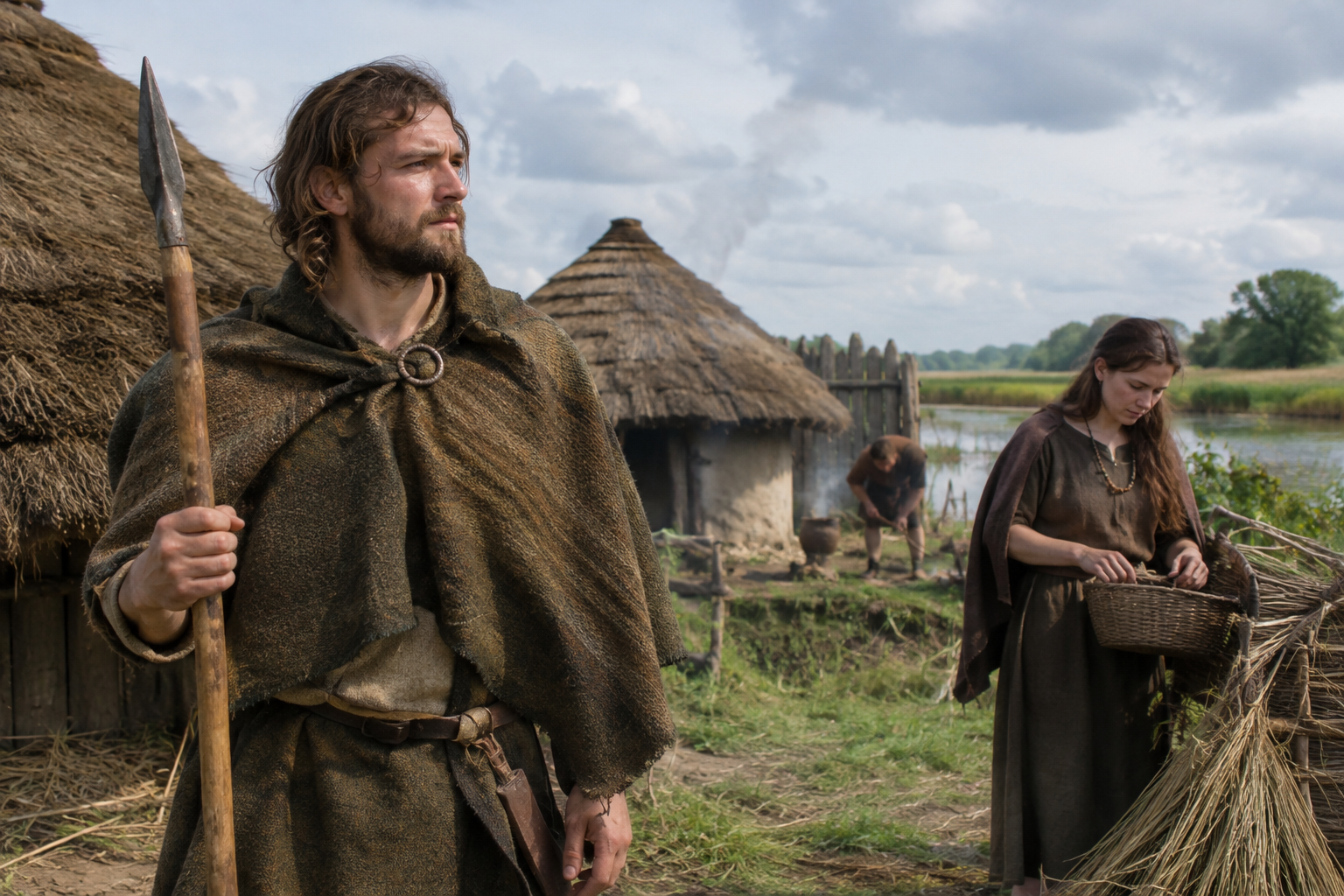
In Iron Age Cambridgeshire, around 296 BC, one man now known by the laboratory ID I19045 offers a small but intriguing clue to a very long paternal story. He is important not because he was a king or because his grave can be dressed up into legend, but because his Y-chromosome was assigned to the remarkably specific branch G2a2b2a1a1b1a1a2a1a1. That makes him a rare fixed point: an ancient bearer of a lineage more often discussed in the abstract than encountered in a securely dated archaeological context.
That setting matters. Iron Age Britain is often imagined through tribal names, hillforts, Roman hindsight, or later national stories. But the men and women actually buried in the centuries before Rome arrived were part of communities whose ancestry had been formed over a far longer timespan. A Y-DNA branch like G2a2b2a1a1b1a1a2a1a1 tracks only one direct paternal line, not a person's whole ancestry, yet even one line can show how unexpectedly deep older population histories remained within Iron Age Britain.
The immediate temptation with a lineage this precise is to turn it into a grand migration map. Better to be more careful. What we can say is that I19045 places this paternal branch in eastern England in the later Iron Age, before the Roman conquest, and that alone is valuable. Ancient Y-DNA from Britain often highlights lineages associated with later Bronze Age and Iron Age demographic changes, but G lineages can point to something older and more layered in the population history of Europe.
In other words, this is not the sort of haplogroup most people would casually expect to meet in pre-Roman Cambridgeshire. Its presence is a reminder that ancient communities were not genetically tidy. Beneath the broad archaeological labels of "Iron Age Britain" sat a complicated inheritance built from Neolithic farmers, later continental arrivals, and generations of local continuity.
The wider haplogroup G, especially branches of G2a, is famous in archaeogenetics for its strong association with early European farming populations. That does not mean every later G subclade can simply be read as a direct badge of the first farmers, nor does it mean that an Iron Age man in England was somehow a straightforward survivor from the Neolithic. But it does place this lineage within a paternal family tree that has deep roots in the farming expansions that spread across Europe millennia earlier.
This is where the distinction between parent and subclade matters. The article haplogroup, G2a2b2a1a1b1a1a2a1a1, is a very narrow twig on that much larger tree. We should not assign to it every movement ever proposed for G2a as a whole. Still, the broader context helps explain why a result like this is so interesting: by the Iron Age, Britain's population already carried layers of ancestry laid down over thousands of years, and some paternal lines preserved traces of very old continental histories.
A major ancient DNA study of Britain and nearby regions, published in Nature, helped clarify just how dynamic these long-term shifts were. One of its enduring lessons is that population change and continuity existed side by side. That is exactly the sort of framework in which a lineage like this makes sense.
Cambridgeshire was no backwater at the end of the first millennium BC. It sat within a landscape of river systems, fen edges, trackways, and connections reaching across eastern Britain and beyond it. People, goods, marriage networks, and ideas moved through this region long before the legions turned up. When we place I19045 in that setting, the result becomes less surprising and more historically useful.
An ancient Y-chromosome does not tell us what language this man spoke, what political group he identified with, or whether he thought of himself as belonging to any named tribe later recorded by classical writers. It does, however, show that eastern England contained paternal diversity that cannot be reduced to a single recent migration. The Iron Age population was already the product of centuries of mixture and local development.
This is one reason Britain keeps rewarding archaeogenetic work. The old story of neat replacement by one people after another has steadily given way to something more human and more complicated: continuity in some families, fresh arrivals in others, and communities assembled over the long term rather than in a single historical moment.
Roman to Early Medieval Britain
With only one directly supplied ancient individual for this article, the responsible task is not to inflate the evidence. We do not know from the information here whether I19045 belonged to a documented high-status burial, a farming settlement cemetery, or a wider paternal kindred recovered from the same site. We should not invent weapons, ornaments, kinship, or social rank. The sample's real importance is more fundamental: it securely anchors this paternal branch in a particular place and period.
That may sound modest, but in ancient DNA it is often exactly these modest anchors that matter most. Once a lineage is found in a dated context, it stops being merely theoretical. It becomes part of the archaeological map. For descendants or testers who match deeper branches in this neighborhood of the Y-tree, that can help frame their paternal history not as something abstractly "European," but as something already present in later prehistoric Britain.
It also speaks to a larger methodological point. Haplogroups are best understood when they are put back into graves, landscapes, and historical time. A name like G2a2b2a1a1b1a1a2a1a1 looks forbidding on the page, but once attached to a man living in Iron Age Cambridgeshire, it becomes evidence about real population history rather than just a string of letters and numbers.
Much of British history is narrated through the Romans, Anglo-Saxons, Vikings, and Normans. Those later episodes are indeed important, but they can overshadow the depth of the older population beneath them. A pre-Roman sample like I19045 is a useful corrective. He belonged to a world already ancient in its own day, and his Y-line hints that some paternal branches in Britain had roots stretching back far beyond the historical identities familiar from schoolbooks.
That does not mean direct descent from one named prehistoric culture can be read off a single haplogroup. Archaeological culture, language, and Y-DNA are different things. But it does mean that the paternal landscape of Iron Age Britain was not newly made. It had been accumulating, pruning, and reshaping itself for millennia.
If your paternal line falls under G2a2b2a1a1b1a1a2a1a1, the clearest evidence here is that this branch, or a reported representative of it, was present in Iron Age eastern England before the Roman conquest. That is not a promise of descent from one excavated man, nor proof of a single ethnic identity. What it does suggest is something more interesting: your direct paternal line may belong to one of those older threads woven into Britain's population long before the better-known upheavals of written history.
For that reason, I19045 is worth remembering. He shows this lineage not in a legend, not in a medieval pedigree, but in the archaeological ground of Iron Age Cambridgeshire, where the deeper past of Britain is still coming into view.





Comments