Haplogroup G2a2a2b

– 4 min read


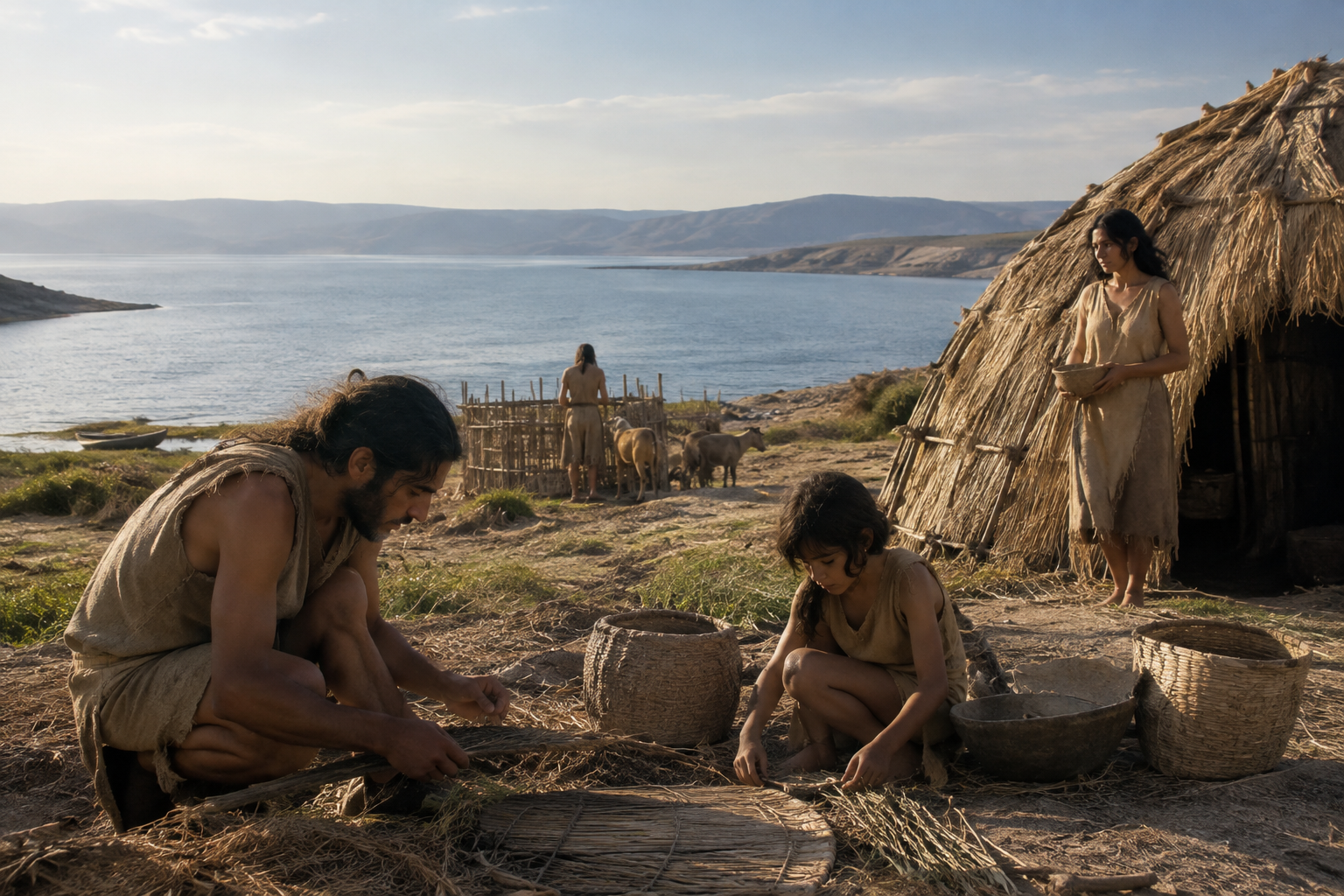
At Ilipinar in the Marmara region of northwestern Anatolia, one early farmer has become a particularly useful signpost for the paternal history of Europe. Sample I3121, dated to around 5900 BC, belongs to the Y-DNA haplogroup G2a2a2b, a branch found in one of the key landscapes where farming communities were already established before the great demographic spread into southeastern and central Europe gathered pace.
That matters because Ilipinar sits in a historical bottleneck. If you wanted to move from Anatolia into the Balkans by land and short sea crossings, this was one of the most plausible staging grounds. So when a man from this region carries G2a2a2b, he is not just an isolated genetic curiosity. He stands close to one of the best documented frontiers in the story of how early farmers transformed Europe.
Ilipinar is not famous in the popular imagination in the way Troy or Catalhoyuk are, but archaeologically it occupies an enormously revealing position. It lies in the Marmara zone, between Anatolia and southeastern Europe, in precisely the region where early village life, farming, herding, and new material traditions could move westward in durable ways.
Sample I3121, associated here with G2a2a2b, belongs to that world of settled Neolithic communities. Y-DNA traces only one line of descent, the direct paternal one, not the total ancestry of an individual, but this one line is still historically important. In early European farming contexts, broader haplogroup G2a appears again and again, and that repeated pattern has made it one of the classic paternal signatures of the first agricultural expansions into Europe.
A major ancient DNA study of the region and its wider connections, published in Science, helped sharpen the picture of how populations around the Aegean, Anatolia, and adjacent zones were linked across long stretches of prehistory. For a lineage like G2a2a2b, the key point is not that one sample "proves" a migration route on his own, but that he appears in exactly the kind of setting where those movements are historically plausible and archaeologically visible.
There is a temptation, when looking at a precise haplogroup label, to treat it as though it were a tribe, a language, or a people with a flag. It is none of those things. G2a2a2b is a paternal branch within the wider haplogroup G2a, and its importance comes from context: branches of G2a are repeatedly found among Neolithic farmers in Anatolia and in the early farming populations that spread into Europe.
In practical terms, that means G2a2a2b belongs to a chapter of history in which small-scale village communities expanded, intermarried, split, moved, and founded new settlements. The archaeological story is about houses, crops, animals, pottery traditions, and settlement networks. The genetic story adds that many of the men in these communities carried lineages from the G2a family, even though later European prehistory would see major shifts in paternal lines.
That last point is crucial. A lineage prominent in the Neolithic does not have to remain equally prominent in later millennia. Europe's paternal history changed dramatically after the arrival and spread of steppe-related populations in the 3rd millennium BC. So a lineage like G2a2a2b can be historically central in one period and much rarer later on, without disappearing from the human story altogether.
When archaeologists and geneticists discuss the first spread of farming into Europe, northwest Anatolia keeps returning to the center of the map. It is not simply "near Europe"; it is one of the most credible launch zones for the populations who moved into the Balkans and beyond. Ilipinar therefore matters as evidence from a corridor, not from a cul-de-sac.
The man represented by I3121 lived well before written history, before kingdoms, before cities in the later Near Eastern sense, and before any ethnic labels we might recognize from classical texts. Yet his paternal lineage belongs to a wider pattern that would help populate the first farming worlds of southeastern Europe. That is the quiet fascination of G2a2a2b here: not imperial grandeur, but deep antiquity at the threshold of continental change.
Across Europe, the earliest farmers often show substantial ancestry ultimately connected to Anatolian Neolithic populations. That does not mean every farmer came directly from one village in Marmara, nor that every G2a lineage took the same road. But it does mean that a sample like I3121 sits in a historical position of extraordinary explanatory value.
With sparse evidence, restraint is part of the job. We should not turn I3121 into a named founder of Europe, nor pretend that G2a2a2b automatically identifies all later descendants of Anatolian farmers. Ancient DNA does not work like heroic genealogy. What it gives us instead is something better grounded: a securely ancient paternal line in a region central to one of the largest demographic transitions in Eurasian history.
That transition was not a single march of identical people. It involved repeated movements, local interactions, and different outcomes in different regions. Some communities mixed extensively with hunter-gatherers; some remained more insulated for a time; later populations overlaid these earlier patterns again. But in the earliest agricultural horizon, haplogroups in the G2a family are among the clearest paternal markers we have.
That is why even a short sample record can carry weight. If your haplogroup is G2a2a2b, the interest lies less in celebrity connections than in your branch's repeated appearance near the opening act of European farming history.
The Marmara region is easy to underrate because it does not fit neat modern categories. It is not simply "Anatolia" in an inland sense, and not simply "Europe" either. Historically, that ambiguity is its strength. This was a zone of contact, movement, adaptation, and transmission long before the Bosporus became a line on schoolroom maps.
Ancient DNA has increasingly reinforced what archaeologists long suspected: the regions linking Anatolia, the Aegean, and the Balkans were not peripheral. They were foundational. For paternal lineages such as G2a2a2b, that makes northwest Anatolia one of the most meaningful places in which to appear early, because it connects population history with one of the great structural changes in human life: the spread of farming villages and the worlds they created.
Foragers to farmers in Denmark
The strongest supported insight for G2a2a2b is not a medieval surname or a royal pedigree. It is that this paternal branch is tied, through sample I3121 at Ilipinar, to an early farming population in the Marmara region around 5900 BC, at one of the key gateways between Anatolia and Europe. For someone researching this haplogroup today, that places your direct paternal line close to the Neolithic world that helped reshape Europe at the village level, field by field and settlement by settlement.






Comments