The House Paynel
– 3 min read


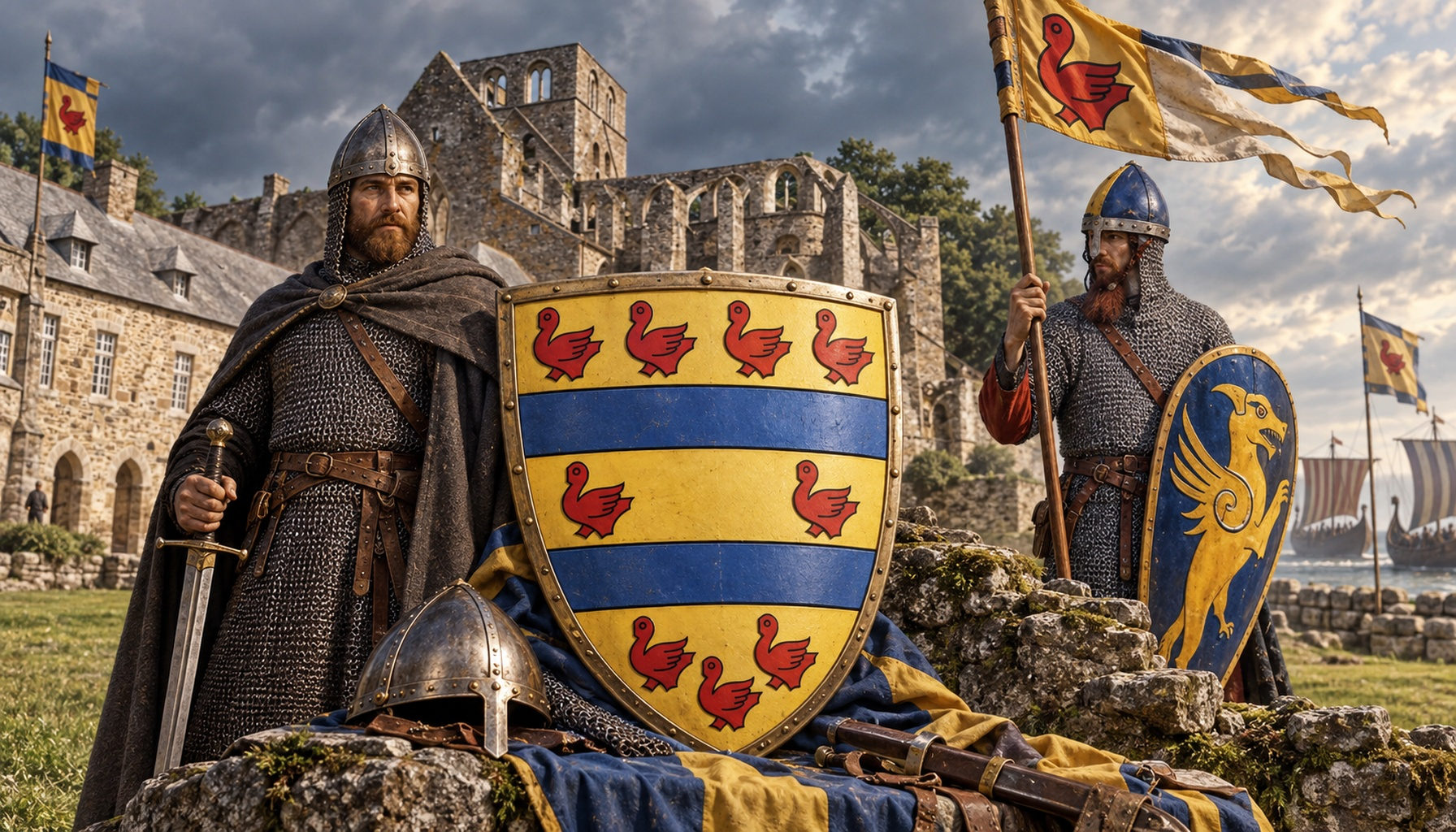
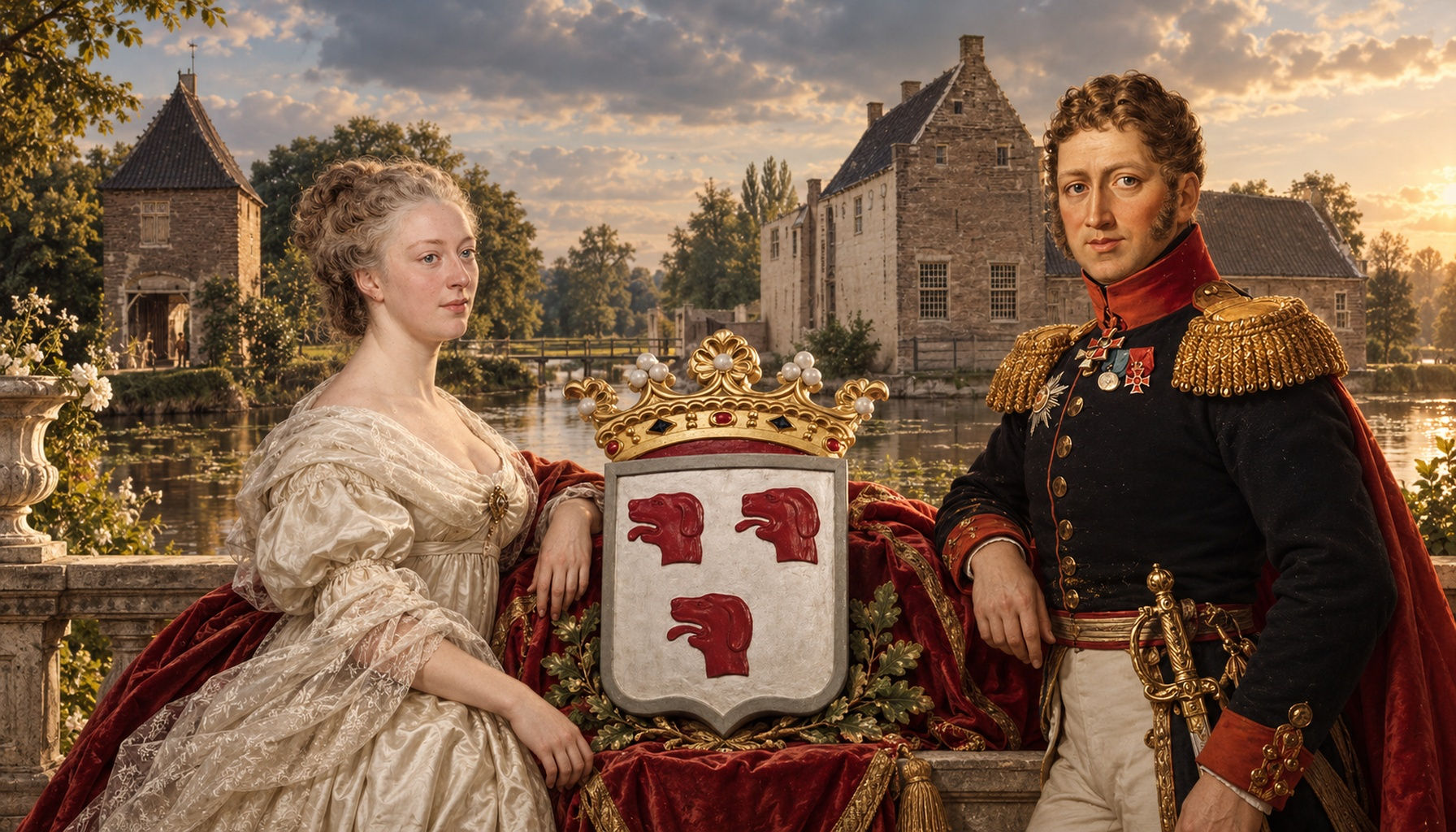
The House Paynel was one of those thoroughly Norman families who seem to stride straight out of the eleventh century: lords rooted in western Normandy, tied to Hambye and Moutiers-Hubert, active in war, landholding, marriage politics, and church patronage on both sides of the Channel. Their story belongs to that hard, energetic world shaped by the Norman Conquest, where a noble family could begin from a local territorial base in Normandy and then extend its reach into England through royal service and baronial opportunity. In haplogroup terms, the primary family association here is I2a1b1a1a1b1a, a lineage tag that places the family within a much deeper paternal history reaching far beyond the medieval record.
The Paynels were not merely names in charters. They were builders of power in the classic Norman style, using estates, armed followings, ecclesiastical alliances, and dynastic continuity to secure their place. William Paynel of Hambye (1042-1089) stands out in the generation after the Conquest as a leading figure associated with the family's Norman lordship and religious patronage. Ralph Paynel of Hambye (1069-1108) continued that inheritance in a period when noble authority depended as much on maintaining networks as on holding castles and rents. William Paynel (1091-1146) belongs to the next great phase of Anglo-Norman aristocratic life, when noble families were no longer simply conquerors but managers of a trans-Channel inheritance. That is really the key to the Paynels: they were part of a mobile Norman elite whose ambitions linked abbeys, manors, courts, and battlefields into one family strategy.
Explore the House of de Warenne
Hambye Abbey is the great stone anchor of the Paynel story. Founded in the twelfth century in Normandy and closely associated with the family, the abbey reflects the very practical piety of Norman aristocrats: to found or endow a monastery was an act of devotion, certainly, but also one of memory, status, and local control. Hambye developed as an important Benedictine house, and its surviving remains still give a vivid sense of the scale and seriousness of noble patronage in this period. The church, monastic buildings, and later ruins speak of a place that was once fully embedded in the social machinery of Norman lordship. This was where prayer for the dead, family commemoration, landed wealth, and regional identity all met. Better still, Hambye Abbey can still be visited today, and that matters, because it allows the Paynels to step out of parchment and into landscape. You can actually stand where their religious ambitions took architectural form.
Read more on the House of de Clare
From a DNA perspective, the Paynel-linked haplogroup I2a1b1a1a1b1a also opens a much longer archaeological backdrop. Related or linked ancient samples carrying this branch or closely associated placement include Medieval England Augustinian Friars (ATP_PSN_527), Neolithic Family Burial England Dorset Monkton Up Wimborne (muw001), Celtic Briton Cliffs End Farm England (I14866), Neolithic Wales Orchid Cave Denbighshire (I16491), Iron Age East Lothian Scotland (I16418), MacAurthur Cave Oban Argyll and Bute Scotland (I2657), Bell Beaker Wiltshire Upavon England (I4949), Ancient Carrowmore Ireland (car004), Bronze Age Isbister Orkney Scotland (I2933), Distillery Cave Oban Argyll and Bute Scotland (I3134, I3135, I2660), and several Neolithic Irish individuals including CAK68, CAK532, CAK531, ASH1, NG10, GNM1076, ANN2, and ANN1. These do not prove direct descent from the Paynels, nor from the Paynels to them. What they do show is that this paternal line has a very deep footprint across Britain and Ireland, stretching from the Neolithic through the Bronze and Iron Ages into the medieval world. That is the delight of archaeogenetics: a Norman noble house can be set against a backdrop thousands of years older than its written history.
If the House Paynel catches your imagination, the next step is obvious: upload your DNA to MyTrueAncestry and see whether you match the family story, the haplogroup I2a1b1a1a1b1a, or any of the related ancient samples from medieval England, Iron Age Britain, or Neolithic Ireland and Scotland. It is a wonderful way to connect your own results with the world that produced families like the Paynels.
Comments