Roman Soldiers on the Move: Praetorium Agrippinae and the Lower Rhine Frontier

– 4 min read


Roman Military Communities as Socially Mixed Borderland Settlements
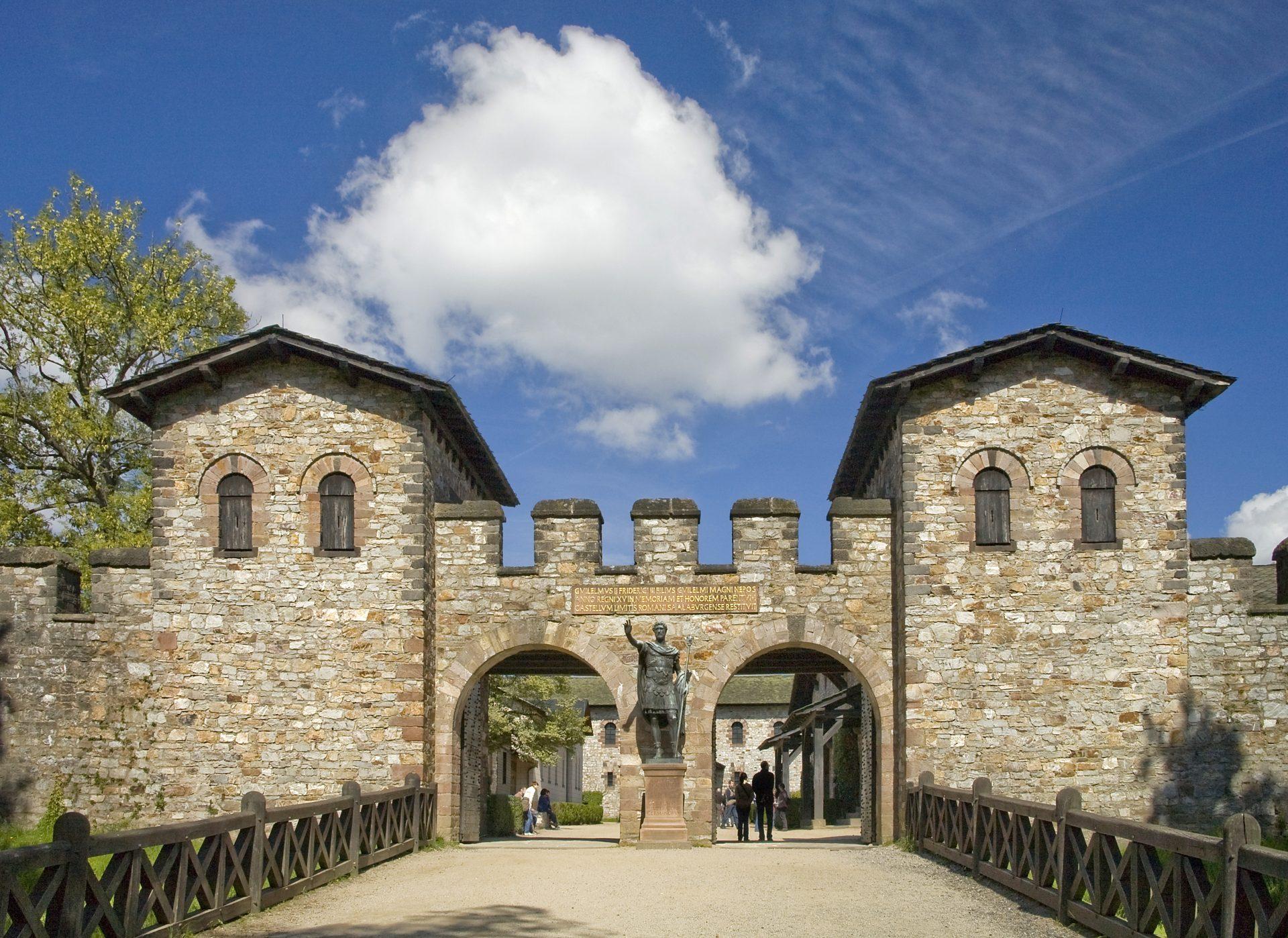
The archaeological site of Praetorium Agrippinae at modern Valkenburg in South Holland presents a compelling case study of Roman military communities as dynamic, socially mixed borderland settlements. This was not a lonely outpost of identical soldiers, but a bustling, multicultural community on the Lower Rhine frontier, where people from many different regions lived, worked, fought, traded, and were buried side by side. Through the integration of archaeological evidence, ancient DNA analysis, and isotopic studies of human remains, we can reconstruct the complex social fabric of this remarkable frontier settlement.
Praetorium Agrippinae was strategically positioned as one of the north-westernmost military settlements along the European frontier. Located on the Rhine, it functioned as a crucial hub in the Roman military network, facilitating the movement of troops, supplies, and information along the frontier and towards the North Sea approaches. The waterlogged conditions at Valkenburg have provided exceptional preservation, allowing archaeologists to recover wooden and leather objects alongside metalwork, toys, infant feeding vessels, and other everyday items that speak eloquently of family life within this military setting.
Archaeologists have uncovered one of the largest Roman cemeteries of the Lower Rhine borderlands here, containing approximately 501 cremations and 124 inhumations dating from the 1st to the 3rd centuries CE. This extensive burial ground represents not merely a collection of graves, but a three-century record of a thriving, continuously renewed community at the edge of the Roman world. The cemetery's remarkable preservation and scale make it an ideal laboratory for understanding the demographic complexity of frontier life.
The cemetery at Valkenburg is distinguished by its extraordinary variety of burial practices. While cremation was the dominant rite, following broader Roman customs, a substantial group of inhumations provides crucial insights into community composition. The inhumations fall into two distinct categories that reveal different aspects of frontier society. The first group consists of numerous neonates and infants under one year old, often buried in tiny coffins or baskets with small grave goods such as miniature vessels or personal ornaments. These burials, combined with toys and feeding vessels found throughout the site, demonstrate conclusively that Praetorium Agrippinae was a settlement of families, not merely a military barracks.
The second inhumation group includes older children, adolescents, and adults aged roughly 1 to 70 years, mostly buried with few or no grave goods. Many were placed in irregular positions, such as face-down burials, or shared graves with multiple individuals. Significantly, osteological analysis reveals that these adult skeletons commonly show signs of heavy physical labor, while their modest funerary treatment suggests they may have represented a lower-status segment within the broader community - workers, camp followers, or dependants rather than high-ranking officers.
Among the cremations, bustum-type graves were remarkably frequent at Valkenburg. In these burials, one or more bodies were burned directly over the grave pit, with the collapsed pyre debris falling together with bones and ash into the cavity below. This practice, often associated archaeologically with Roman soldiers and military sites, appears dozens of times at Valkenburg, alongside other cremation forms including simple cremation pits, urn burials, and carefully cleaned bone deposits.
Ancient DNA analysis reveals that the cemetery population was characterized by a striking lack of close kinship ties. Despite being buried in the same cemetery and living in the same settlement, the individuals do not form family clusters, even when compared against hundreds of other ancient European genomes. This genetic evidence underlines the transient, fluid character of the frontier population, where people arrived, served, labored, and died far from their biological kin.
Isotopic analysis of strontium, oxygen, and carbon in tooth enamel and cremated bone provides detailed insights into individual mobility patterns. Nearly half of the analyzed individuals showed different isotopic values in different molars, indicating movement during childhood or adolescence as their teeth were forming. The strontium and oxygen measurements from Valkenburg teeth show extraordinary variation compared to typical Dutch baselines, spreading across ranges that can only be explained by people growing up in very different geological and climatic environments across Europe.
Particularly compelling are individual case studies that emerge from this biomolecular evidence. One adolescent male, designated CL043, died between ages 13 and 16 and represents one of the most striking examples of long-distance movement. Genetic analysis places him closest to present-day Estonian populations, while his tooth enamel isotope values point to a childhood in a cold, continental climate matching central Estonia. His teeth show he spent approximately his first eight years in the Baltic region before moving hundreds of kilometers to reach the Rhine frontier, where he died in his teens - a vivid example of a Baltic teenager ending his short life far from his northern homeland.
Another notable individual, adult male CL032, falls genetically within the range of modern Greek populations, suggesting eastern Mediterranean ancestry. His predicted appearance based on DNA analysis indicates intermediate skin tone, dark eyes, and brown hair - features entirely typical of Mediterranean populations but distinctive among his northern European neighbors at Valkenburg.
The evidence challenges traditional interpretations of Roman frontier communities as ethnically homogeneous or rigidly stratified along military lines. While many Valkenburg genomes show ancestries common in western Europe, with clustering near North Sea populations and the British Isles, the isotopic evidence complicates simple assumptions about British recruitment. Most individuals' oxygen values prove too low for Britain's maritime climate, instead pointing to more continental European origins.
The cemetery reveals a community held together not by kinship but by the practical demands and opportunities of frontier life. Soldiers, their families, merchants, craftsmen, laborers, and others of varying status shared this space at the empire's edge. The diversity of origins spans from the North Sea to the Mediterranean and Baltic regions, while burial practices reflect both Roman military traditions and local adaptations.


Comments