Haplogroup Unk

– 4 min read


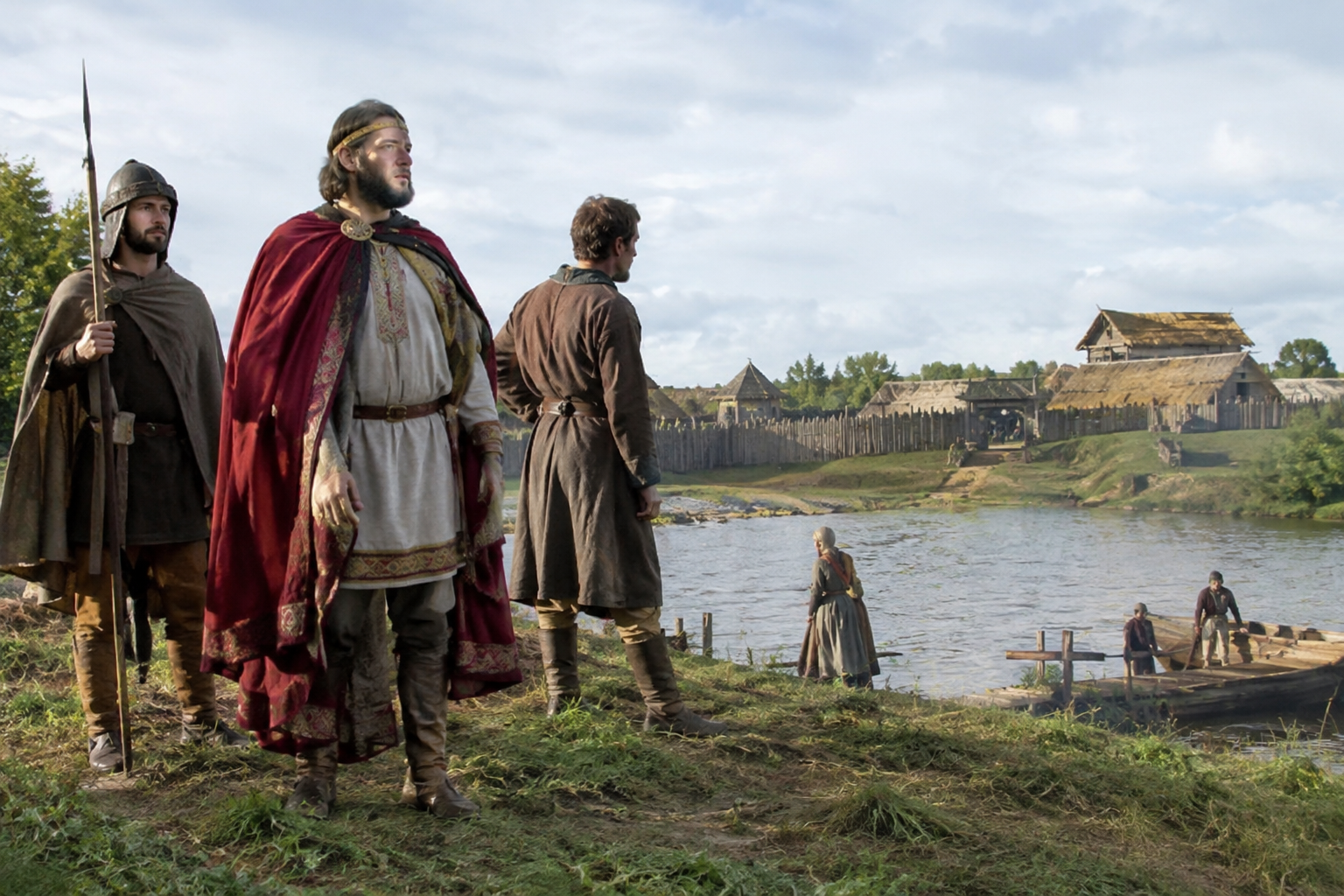
At Ostrow Lednicki, one of the key strongholds of the medieval Piast realm in Poland, ancient DNA has added a small but telling detail to a very large historical story. A male individual dated to around AD 1100, sample PCA0337, was identified from this Piast-era setting, yet his Y-DNA is recorded here simply as Unk - unknown. That may sound like a dead end, but in archaeology an unknown paternal line can be as revealing as a famous one, because it reminds us where the limits of evidence still sit.
Ostrow Lednicki is not just any medieval site. It belongs to the heartland of the first Polish state, associated with the Piast dynasty and the political world that took shape between princely courts, fortified centers, churches, and burial grounds. In that setting, an unresolved Y-chromosome result matters because Y-DNA traces only one direct paternal line, and when that line cannot be securely assigned, we are forced back onto the broader archaeological and historical context rather than easy genealogical slogans.
Ostrow Lednicki sits in Greater Poland, in the region where the Piast dynasty built power in the early and high Middle Ages. The site is famous for its strategic island location and its place in the consolidation of rulership, Christianity, and elite residence. By the time of sample PCA0337, around AD 1100, this was already an old political landscape, shaped by generations of dynastic rule and regional competition.
The significance of PCA0337 lies less in a named haplogroup than in the fact that he comes from a place loaded with historical meaning. An ancient DNA study focused on medieval Polish elites and related individuals has helped clarify how burials from this world can be tested against dynastic history, while also showing that not every male individual yields a clean or publishable Y-chromosome assignment. The broader research context can be explored in this genetic study of medieval Polish and connected dynastic remains.
In public discussions of ancient DNA, there is a strong temptation to treat every skeleton as a tidy label: this lineage, that migration, this royal branch. But ancient genomes do not always cooperate. A designation of Unk usually means that the available Y-chromosome evidence was not sufficient for a reliable haplogroup call at the level needed for interpretation, or that no secure result was reported for that lineage in the material at hand.
That does not make PCA0337 unimportant. Quite the opposite. It places a real man in a real Piast-period context, while warning us not to overstate what the paternal evidence can bear. We may be dealing with preservation limits, coverage issues, or analytical caution; what we should not do is pretend that an unknown result can be turned into a specific paternal ancestry story by wishful thinking.
The medieval Piast realm was never genetically or socially simple. Dynastic courts drew in clergy, retainers, dependants, local elites, craft specialists, and people tied to church institutions and military obligations. A burial from Ostrow Lednicki therefore belongs to a world of political centralization, but not automatically to a single paternal dynasty, nor to a single homogeneous population.
This is exactly why unresolved Y-DNA results deserve attention. They keep the focus on the site as an archaeological setting rather than reducing everything to a surname-style inheritance line. In a Piast center, the interesting question is not merely "what was his haplogroup?" but also "what sort of community gathered around an early medieval power center, and how varied were the people within it?"
Sites tied to ruling houses often attract a particular kind of modern curiosity. Readers want a dynastic verdict: was this man part of the ruling family, related to foreign nobles, or evidence for some famous migration? Sometimes ancient DNA can help answer such questions. Sometimes, as with PCA0337's reported Y-DNA status here, it cannot.
That is not failure. It is good method. Medieval cemeteries and elite centers contain many kinds of people, and even where royal or princely connections exist, genetic evidence must be matched carefully to archaeology, chronology, and burial attribution. The Piast world is especially instructive because it stands at the intersection of state formation, Christianization, and regional mobility in Central Europe. A single unresolved paternal line does not settle those questions, but it belongs to the evidence base from which better-grounded answers are built.
The wider historical background also sits well alongside other Central and eastern European archaeogenetic work on language spread, migration, and medieval population structure. For readers interested in broader regional movement and identity, related work on early medieval and migration-era populations offers useful comparison without pretending that one case explains all the others.
Southwest Poland in Transition
Around AD 1100, Poland was not an isolated corner of Europe but part of a dense medieval network of dynastic marriages, ecclesiastical contacts, frontier politics, and cultural exchange. Ostrow Lednicki belongs to the earlier core of that kingdom-making process. Even if PCA0337's paternal branch remains unassigned, his presence at this site anchors him in the social world created by the first centuries of Polish rulership.
That matters because ancient individuals are often most valuable when they illuminate a place and a period rather than a single line of descent. In the Piast heartland, every securely dated burial helps fill out the human landscape behind chronicles and later national histories. Some of those people will eventually yield sharp genetic resolution; others will remain stubbornly indistinct. Both outcomes are historically meaningful.
Early Slavic Population Shifts
For someone researching a direct male line, Unk is a reminder to be disciplined. It does not point to a specific deep ancestry branch, and it should not be dressed up as one. What it does offer is a documented connection to a striking historical context: a man from the Piast-period center at Ostrow Lednicki, living in the political world of medieval Poland around AD 1100.
That is a modest conclusion, but a useful one. Ancient DNA is strongest when it joins names, dates, and places to evidence that can actually be defended. In this case, the enduring value of PCA0337 is not a grand paternal claim, but a clear archaeological fact: even in the dynastic core of medieval Poland, the past does not always yield its answers neatly, and that is part of what makes it worth studying.






Comments