Haplogroup R1b1a1b1a1a2c1a2b3a1

– 6 min read


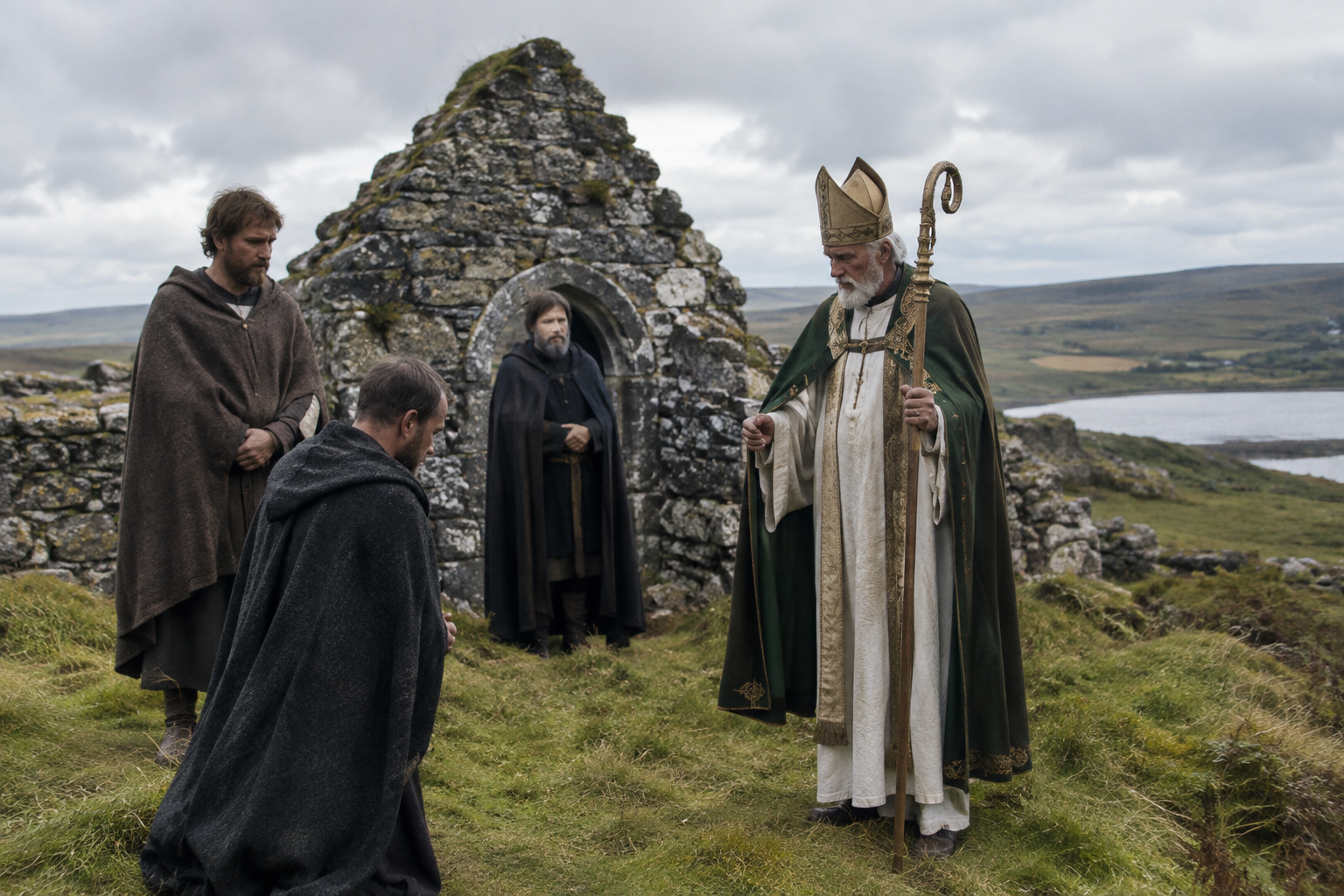
Some Y-chromosome lineages arrive in history with trumpets and banners. Others appear more quietly: one burial, one ruined castle, one cluster of men in a region whose written records are late and partisan and full of gaps. Haplogroup R1b1a1b1a1a2c1a2b3a1 belongs to that second, more intriguing category. It sits deep within the wider R1b tree, a vast paternal lineage that today is common in parts of western Europe, but this very narrow branch must not be confused with the whole of R1b history. The challenge, and the pleasure, is to ask what this specific paternal line may tell us when ancient DNA, archaeology, and medieval landscape are placed side by side.
That is worth doing because Y-DNA traces a direct paternal line only: father to son to son, across centuries. It does not describe a person's whole ancestry, culture, identity, or family tree. Still, paternal lineages can be historically revealing. They can show continuity in a region, movement between regions, and sometimes the survival of male lines through immense political change. In this case, the most suggestive setting is medieval Ireland, where ancient DNA from Roscommon and the later world of Gaelic lordship in Connacht invite us to think carefully about long-lived paternal landscapes.
The first thing to say, before anyone runs off to crown themselves a tribal king, is that R1b1a1b1a1a2c1a2b3a1 is a highly specific subclade. It belongs to the larger R1b family, but we should not lazily pour the entire prehistory of R1b into this one downstream branch. Broadly speaking, many R1b lineages are connected in ancient DNA studies with later prehistoric population changes in western Europe, especially those tied to Bronze Age expansions. But whether this exact branch formed in Ireland, arrived earlier from Britain or the Continent, or diversified locally after arrival is a question that needs evidence, not patriotic enthusiasm.
What can be said more safely is that narrow Irish and British R1b branches often make sense in the context of long regional continuity mixed with repeated episodes of movement: Bronze Age turnover, Iron Age connections across the Irish Sea, Roman-era mobility in nearby Britain, and early medieval realignments among Gaelic kingdoms. Ireland was never sealed off. Yet neither was it merely a receiving station for outsiders. Its population history is one of both contact and local persistence.
Readers interested in the bigger archaeological background to these west European paternal patterns may enjoy this broader discussion of how genetics and archaeology work together in deep time.
The most important anchor here is the ancient sample KIL026, listed as Medieval Ireland Kilteasheen Roscommon Bishops Seat Year:650 AD ID:KIL026. That is already enough to make him interesting. We are in early medieval Ireland, around the seventh century, long before the great tower houses of later Gaelic lordship and long before most families can be traced in documentary form with any confidence.
Kilteasheen, in County Roscommon, is an ecclesiastical landscape: the kind of place where early Christian Ireland, local power, learned communities, and burial practice intersect. A burial from such a setting reminds us that paternal lineages were not abstract genetic codes wandering across a map. They were carried by actual men living in a society of monasteries, kin-groups, clientship, rivalry, and regional kingship. If KIL026 belongs on the line leading toward this haplogroup assignment, he provides evidence that this paternal branch, or a very close related branch, was present in Ireland by 650 AD.
That does not make him the ancestor of any named later clan. It does something both more modest and more useful: it places this paternal heritage in the soil of early medieval Ireland. It shows that such lineages were part of the human landscape from which later Gaelic polities emerged.
If you want a wider view of how ancient DNA is reshaping our understanding of Ireland before the age of surnames, this companion article is especially relevant.
Discover Ancient Irish Kinship
Between KIL026 in seventh-century Roscommon and the later medieval world of Connacht lies a long stretch of history often flattened into cliches about Celts, clans, and heroic bloodlines. The reality was more complicated. Early medieval Ireland was a patchwork of kingdoms and sub-kingdoms, with churches, dynasties, and kin-groups competing and cooperating. Over time, some paternal lines expanded, others faded, and many merged into new political identities.
This is exactly where Y-DNA is useful if handled properly. A lineage like R1b1a1b1a1a2c1a2b3a1 may suggest continuity of male lines within an Irish regional setting across many centuries. But continuity does not mean social sameness. The men carrying related Y-chromosomes in 650 AD did not live in the same kind of world as the castle-building Gaelic elites of the fifteenth century. The chromosome can persist while everything around it changes: language shifts in status, church structures reorganize land, lordships harden, surnames stabilize, and fortifications rise in stone.
That is one of the great lessons of archaeogenetics. DNA can reveal persistence, while history shows transformation.
For readers curious about how paternal and wider genomic patterns evolved in neighboring regions after Rome and into the early medieval period, this article on Britain offers a valuable comparison.
Explore Post-Roman Britain DNA
The later historical setting supplied with this haplogroup points us to Clan Ohara and Moymlough Castle in County Galway. Here one must tread carefully. A historical association with a haplogroup is not proof that every man of a clan bore that Y-line, nor that a surviving castle can certify a genetic pedigree. Medieval and early modern families were complicated institutions, not laboratory strains.
Even so, the setting matters. Moymlough Castle is described as a late medieval tower house, probably built in the fifteenth or early sixteenth century by the O Kelly family, major Gaelic lords in the region. It stood as both defended residence and symbol of power in a landscape contested by rival families and, later, by expanding English authority. That single description tells you almost everything important about late Gaelic Ireland. These towers were homes, statements, and warnings. They projected lineage, status, and control over land.
In that context, the association with Clan Ohara is historically suggestive not because it proves a direct Y-chromosome chain from KIL026 to any named nobleman, but because it locates the haplogroup in the same western Irish world where lordship, kin identity, and territory mattered intensely. Roscommon and Galway are neighboring counties in Connacht, and that geographical closeness is worth noticing. Ancient DNA from early medieval Roscommon and the later political landscape of Galway belong to the same broad regional theater.
Moymlough's later fate is just as revealing. Like many Irish tower houses, it declined as warfare, politics, and changing tastes made such buildings less useful. By the nineteenth century it had become a romantic ruin, recorded by antiquarians including George Victor Du Noyer and the Wakeman artists. In other words, the building passed from power into memory. Castles often do that. They stop controlling the landscape and start preserving a story about it.
Readers interested in the clan named in your supplied material can continue with this closely related community feature.
So what does R1b1a1b1a1a2c1a2b3a1 reveal? At the very least, it points toward a paternal story embedded in the history of Ireland, and very likely western Ireland in particular, when read alongside KIL026 from Kilteasheen and the later historical landscape around Moymlough Castle. It hints at the endurance of male lines across the shift from early Christian burial ground to Gaelic tower house.
But there are limits, and they matter. Sharing a haplogroup with an ancient individual does not prove direct descent from him. Sharing a haplogroup with a clan association does not prove membership in that clan. And a noble family linked historically to a region does not guarantee that all branches of that family carried the same paternal lineage over centuries. Adoption, non-paternity events, cadet branches, political surname changes, and simple historical messiness all belong in the story too.
That is not a disappointment. It is, in fact, the interesting bit. Ancient DNA gives us something different from family legend. It lets us see deep paternal structure beneath the surface of recorded history. Sometimes it confirms continuity. Sometimes it shows surprising diversity. Nearly always it reminds us that the past was crowded with real people whose identities were more than a haplogroup, but whose haplogroups still help map the long human history of place.
If your own Y-DNA falls within a branch like R1b1a1b1a1a2c1a2b3a1, MyTrueAncestry can help place that lineage beside ancient individuals such as KIL026 and within the wider story of medieval Ireland. Those comparisons can offer striking historical perspective, even when they do not prove a direct genealogical link to a particular clan or castle.






Comments