Haplogroup R1b1a1b1a1a1c2b2a1b1a1a2b2a

– 5 min read


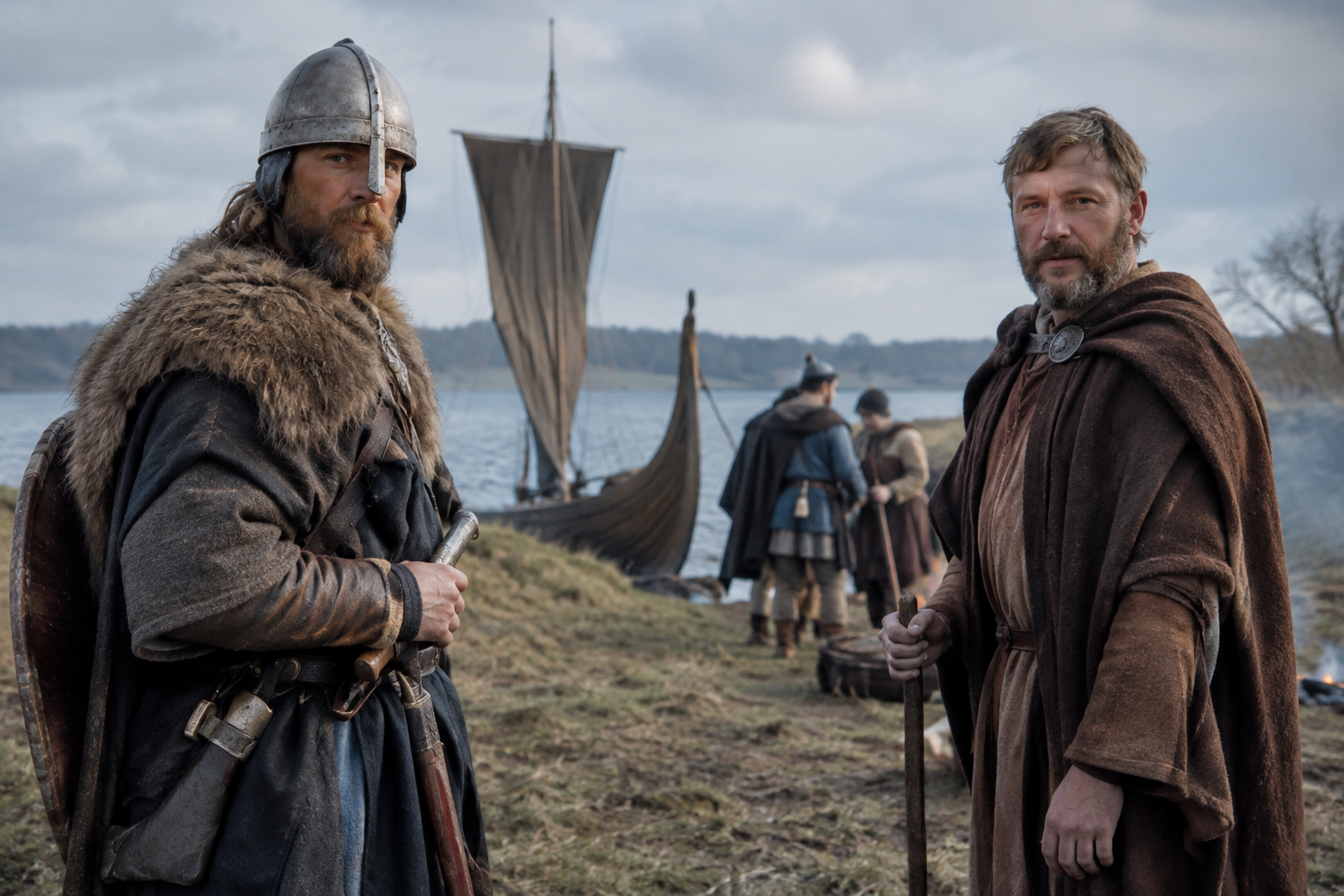
There is something wonderfully humbling about a very long Y-DNA label. R1b1a1b1a1a1c2b2a1b1a1a2b2a does not sound romantic at first glance. It sounds more like a filing error in a medieval archive. But in fact these dense strings are one of the ways genetics lets us track the direct paternal line across centuries, sometimes across astonishing distances. They are not family trees in the ordinary sense, and certainly not proof of noble descent, but they are clues: markers of one narrow thread of male-line ancestry moving through real landscapes, real burial grounds, and real historical worlds.
This particular lineage sits very deep within the wider haplogroup R1b, one of the major paternal branches found across western Eurasia and especially well represented in much of western Europe today. For a very specific downstream branch like this one, caution matters. We should not lazily pour the entire grand history of broad R1b straight into this tiny twig of the tree. Still, the available context is suggestive. The ancient samples supplied here place related paternal ancestry in the North Sea and southern Scandinavian world of the 8th century, at exactly the sort of moment when older regional lineages were being carried through new political formations, trade networks, and migrations.
Y-DNA haplogroups trace one line only: father to son to son to son. That makes them powerful for studying paternal continuity and movement, but limited too. They do not represent a person's full ancestry, culture, language, or identity. A man with this haplogroup in Viking Age Denmark and another with a related branch in medieval Devon may belong to entirely different communities, speak different languages, and share no documented genealogy at all. What they may share is a place somewhere on the same paternal map.
Broadly speaking, R1b lineages are important in the story of later prehistoric and historic Europe, and ancient DNA has shown again and again that paternal lineages could spread, contract, and diversify through major demographic changes. If you want the bigger prehistoric backdrop for northern Europe, including the long story before the Viking Age, one useful starting point is the MyTrueAncestry article on Denmark's deeper population history.
Explore Denmark's Deep Genetic Past
The most vivid evidence supplied for this haplogroup comes from two early medieval individuals. One is CGG107519, from Viking Age Denmark Sjaelland Kyndby, dated to 787 AD. The other is DRU012, from Carolingian Drantum Lower Saxony Germany, dated to 750 AD. They are close in time and not impossibly far apart in geography, but they belonged to different political and cultural settings.
Kyndby on Sjaelland places us in Denmark just before the Viking Age bursts fully into written history. This was a world of sea routes, regional lordship, shifting alliances, and communities already deeply entangled across the Baltic and the North Sea. A male-line lineage found there in 787 AD belongs to the Scandinavian zone at a crucial moment, when local ancestry and maritime mobility were beginning to reshape much of northern Europe. That does not make CGG107519 a "Viking ancestor" in the simplistic popular sense. It does, however, place this paternal branch in the right theater at the right time.
Then there is DRU012 in Drantum, Lower Saxony, dated to 750 AD, within the Carolingian world or on its frontier. Lower Saxony was no quiet backwater. It was a contact zone: Saxon, Frankish, coastal, inland, and tied into the long afterlife of Roman and post-Roman movement in northern Europe. A related paternal lineage appearing here suggests not a single tribe with a neat genetic label, but a northern European male line present on both sides of the waters linking Denmark and northern Germany.
That matters because ancient DNA often reveals what medieval texts blur. Written sources love categories like Dane, Saxon, Frank, or Norman. Genetics reminds us that populations were not arranged in tidy boxes. Related paternal lines could persist through different kingdoms and changing identities. For a broader look at just this sort of complexity, the article on Viking Age population history is well worth a read.
Once you begin in Sjaelland and Lower Saxony, the later appearance of associated families in Sweden and England feels less surprising. Not because we can draw a direct line from those ancient burials to named noble houses - we cannot - but because the geography makes historical sense. The North Sea and Baltic were not barriers. They were highways.
The supplied noble associations are revealing in that respect. One is Riddarhuset Uggla, pointing toward the Swedish noble world preserved in the House of Nobility. The input provides no location details beyond that prompt-like fragment, so it would be irresponsible to invent a seat or castle history. Still, the Uggla name belongs in the context of Swedish aristocratic memory, where noble identity was recorded, displayed, and formalized in a kingdom whose medieval and early modern elite grew out of older Scandinavian social landscapes. The significance here is contextual: if a paternal branch has roots in the Scandinavian sphere in the 8th century, it is not difficult to see why later Swedish noble associations might become part of its modern historical imagination.
For readers interested in that Swedish setting, the MyTrueAncestry community already has a dedicated piece on the family itself.
The second family is easier to place on the map. The House of Cruwys is tied to Cruwys Morchard in mid Devon, a small parish whose history, as supplied, reaches back to the Norman family of Cruwys who held the manor after the Conquest. This is not a great frontier fortress looming over a river crossing. It is in some ways more interesting than that. Cruwys Morchard represents the long continuity of local power in the English countryside: manor, church, scattered settlement, landholding family, and the slow persistence of place-name and identity.
The church of St Mary, noted as the historic centre, anchors the sort of landscape where genealogy and archaeology constantly brush against one another. The Norman Conquest did not wipe the slate clean in England. It layered new elites over older populations, and the result was centuries of interwoven ancestry. A paternal lineage associated today with a family like Cruwys might reflect Norman, insular, Scandinavian-connected, or other northwestern European male ancestry somewhere further back. But one must be precise: the family association does not prove that every historical Cruwys male carried this exact branch, nor does the haplogroup prove descent from the manor-holding line.
Still, the setting is splendidly evocative. Devon's manorial world, shaped by conquest and continuity together, is exactly the sort of place where ancient lineages could be carried into historical surnames. If that intersection of Norman settlement, local English ancestry, and medieval family formation interests you, this related piece offers a useful parallel.
What makes R1b1a1b1a1a1c2b2a1b1a1a2b2a interesting is not that it comes with a ready-made saga. It is interesting because it does not. Instead, it gives us something truer and more historically useful: a narrow paternal signal appearing in the early medieval North, in Denmark and Lower Saxony, and later echoed in the historical associations of families rooted in Sweden and Devon.
The lesson is a good one. Ancient DNA does not replace archives, chronicles, parish records, or archaeology. It changes the questions we ask of them. A burial like CGG107519 from Kyndby or DRU012 from Drantum is not a mascot for a modern surname project. He is a real man from a real community, and his Y-chromosome happens to preserve one sliver of the population history around him. Noble houses, manors, and heraldic traditions preserve another kind of memory. Put the two together and you begin to see not a fantasy of direct descent, but a layered map of continuity, migration, and local survival.
If your own Y-DNA falls on a branch like this, MyTrueAncestry can help place that paternal line within the wider archaeological record, showing where related ancient individuals and historical populations appear. That will not prove that you descend from a Viking in Sjaelland, a Carolingian-era man in Lower Saxony, or a noble house in Sweden or Devon. But it may show you that your paternal ancestry belongs to the same long historical landscape.
Upload your DNA to MyTrueAncestry and explore whether your results connect you with ancient samples, medieval regions, and the deep paternal history behind names, manors, and kingdoms.






Comments