Haplogroup Q1b1a2a1c

– 4 min read


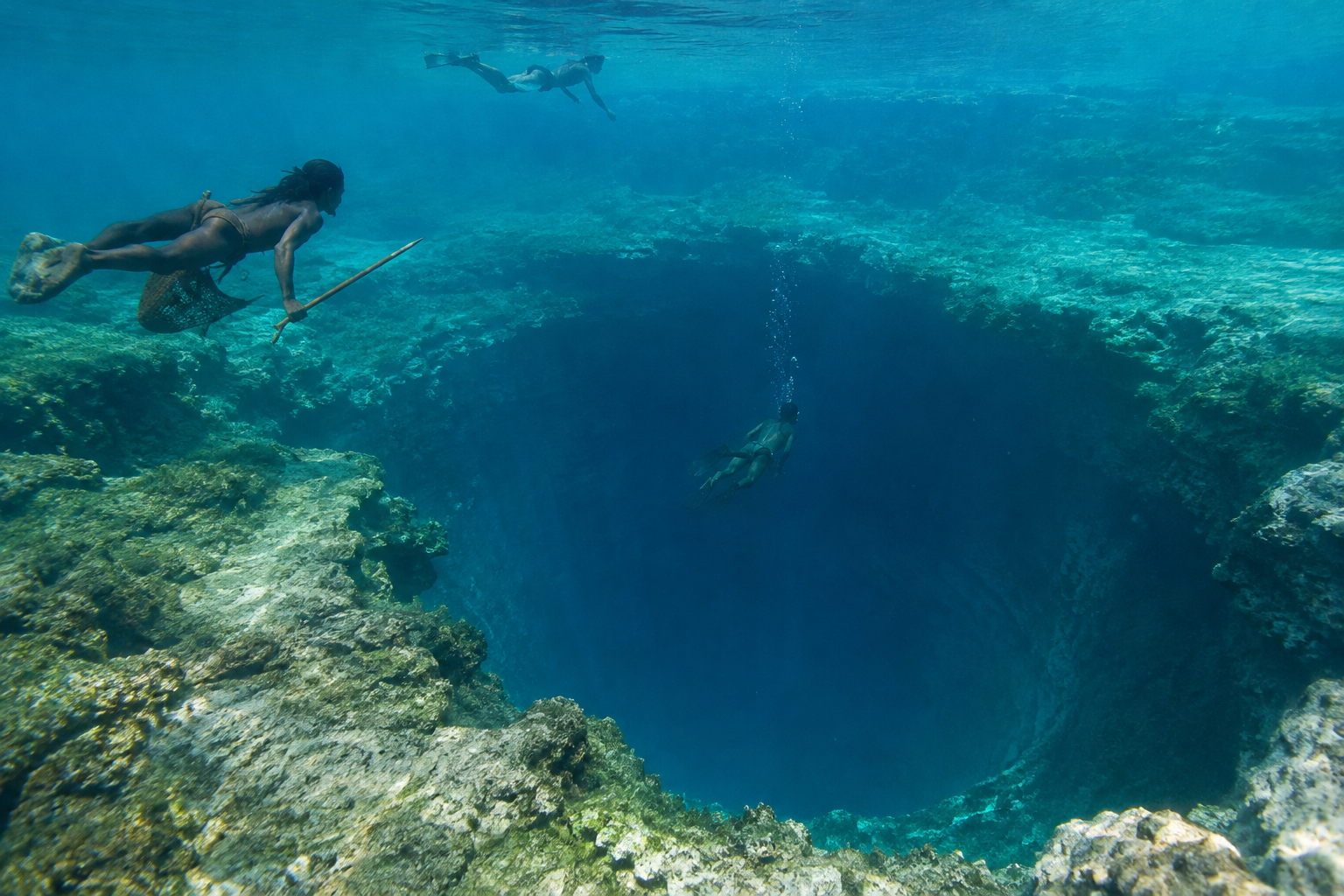
In the pre-Columbian Bahamas, one of the most arresting ancient DNA finds comes not from a palace, a battlefield, or a famous royal tomb, but from a blue hole on South Andros. The individual identified as I14879, dated to around AD 1320, links the Y-DNA haplogroup Q1b1a2a1c to a Lucayan-era island world that was already old, connected, and fully human in all the ways archaeology keeps reminding us of.
That matters because Q lineages occupy a special place in the paternal history of the Indigenous Americas. Yet the exact branch named here, Q1b1a2a1c, is not a grand label for all Native American men, nor a shortcut to ethnicity. Y-DNA traces one direct paternal line only. What makes I14879 interesting is that this one line appears in a real, datable Caribbean individual from just over a century before Columbus reached the region.
The South Andros Blue Hole Sanctuary has become one of the most evocative archaeological settings in the Caribbean. Blue holes are natural sinkholes, often flooded, and in the Bahamas they have preserved remarkable traces of past lives. In this case, the site produced pre-Columbian human remains from the Lucayan world of the northern Caribbean archipelago.
Sample I14879 belongs to that setting. The date of about AD 1320 places him in the late pre-contact period, when the Bahamas were inhabited by communities descended from peoples who had moved northward through the Antilles from mainland regions of the Americas. For a Y-chromosome lineage such as Q1b1a2a1c, this is precisely the sort of evidence that helps turn broad migration models into something more tangible: not just a map arrow, but an actual man at an actual place.
A major ancient DNA study of the Caribbean, published in Science, helped clarify how pre-Columbian island populations were related to one another and to mainland American groups. Even when a paper's main emphasis is population structure rather than any single haplogroup label, that wider context is crucial. It shows that the Bahamas were not some isolated cul-de-sac of history, but part of a chain of movement, kinship, and settlement stretching across the Caribbean.
Haplogroup Q is one of the principal Y-DNA lineages associated with the peopling of the Americas. That much is well established at the broad level. But broad level is the phrase to keep in mind. The branch Q1b1a2a1c is a much narrower designation, and it should not be loaded with more historical certainty than the evidence can bear.
For I14879, the significance of the branch is local and concrete. It shows that this paternal lineage was present among pre-Columbian inhabitants of the Bahamas in the centuries immediately before European invasion. It does not by itself tell us the language he spoke, the exact island-to-island route by which his paternal ancestors arrived, or whether his family had lived on Andros for generations. Genetics gives one line of descent; archaeology and history have to do the rest of the work.
Still, one should not underestimate the force of even a single secure placement. Caribbean preservation is often difficult, which is exactly why each successful result counts for so much. A haplogroup assignment from a pre-contact Bahamian individual is not just a label in a tree. It is evidence that the paternal diversity of Indigenous Caribbean communities can be recovered at all.
There is an old habit in popular history of treating islands as remote by default, as though sea meant separation first and connection second. The archaeology of the Caribbean suggests almost the reverse. Canoe travel, inter-island exchange, and long cultural continuities made these islands part of a maritime world. By the time I14879 lived, people in the Bahamas were participating in networks that had been developing for centuries.
That broader setting helps explain why a lineage such as Q1b1a2a1c in the Bahamas is historically plausible without needing a melodramatic migration tale. The most defensible interpretation is that this paternal line formed part of the Indigenous population structure of the region before European disruption. In other words, the lineage belongs to the real human geography of the late pre-Columbian Caribbean, not to a romantic afterthought.
Genetic work on the Caribbean has also highlighted ties between island populations and mainland American ancestry streams. Those findings fit well with the archaeological picture of settlement moving through the Antilles over time. They do not reduce the Bahamas to a mere endpoint, though. Communities there developed their own island histories, identities, and local traditions.
Pre-Ceramic Caribbean Continuity
It is tempting to think one sample is too little. In one sense, of course it is: no single individual can stand for an entire people. But in another sense, I14879 is exactly the kind of find that ancient DNA depends on. He anchors a specific paternal lineage to a specific place and period. That is how larger historical pictures are built.
For the Bahamas, this is especially valuable because written records begin only with European arrival, and by then Indigenous lifeways were already facing catastrophic upheaval. Ancient DNA therefore helps restore part of the pre-contact record on Indigenous terms. It lets us glimpse the biological history of communities before forced migration, enslavement, disease, and colonial violence shattered the older demographic landscape.
That is also why Caribbean archaeology needs to be read with some moral seriousness. These are not just technical results. They concern populations whose descendants and historical memory were profoundly affected by conquest. A lineage like Q1b1a2a1c, found in a man from South Andros before that rupture, belongs to that lost and recoverable world.
Deep Diversity in the Americas
If your own Y-DNA falls under Q1b1a2a1c, the clearest lesson from this evidence is not a grand claim of rank or a neat ethnic badge. It is something subtler, and in a way more interesting: this branch is documented in the pre-Columbian Caribbean, in an individual from South Andros living around AD 1320. That places the lineage within the Indigenous male ancestry of the Americas and, more specifically, within the island history of the Bahamas before European contact.
As more ancient DNA emerges from the Caribbean, the picture will become sharper. For now, I14879 gives Q1b1a2a1c a firm archaeological foothold in a world of seaways, island communities, and pre-contact American history that deserves to be seen on its own terms.






Comments