Haplogroup N1a2b

– 5 min read


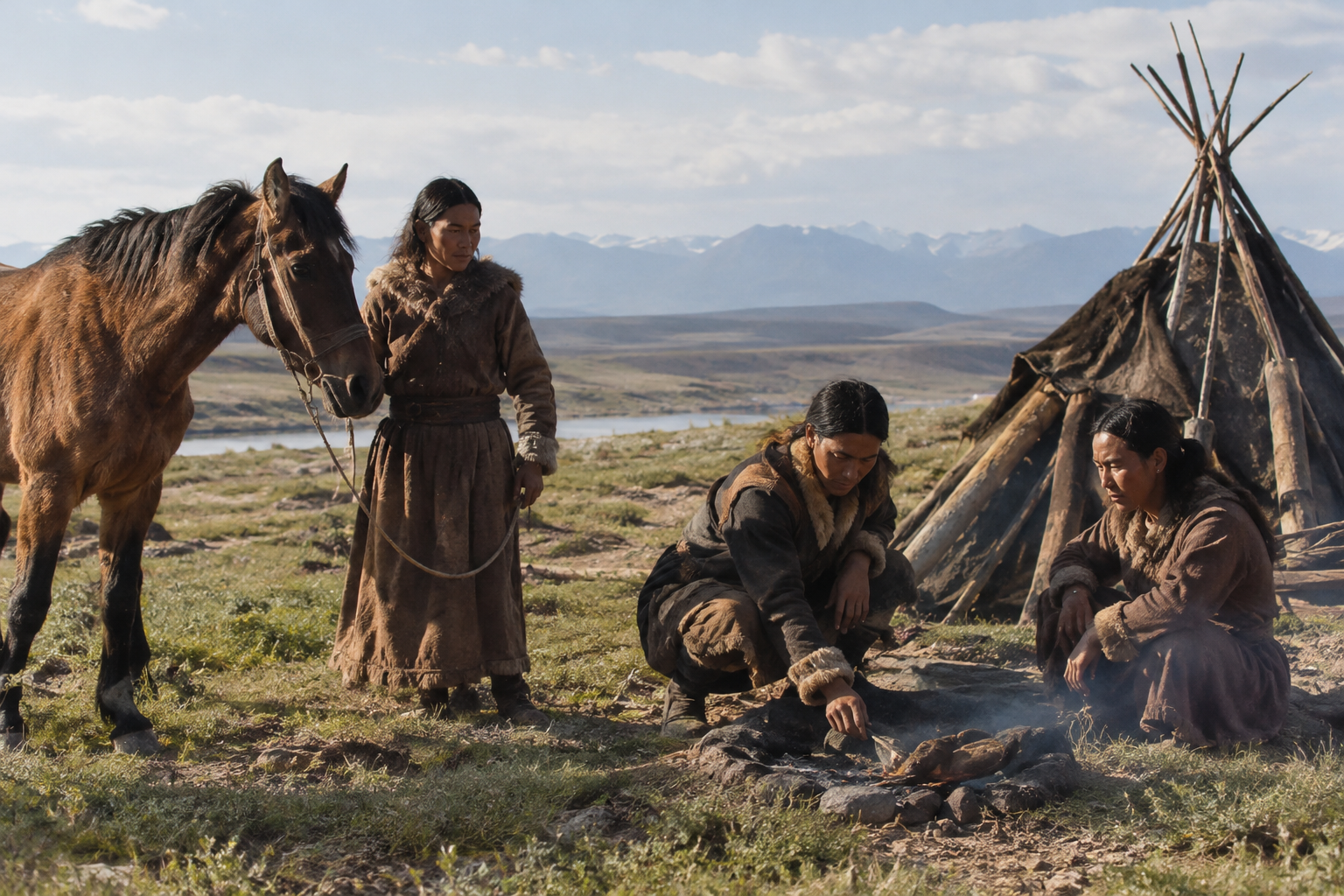
One of the clearer ancient signposts for Y-DNA haplogroup N1a2b comes from the Trans-Baikal region, east of Lake Baikal, where an individual identified as yak030 is dated to around 1000 BC. That is already an arresting setting: not a famous imperial court or a neatly documented medieval pedigree, but the Bronze Age world of northeastern Eurasia, where steppe, forest, and river routes met and where later histories of Siberian and Inner Asian peoples would unfold.
The importance of yak030 is not that one burial can explain an entire lineage. It cannot. But it does place this paternal branch in a region that matters enormously for the deeper history of northern Eurasia. Haplogroup N in its wider sense is one of the major Y-chromosome lineages associated with populations spread across Siberia, parts of Inner Asia, and later much of northeastern Europe. N1a2b is a narrower branch within that wider family, and the appearance of a Bronze Age Trans-Baikal individual linked to it helps anchor that history in a real archaeological landscape.
The Trans-Baikal zone is one of those regions that can look remote on a modern map yet was anything but isolated in prehistory. It connected the Baikal world to Mongolia, the eastern steppe, and the forested north. People, animals, technologies, and languages moved through this broad corridor over many centuries, and ancient DNA has increasingly shown that it was a place of mixture as well as continuity.
That makes yak030 more than a technical label. A male lineage found here around 1000 BC belongs to a period when Bronze Age societies across northern Asia were already linked into wider systems of mobility. We should be careful not to turn a Y-chromosome result into an ethnic badge, but it is fair to say that a paternal line such as N1a2b sits comfortably within the larger archaeological story of northern Eurasian populations whose histories were shaped by movement across river basins, taiga margins, and steppe frontiers.
It is worth pausing over the genetics, because haplogroup labels can easily encourage overconfident storytelling. Y-DNA follows one direct paternal line only: father to son to son across time. That makes it wonderfully precise for one narrow thread of ancestry, but it does not summarize a whole person, still less a whole people.
In the broader picture, haplogroup N is strongly associated with northern Eurasia and is especially important in discussions of Siberian populations and, later, several Uralic-speaking and other northeastern European groups. But a parent haplogroup's full range should not simply be pasted onto one smaller subclade. For N1a2b, the safest claim here is the specific one: by the Late Bronze Age, a lineage associated with this branch was present in the Trans-Baikal region.
That geographical placement is meaningful because it sits in the eastern part of the great distribution of haplogroup N lineages. It suggests that when people with N1a2b trace their paternal ancestry today, they are looking toward a story rooted in northern Asia rather than one that begins in the historical states of Europe or the classical Mediterranean.
Ancient DNA articles sometimes tempt us into thinking a single sample is a solved biography. In reality, yak030 is most useful as evidence of presence. It shows that a branch tied to N1a2b existed in the Trans-Baikal archaeological record by around 1000 BC. That is a sturdy finding. What it does not do on its own is reveal the exact language, social identity, or later descendants of that individual.
Still, presence matters. Archaeologists often work by patiently pinning human histories to time and place, one grave or settlement at a time. The value of a sample like yak030 lies precisely in that modesty. It narrows the map. It tells us that this paternal branch was not merely a modern pattern inferred from living populations; it was already part of the human landscape of eastern Siberia in the Bronze Age.
A wider ancient DNA study of populations in this region, published in research on the Lake Baikal and northeastern Eurasian ancient genomic record, helped establish how dynamic these northern populations were across long spans of time. Even without forcing every detail onto one sample, that work supports the larger point: this was a zone of deep local history as well as repeated interaction.
When we widen the lens, N1a2b becomes interesting not because it can be attached to one famous dynasty, but because it belongs to a set of paternal lineages that illuminate the making of northern Eurasia. Regions around Baikal, the Altai, the forest-steppe, and the far northern river systems were not marginal sidelines to history. They were engines of population formation.
Over the long term, lineages within haplogroup N appear in discussions of movements that linked Siberia with populations farther west. That does not mean every man carrying N1a2b followed the same route or participated in the same historical expansions. But it does place this haplogroup in one of the most consequential demographic arenas of Eurasian prehistory: the belt stretching from the Baikal world toward the Urals and beyond.
This is one reason ancient DNA has changed the conversation so dramatically. Older historical writing often treated Inner Asia and Siberia as background scenery to events happening elsewhere. Genetics, when combined with archaeology, has made that view much harder to sustain. The Bronze Age man yak030 stands as a small but firm reminder that the eastern side of Eurasia was generating lineages and communities that would matter for millennia.
There are no supplied noble houses, castles, or dynastic pedigrees here, and that is really to the good. With some haplogroups, later family history can be illuminating; with others, it distracts from the stronger evidence. For N1a2b, the genuinely interesting material lies earlier and farther east, in the archaeology of northern Asia.
That also makes this lineage a useful corrective to a familiar habit in popular ancestry writing: the assumption that significance depends on crowns, coats of arms, or medieval surnames. In fact, a Bronze Age sample from the Trans-Baikal may tell us something more fundamental. It locates a paternal branch in a formative prehistoric world, before written chronicles and long before later political borders tried to tidy Eurasia into separate boxes.
So what does haplogroup N1a2b most responsibly suggest? Not a ready-made identity, and certainly not a guaranteed link to one named people. What it does suggest is a paternal history tied to the northern and eastern reaches of Eurasia, with Bronze Age evidence in the Trans-Baikal region offering a tangible early foothold. For anyone researching this haplogroup today, that is the real prize: not fantasy ancestry, but a documented connection to one of the great prehistoric contact zones of the Eurasian north.






Comments