Haplogroup I2a1b1a2b1a2a1a1a1a1a1c

– 6 min read


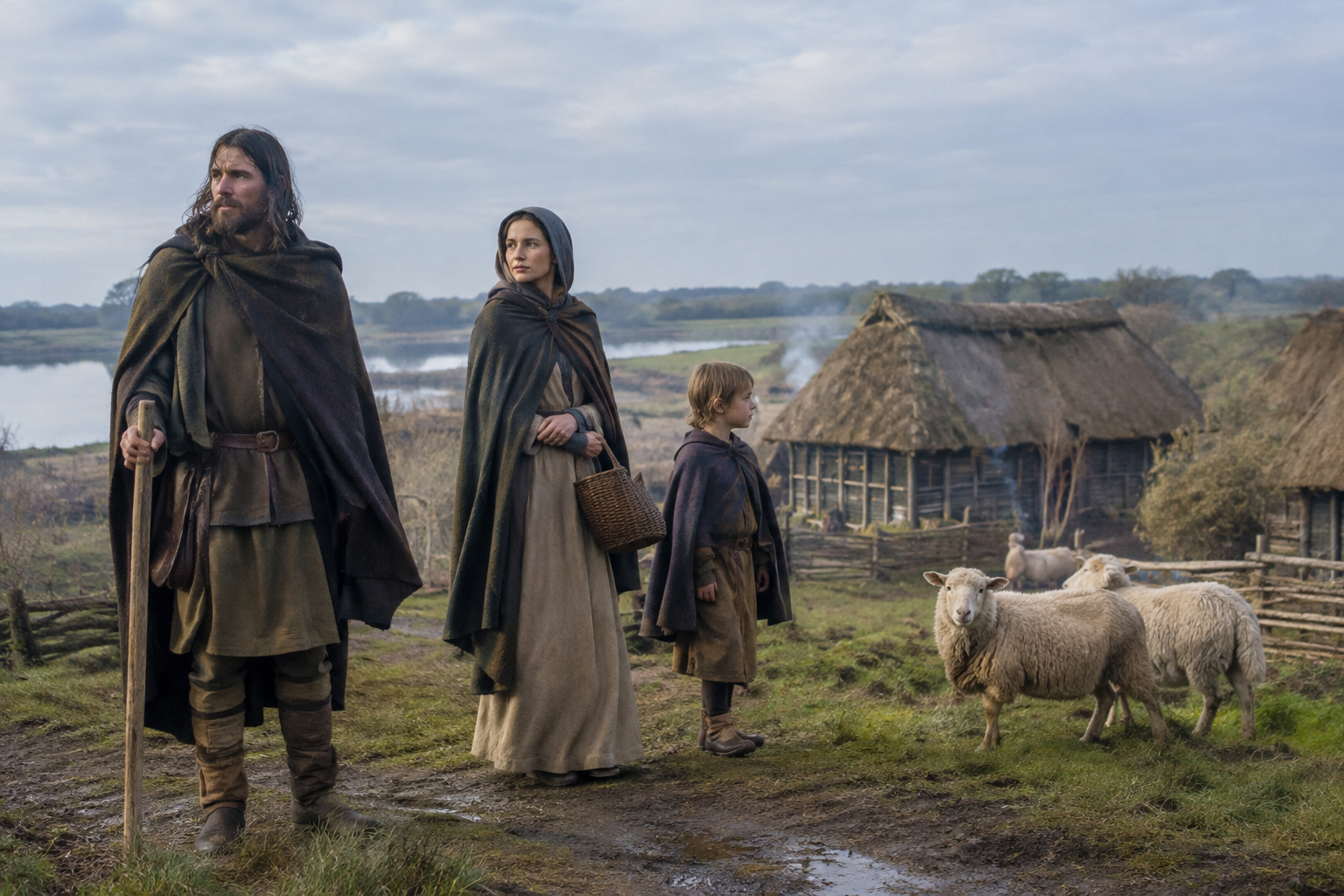
Some Y-chromosome lineages arrive in history with trumpets. Others turn up more quietly: one man in an early medieval cemetery, one branch on a very long genetic tree, one clue that only starts to make sense when archaeology and written history are placed side by side. Haplogroup I2a1b1a2b1a2a1a1a1a1a1c belongs firmly to that second category. It is so specific a branch that the temptation is to tell too neat a story about it. Better not to. What makes it interesting is precisely that it sits deep within a broader European paternal lineage, while our direct evidence for this exact twig is still limited.
That is worth saying plainly at the start. Y-DNA haplogroups trace a direct paternal line: father to father to father, across many generations. They do not describe a person's full ancestry, culture, language, or social identity. Nor does sharing a haplogroup automatically prove close kinship. But when a rare or highly specific branch appears in ancient DNA, it gives us a sharply focused glimpse into one strand of the male past - and in this case, that glimpse leads us to early medieval England, and later to the historic landscapes of Yorkshire and the House of Lascelles.
This haplogroup belongs within haplogroup I, one of the major European Y-chromosome families, and more specifically within the I2 branch. Broadly speaking, lineages in I and I2 have deep roots in Europe and appear in many discussions of prehistoric and historic European paternal ancestry. But caution matters here: the broad history of I2 is not the same thing as the proven history of the much narrower branch I2a1b1a2b1a2a1a1a1a1a1c. The further down the tree one goes, the more local, recent, and patchy the evidence often becomes.
What we can say responsibly is that this lineage belongs to a family of paternal branches that have been part of Europe's long population history, surviving major changes that reshaped the continent: the arrival of farming, Bronze Age mobility, Roman imperial movement, and the mixed settlements of the early medieval world. Ancient DNA has made those transformations visible in a way older history books simply could not.
How ancient DNA decodes history
In Britain especially, Y-chromosome evidence rarely lines up tidily with old labels such as "Celtic," "Roman," "Anglo-Saxon," or "Viking." Real populations were more mixed, more mobile, and more local than those grand names suggest. A single paternal branch might persist through several cultural changes without anyone noticing at the time. That is part of the fascination here.
The most important anchor in the supplied evidence is LAK015, from Lakenheath, Suffolk, England, dated to 650 AD. That date places him in the early medieval period, in the centuries after Roman rule had ended and while eastern England was being shaped by new kingdoms, shifting allegiances, Christian conversion, and migration across the North Sea.
Now, one must be careful not to turn LAK015 into a mascot for an entire people. He was an individual, not a tribe. But he matters because men like him show how ancient DNA can illuminate the social world of seventh-century England from the ground up. At that date, Suffolk lay in a region deeply connected to the kingdom of East Anglia, a landscape of settlements, cemeteries, marshes, river routes, and coastal contacts. A Y-line found there tells us that this paternal branch, or one very close to it, was present in early medieval eastern England.
That does not prove where his paternal ancestors had lived centuries earlier, nor does it prove direct descent to any later family. What it does offer is a fixed point: this lineage was part of the human reality of England in 650 AD, not merely a modern testing result floating free of context.
Explore ancient DNA in post-Roman Britain
And there is a larger lesson here. Early medieval England was not populated by genetically uniform blocs marching under ethnic banners. Ancient cemeteries show variety - in ancestry, in burial custom, and in kinship structure. The Y-chromosome can identify one paternal line, but it works best when read alongside archaeology, isotopes, and the wider genome. LAK015 is important not because he solves everything, but because he reminds us how specific and human the evidence really is.
If we step back from one burial and look at the longer landscape, eastern England is exactly the sort of place where old lineages and new arrivals could meet. Roman Britain had already drawn soldiers, traders, administrators, craftspeople, and families from across the empire. After Rome's political withdrawal, the region remained tied to the North Sea world. The result was not a clean replacement of one population by another, but a messy, local, centuries-long reworking of communities.
That is why a paternal lineage like this one should not be assigned too quickly to a single named migration. It may represent continuity from earlier populations. It may reflect movement during late Roman or post-Roman centuries. It may have spread through small-scale family networks rather than dramatic invasions. With a branch this specific, the honest answer is often that the broad setting is clear, while the exact route remains uncertain.
Still, that uncertainty is productive. It pushes us away from myths of pure origins and toward something more plausible: villages, marriages, inheritance, local prestige, and the stubborn survival of paternal lines across political upheaval.
Read about Anglo-Saxon era ancestry
Much later, and in a very different register of history, the supplied noble association brings us to the House of Lascelles and Harewood House near Leeds in Yorkshire. Here the story shifts from burial grounds to estate landscapes, from excavated bone to polished stone, plasterwork, and parkland. Harewood House was built between 1759 and 1771 as the grand seat of the Lascelles family. It was designed by John Carr, with interiors by Robert Adam and grounds shaped by Capability Brown.
But Harewood cannot be described honestly as just another beautiful great house. The wealth behind it was tied to the Atlantic slave trade and Caribbean plantations. That fact matters. Aristocratic houses often present themselves as serene embodiments of lineage and taste; archaeology and history are there to spoil the illusion a bit, as they should. Harewood was a seat of status, politics, collecting, and family ambition, but also part of a much wider imperial economy built on coercion and inequality.
Its estate also reflects another truth historians sometimes neglect when dazzled by dynasties: great houses depended on many other lives. Servants, laborers, tenants, craftsmen, and estate workers kept such places functioning. In that sense, the contrast with ancient DNA is rather striking. Genetics often recovers the unnamed; aristocratic archives preserve the famous. Together they make a fuller history.
We should be especially careful, though, with any genetic implication. The presence of this haplogroup in an article associated with the House of Lascelles does not prove that every Lascelles male carried it, nor that LAK015 was an ancestor of that family, nor that Harewood House offers genetic evidence of anything at all. The connection is contextual and historical, not demonstrated genealogical descent.
Discover the House of Lascelles
So what do we gain by placing a seventh-century man from Suffolk beside an eighteenth-century Yorkshire estate? Not a family tree, certainly. Something more interesting. We see how paternal lineages can endure across vast changes in language, religion, class, and power. The man buried as LAK015 belonged to a world of small kingdoms and local communities. Harewood House belonged to a world of empire, finance, architecture, and display. Between them lies more than a thousand years of English history.
Y-DNA cannot fill in all those missing centuries. Written genealogy often cannot either. But together with archaeology, it helps us think across them. Ancient DNA tells us that paternal lines present in medieval and modern populations were already embedded in real communities long before surnames, heraldry, or stately homes. Noble families preserve one kind of memory; graves preserve another.
And perhaps that is the real interest of a lineage as specific as I2a1b1a2b1a2a1a1a1a1a1c. It is not a badge of identity so much as a thread. Follow it carefully and it leads not to simplistic answers, but to better questions about continuity, migration, status, and the people who usually vanish from conventional history.
See Roman and early medieval Britain through DNA
For anyone who carries this branch today, the excitement is obvious. A lineage like this may connect your direct paternal line to deep European history and, in broad geographic terms, to places like early medieval England. But the limits are just as important as the possibilities. A shared haplogroup does not prove descent from LAK015. It does not prove noble ancestry. It does not assign you a medieval ethnicity. What it does do is place one narrow paternal line inside a documented human past.
That is the pleasure of ancient DNA at its best. It brings us down from legend to evidence, and then back up again to a more thoughtful sort of imagination.
If you want to explore whether your own DNA shows links to ancient individuals, historic populations, or paternal lines that appear in the archaeological record, MyTrueAncestry offers a remarkable way into that past. The comparisons may reveal striking connections, while still stopping short of claiming direct descent or membership in a noble house.






Comments