Haplogroup I2a1b1a2b1a1

– 5 min read


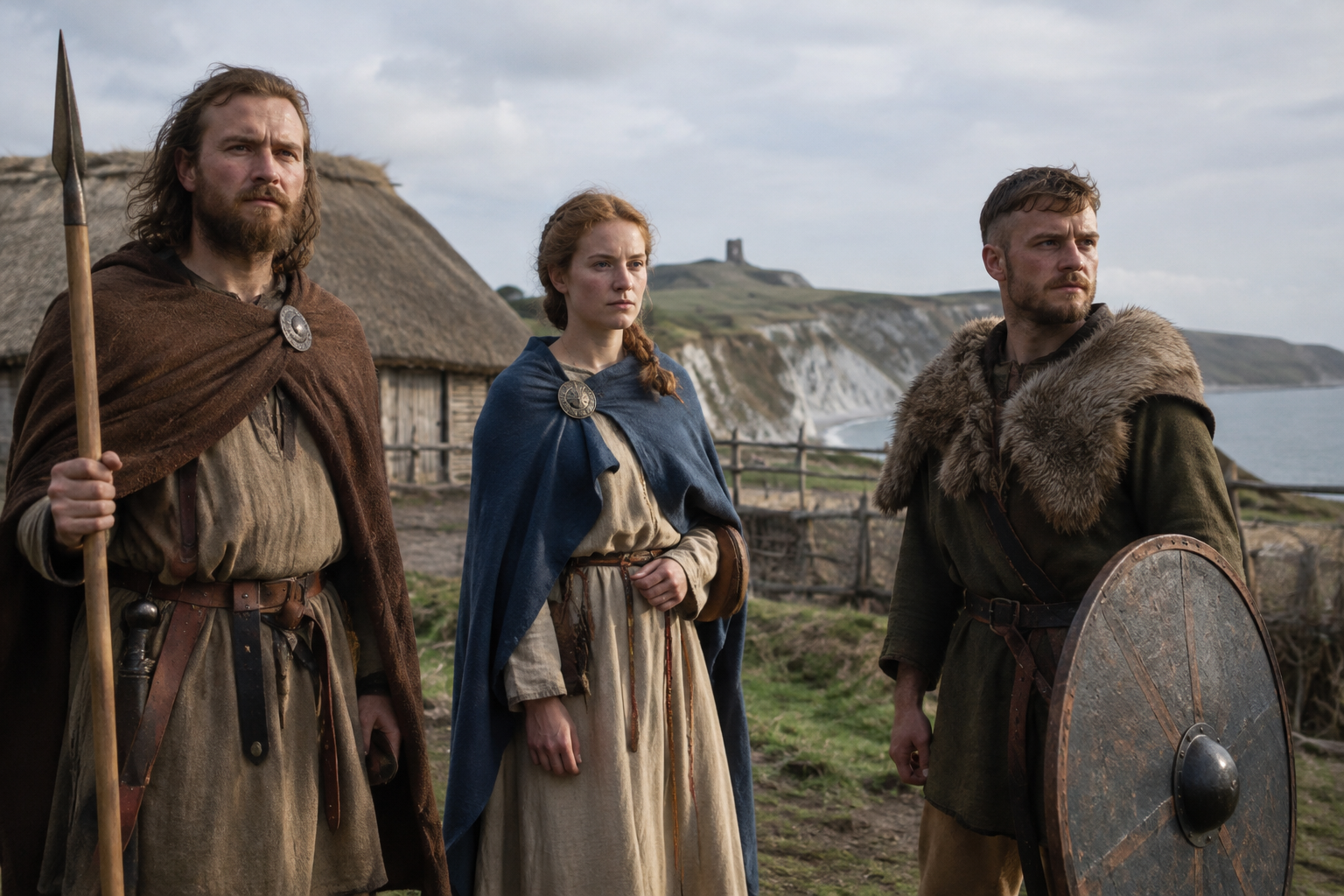
In Obermoellern in Thuringia, one excavated man dated to about AD 1050, sample OBM042, places haplogroup I2a1b1a2b1a1 squarely inside the world of the medieval western Slavs. That is already interesting, because this is not a lineage floating in the abstract. Here it appears in a documented central European setting, at a time when frontiers, lordship, language, and identity were being renegotiated across the old eastern edge of the German kingdom.
The value of a find like OBM042 is not that it lets us pin one Y-chromosome line to one people forever. Y-DNA traces a direct paternal line only, not a person's whole ancestry. But when the same branch turns up in more than one early medieval context, and in different regions around the North Sea and central Europe, it begins to look less like an isolated curiosity and more like a thread running through the complicated human history of post-Roman and medieval northern Europe.
By the 11th century, Thuringia sat close to zones where Slavic-speaking communities, expanding Christian institutions, and German-speaking polities met and overlapped. A man like OBM042, classified as Western Slav and dated to around AD 1050, belongs to that historical landscape. The significance here is geographical as much as genetic: this branch is present in a region often discussed in terms of movement, settlement, and political incorporation during the early and high Middle Ages.
Ancient DNA studies from medieval central Europe increasingly show that such frontier regions were not simple ethnic blocks. They were lived-in places, with families remaining, marrying, moving, and adapting over generations. In that sense, a lineage like I2a1b1a2b1a1 is best understood not as a tribal badge, but as one paternal strand preserved within the populations that archaeology and written sources later identify as western Slavic.
A broader research project linked to these medieval remains can be followed through this ancient DNA study archive, which helps place individuals like OBM042 into the much larger effort to reconstruct population history from excavated burials.
Ancient DNA and Slavic populations
The same haplogroup becomes even more intriguing when we move back several centuries and cross the Channel. Sample BUK053, dated to about AD 400 and identified as Jute or early Anglo-Saxon period from Buckland, Dover, places this paternal line in one of the classic zones of early migration-period England.
Dover is not just any place on the map. It was one of the obvious gateways between Britain and the continent, and Buckland has long mattered to archaeologists studying the early medieval transformation of southeast England. To find a carrier of I2a1b1a2b1a1 in that context suggests that this paternal branch was present among the communities involved in the North Sea world of the 5th century, whether we describe them in older terms as Jutes, or more broadly as part of the early Anglo-Saxon cultural horizon.
That does not mean everyone in early Anglo-Saxon Kent shared the same ancestry, and in fact the opposite is true. One of the clearest lessons from recent genomics is diversity. An ancient DNA study examining the formation of the early English gene pool, available here at this research publication, helped underline how migration into post-Roman Britain involved both substantial continental ancestry and a great deal of local and regional variation.
So BUK053 matters because it gives this haplogroup a securely early medieval foothold in England, in a place deeply tied to the first centuries of Anglo-Saxon settlement.
A second English example, LAK001 from Lakenheath in Suffolk, dated to about AD 650, pushes the story forward into a more established early medieval landscape. By the 7th century, eastern England was no longer merely a zone of arrival. Kingdoms had formed, cemeteries were developing longer local histories, and communities that once looked new in archaeological terms were becoming rooted.
This is exactly why LAK001 is useful beside BUK053. The Dover sample belongs near the beginning of the Anglo-Saxon period in England; the Suffolk sample sits later, when those migrant and locally mixed communities had already become part of the social fabric of early English life. The presence of the same haplogroup in both settings hints at persistence across time rather than a one-off appearance.
Suffolk, of course, is one of the great counties of early medieval archaeology, and ancient DNA has been especially valuable there because it lets us compare material culture with biological relationships without pretending they are the same thing. A burial can look culturally "Anglo-Saxon" without telling us a simple story of origin. Y-DNA adds one line of evidence, and LAK001 shows that the branch remained present in eastern England well after the first migration wave.
Roman and early medieval Britain
The awkward-looking label matters because it is specific. I2a1b1a2b1a1 is not the same thing as haplogroup I as a whole, nor even all of I2. Those broader parent branches have very deep histories in Europe and show up in many different times and places. The narrower branch in this article should be treated much more carefully.
With the evidence here, the safest thing to say is that this paternal line appears in three early medieval contexts stretching from southern England to central Germany: an early 5th-century burial at Buckland in Dover, a 7th-century burial at Lakenheath in Suffolk, and an 11th-century western Slavic individual in Thuringia. That distribution fits a world of North Sea contacts, continental settlement histories, and later medieval central European populations. It does not justify claiming a single ethnic identity, a single migration event, or a single homeland for every man carrying the branch.
Still, there is a historical shape to the evidence. These are not random global appearances. They sit in places closely tied to the post-Roman rearrangement of northern Europe: migration into Britain, consolidation of early English communities, and medieval Slavic presence in central Germany.
Taken together, the samples suggest a lineage that was at home in the broad interaction zone linking the continent and eastern England in the early Middle Ages. Dover and Suffolk belong to the maritime side of that picture. Thuringia belongs to the inland side, where populations later classified as Slavic and Germanic met under changing political conditions.
That pattern is worth pausing over. Histories of early medieval Europe are still too often told as if peoples moved about like labeled blocks on a schoolroom map. Ancient DNA keeps spoiling that simplicity. One paternal lineage can be found in contexts described as Jutish, Anglo-Saxon, and western Slavic, not because labels are useless, but because real populations were mixed, mobile, and historically entangled.
North Sea migrations to Britain
If your paternal line belongs to I2a1b1a2b1a1, these ancient matches point toward a branch with documented early medieval presence on both sides of the North Sea and later in central Europe's Slavic frontier zone. The strongest insight is not a grand claim of one people or one kingdom, but something more historically credible: this was a living paternal line within the unsettled, connected societies that emerged after Rome, survived in early England, and remained present in medieval central Europe.

Comments