Haplogroup I2a1a2b1a1

– 6 min read


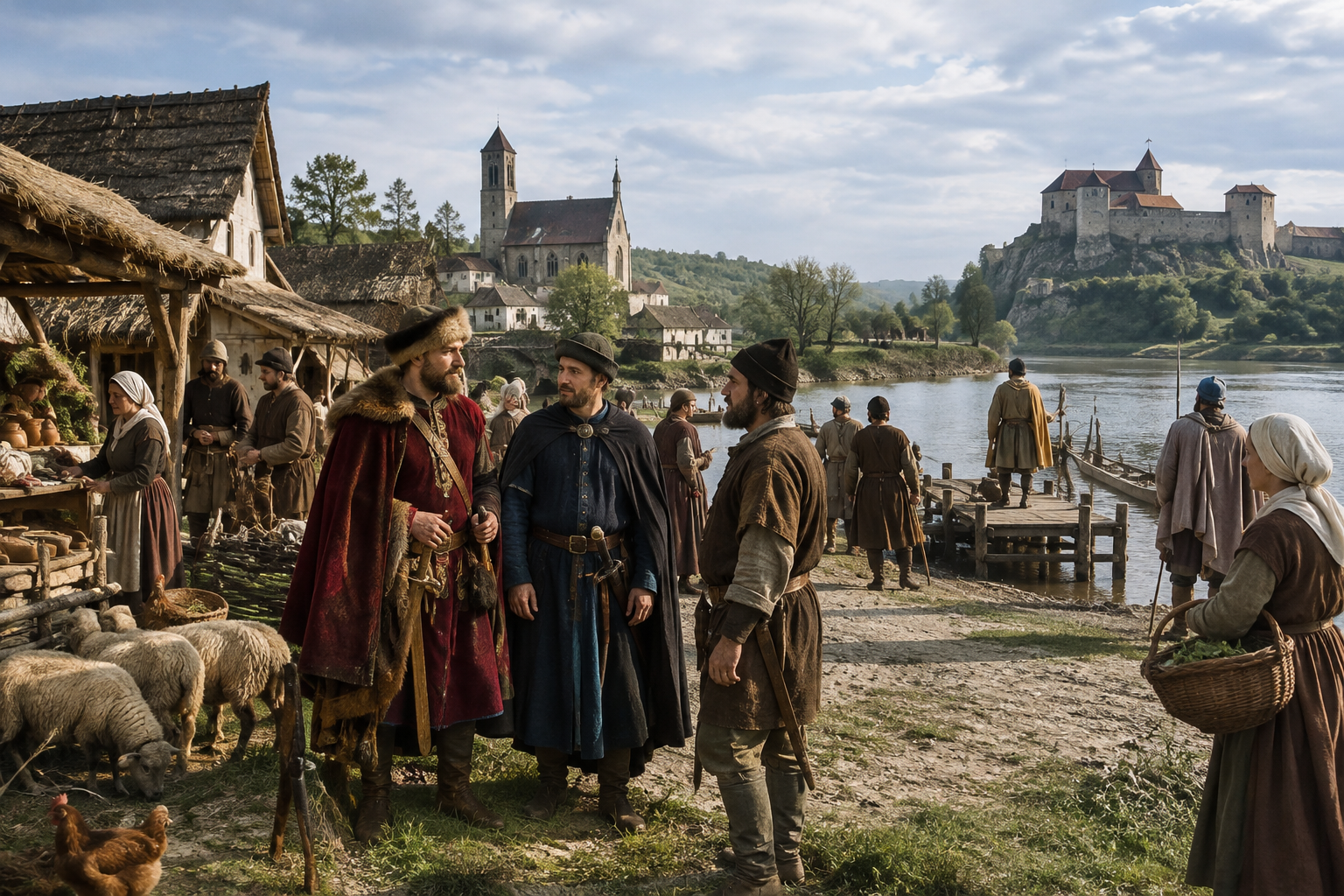
Some Y-chromosome lineages seem to sit quietly in the background of European history until ancient DNA brings them into sharper focus. Haplogroup I2a1a2b1a1 is one of those. It belongs to the wider haplogroup I family, a branch deeply associated with Europe, yet this particular subclade appears in a striking spread of finds across the Balkans, the Carpathian Basin, Central Europe, and even farther north. What makes it so interesting is not one dramatic royal claim or a single famous burial, but the way it keeps turning up in very different settings: Bronze Age Bulgaria, medieval Serbia, Western Slavic settlements in Germany, Hungarian noble contexts, and late medieval Croatia.
That is exactly where Y-DNA becomes historically useful. A Y-DNA haplogroup traces one direct paternal line only: father to son, back through time. It does not describe a person's whole ancestry, culture, language, or identity. But when many ancient burials carrying related paternal lineages appear across centuries and regions, they can help us see patterns of continuity, migration, and settlement that written sources alone could never show.
I2a1a2b1a1 sits within the larger haplogroup I tree, one of the major Y-chromosome lineages long present in Europe. For a very specific subclade like this one, caution matters. We should not simply pour the whole long history of haplogroup I into this narrower branch as though nothing changed along the way. Still, the ancient samples supplied here strongly suggest that this lineage, or closely related paternal branches, had an important presence in southeastern and central Europe over a long span of time.
The earliest clues in this set come from the Balkans and neighboring regions. Two Early Bronze Age individuals from Yunatsite in Bulgaria, YUN037 dated to 2770 BC and YUN038 dated to 2838 BC, show that this paternal line was present in prehistoric southeastern Europe very early indeed. Another relevant Bronze Age case is I10479 from the Moneoru Culture at Arman Carlomanesti in Romania, dated to 2000 BC. Add to that the Croatian cave samples I18721 from Bezdanjaca Cave, dated to 1150 BC, and I18719 dated to 1250 BC, and a broad prehistoric zone begins to emerge across the Balkans and Carpathian-facing lands.
That does not prove a single unbroken local population in a simplistic sense. Bronze Age Europe was full of movement, exchange, and social change. But it does suggest that paternal lines within this cluster were not late arrivals to the region.
The medieval evidence is where the story becomes especially vivid. In Serbia, three samples stand out: I15541 from Timacum Kuline Ravna Village dated to 910 AD, I15542 from the same site dated to 950 AD, and I32299 from the Rudine Necropolis at medieval Viminacium, dated to 1200 AD. These are not abstract data points. They come from landscapes that had already seen Roman rule, frontier reorganization, post-Roman transformation, and the formation of medieval Balkan societies. A paternal lineage appearing there across separate burials and centuries is historically suggestive, even if it is not proof of a single local dynasty.
Croatia offers another dense cluster. DUC001 from Dubrovnik Cathedral, dated to 500 AD, places the lineage in a post-Roman Adriatic setting. Then we have a remarkable concentration at Velim-Velistak in early medieval Croatia: VEM018, VEM027, VEM043, VEM052, VEM001, and VEM007, all dated to 750 AD. Nearby or broadly related in time and region are TOR004 from Torcec in northern Croatia, also 750 AD, and DUG014 from Dugopolje Vucipolje, dated to 1400 AD. This is precisely the sort of evidence that makes archaeogenetics so useful: not one glamorous skeleton, but repeated appearances in real communities.
The line also appears in movement-rich zones north of the Balkans. CGG021918 from Kiskundorozsma in Hungary, dated to 797 AD and described as South Slavic Migration Period, is especially evocative. So are AHS54 from Zalavar Varsziget, dated to 850 AD, AHPS202W from Bodajk Proletarfoldek dated to 950 AD, and AHPS103 from Visegrad Sibrik domb I Esperesi dated to 1050 AD. Together they suggest this paternal line was present in the shifting world of Carolingian borders, early medieval frontier societies, and the emerging kingdoms of the Carpathian Basin.
One of the most striking features of this dataset is how often the lineage appears in Western Slavic contexts farther northwest. At Obermoellern in Thuringia, dated to 1050 AD, we have OBM045, OBM048, OBM040, OBM043, OBM029, OBM030, and OBM031. At Steuden in Sachsen-Anhalt, Western Slav settler burials include SDN007, SDN009, and SDN013 dated to 900 AD, and SDN014 dated to 1050 AD. Then there is GRK009 from Grodek nad Bugiem in Poland, dated to 750 AD, and the three Pidhirtsi burials from the Duchy of Sandomierz in the Lublin region, PDH004, PDH007, and PDH008, each dated to 1150 AD.
This is an important historical reminder. Paternal lineages do not respect the tidy ethnic boxes later historians sometimes prefer. A branch found in Bronze Age Balkan contexts can also appear in medieval Slavic settlements far to the northwest because people moved, intermarried, colonized new zones, and carried family lines with them. Ancient DNA does not flatten those histories; it makes them more complicated, and therefore more interesting.
There are even northern and elite outliers worth noting. CGG106791 from Langeland Kaagarden in Denmark, dated to 975 AD and described as a Viking Age Baltic outlier, and CGG107580 from Kalmargorden in Denmark, dated to 1090 AD, show that this paternal branch had reached, or was carried into, Scandinavian contexts. VK53 from Viking Age Gotland, dated to 975 AD, adds another Baltic-world point. And then there is VK542, Gleb Svyatoslavich, Prince of Novgorod of the Rurik Dynasty, dated to 1078 AD. That does not mean everyone in the Rurik world belonged to the same exact branch, nor does it turn haplogroup into destiny. But it demonstrates that this paternal line could appear in very high-status medieval settings as well as ordinary village cemeteries.
The supplied noble connection brings us to the House of Karadorde, more usually rendered Karađorđević in modern historical writing, and to Beli dvor, the White Palace in Belgrade. Here the story shifts from medieval cemeteries to the ceremonial world of modern monarchy. Built between 1934 and 1937 for King Alexander I of Yugoslavia as part of the Karađorđević family compound in Dedinje, the palace was designed by Aleksandar Đorđević in a Serbian Byzantine style. It was completed after the king's assassination, became the home of Prince Paul and later the royal family, was taken over by communist Yugoslavia after the war, and in the post-communist era was returned to the royal family.
This is a good example of how genetic history and built history meet without collapsing into one another. A palace is not a DNA result. Beli dvor does not prove a haplogroup. But it does preserve the historical memory of a dynasty rooted in the same broad Balkan landscape where this paternal lineage appears repeatedly in ancient DNA, especially in Serbia and neighboring regions. The connection is contextual, geographical, and historical rather than a demonstrated line of descent from any particular ancient burial.
The same caution applies to the noble samples in the dataset. HUASper85, from the Hungarian Nobility Gothic Vault of the Royal House of Aba at a Benedictine monastery, dated to 1405 AD, and PER02, described as Medieval Hungarian Bathory Male Nobility Pericei, dated to 1500 AD, are enormously interesting because they place this paternal lineage in aristocratic contexts. So does MH1-4, a medieval elite Hungarian conqueror from Magyarhomorog-Konyadomb dated to 950 AD. Yet sharing a haplogroup or broad branch is not the same as proving close genealogical kinship between noble houses, still less between those houses and much older Balkan or Bronze Age individuals.
Explore the Royal House of Karadorde
So what can we say with confidence? Haplogroup I2a1a2b1a1 appears in this evidence as a durable European paternal lineage with especially notable visibility in the Balkans, Croatia, Serbia, Hungary, and medieval Slavic regions farther north and west. The ancient samples suggest both deep regional roots and later mobility. From YUN038 in Early Bronze Age Bulgaria to STR105e in Early Modern Belgium dated to 1800 AD, this is a lineage that can be followed across an impressively wide chronological and geographic range.
What we cannot do is turn that pattern into a fairy tale of single-tribe purity or neat one-to-one descent. Ancient DNA rarely gives us that sort of simplicity. Instead, it shows continuity mixed with movement, local persistence mixed with frontier expansion, and noble households sharing broad biological histories with much humbler communities buried in fields, villages, caves, and cathedral grounds.
That, really, is the fascination of Y-DNA. It is not a badge of ethnic certainty. It is a clue - one line among many - that helps reconstruct how men and their descendants moved through the worlds of Bronze Age settlements, post-Roman towns, Slavic frontier villages, royal vaults, and modern palaces.
If you want to explore how your own DNA may connect with ancient individuals, historical populations, and paternal lineages like I2a1a2b1a1, MyTrueAncestry can help you compare your results with archaeological DNA from the past. Those matches can open remarkable historical perspectives, even when they do not prove direct descent from a specific ancient person or noble family.






Comments