Haplogroup I1a2a2a4b2c2

– 5 min read


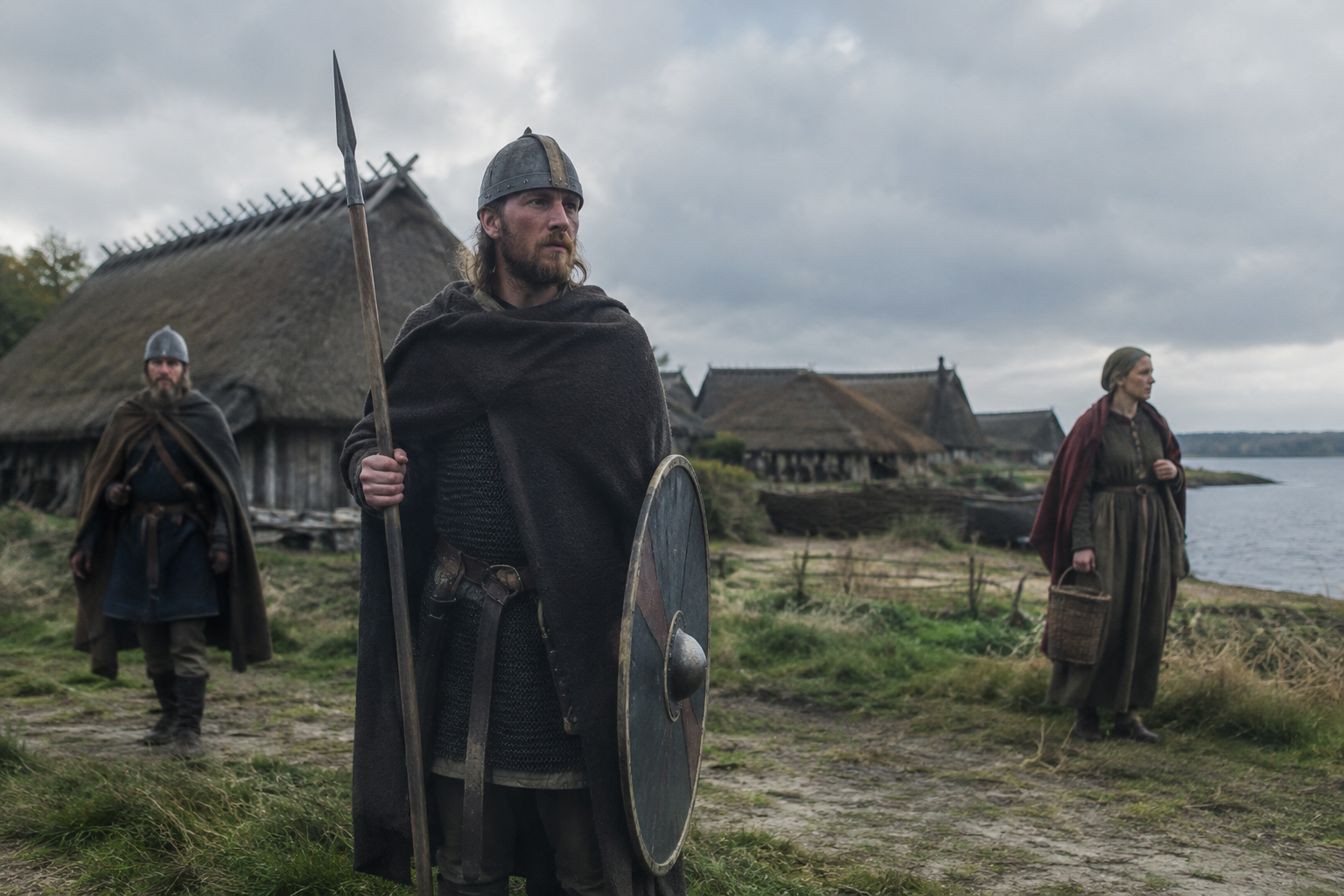
Some Y-chromosome lineages are famous because they turn up in royal tombs or in sweeping maps of prehistoric migration. Others are interesting for a subtler reason: they sit inside a much larger northern European story and invite us to think about how paternal lines moved through real landscapes, real settlements, and real families. Haplogroup I1a2a2a4b2c2 belongs in that second category. It is a very specific branch within the wider Y-DNA haplogroup I1, a lineage long associated in broad terms with northern Europe, especially Scandinavia.
That matters because Y-DNA traces one narrow line only: father to son, back through time. It does not describe a person's whole ancestry, culture, language, or identity. But when a branch like I1a2a2a4b2c2 appears in a historical context linked to Viking Age Denmark and later resonates with the Norse-touched world of the Scottish Highlands, it becomes a fine example of how genetics, archaeology, and history can illuminate one another without collapsing into fantasy.
The broader haplogroup I1 is widely studied as one of the characteristic paternal lineages of Scandinavia and nearby parts of northern Europe. That much is well established at the level of the parent haplogroup. What is harder, and more important, is not to lazily assign the whole long history of I1 to one tiny downstream twig. A branch as specific as I1a2a2a4b2c2 represents a later subdivision inside that much older paternal framework, and its own history must be approached cautiously.
Still, the general setting is clear enough. Northern Europe in later prehistory and the early medieval period was no sealed world. The Baltic and North Sea were not barriers; they were highways. Men carrying branches of I1 moved through farming villages, trading ports, war bands, royal entourages, and family settlements. By the Viking Age, such lineages could travel astonishing distances, not because "the Vikings" were a single people in any simple biological sense, but because Scandinavian-linked networks connected Denmark, Norway, the British Isles, the North Atlantic, and beyond.
That makes this haplogroup historically interesting. Even where the exact path of the branch cannot be reconstructed in neat stages, its place within I1 puts it in the orbit of the great northern maritime world that tied together southern Scandinavia and the western seaways.
The most useful anchor supplied here is an ancient individual from Denmark: VK446, from Viking Age Galgedil Funen Denmark, dated to 925 AD. That one line of evidence already does quite a lot of work. It places this paternal branch, or a very close relevant lineage, in the Danish islands during the Viking Age, at a time when Denmark was deeply involved in the political and commercial traffic of northern Europe.
Funen was no remote backwater. Sitting between Jutland and Zealand, it belonged to the connective tissue of the Danish realm. A Viking Age burial there reminds us that haplogroups are not abstractions floating above history. They belonged to men who lived in farmsteads, fought, traded, married, and were buried by communities that knew exactly who they were, even if we now meet them only through an archaeological label and a sample number.
What can VK446 prove? Not that everyone with a similar haplogroup today descends from him. Not that a later Highland clan came from his immediate family. Not even that this exact branch was uniquely "Viking" in an ethnic sense. What he does provide is a secure historical waypoint: by 925 AD, this paternal line was present in Viking Age Denmark.
That matters because ancient DNA has changed the conversation. Earlier historians often had to infer movement from place names, artefacts, and chronicles. Now we can occasionally add a direct paternal signal to the picture. It is one line of evidence among several, but it is a powerful one.
Read More on Denmark's Deep Genetic History
If Denmark gives us the Viking Age genetic waypoint, the Highland material gives us the later historical landscape in which such northern lineages make cultural sense. Tulloch Castle, near Dingwall in Ross-shire, began as a 12th century tower linked to a region shaped by both Gaelic and Norse influence. That phrase "linked to the Norse era" is important. Northern Scotland was not merely raided from afar; it was part of a long contact zone in which Scandinavian power, settlement, and political culture left durable marks.
The castle later became the seat of the powerful Bain family before passing by marriage to the Davidsons in the 16th century. Over time it grew from defensive stronghold to lairdly residence, with additions in the 16th, 17th, and 19th centuries. In other words, the building itself is a kind of historical stratigraphy. One can almost read in its masonry the shift from frontier fortification to elite household, from clan world to modern reinvention.
None of this proves that Clan Davidson, or the earlier Bain possessors of Tulloch, carried haplogroup I1a2a2a4b2c2. That would require documented genetic evidence from the family line itself. But the broader context is suggestive in a sensible historical way. A Scandinavian-centered paternal lineage appearing in Viking Age Denmark and a later Highland seat standing in a Norse-influenced region are not a genealogical chain; they are a geographical and historical parallel worth noticing.
This is where genetics is at its most interesting when it is used responsibly. It does not flatten the past into "you are descended from Vikings" or "this castle belongs to your haplogroup." Instead, it helps us see how paternal lines could persist through centuries of changing identity. The same Y-line might pass from pagan Scandinavia into Christian kingdoms, from seaborne raiding worlds into settled lordship, from burial mounds and churchyards into named clans and documented estates.
Tulloch Castle is especially evocative because it shows how family memory attaches itself to place. Near Dingwall, in Ross-shire, it stood through the upheavals of Scottish history: local feuds, clan politics, changing tastes in architecture, and the long transition from medieval lordship to modern heritage building. In the 20th century it ceased to be a private family home and was adapted for new uses, eventually becoming a hotel. That transformation is itself part of the story. Aristocratic buildings rarely remain frozen in one era; they survive by changing function.
For readers interested in paternal ancestry, castles matter not because they are genetic proof, but because they preserve the social world in which lineages were remembered, contested, and displayed. A clan seat, a marriage transfer, an inherited estate: all these are reminders that surnames, kin groups, and property often followed paternal frameworks, even though real family history was always more tangled than that.
So when we place a haplogroup like I1a2a2a4b2c2 beside Tulloch Castle, we are not claiming a laboratory-certified clan pedigree. We are doing something more historically honest. We are setting an ancient paternal line against a later regional stage where Norse influence, Highland identity, and inherited male-line traditions all formed part of the same long story.
Explore North Sea Migrations to Britain
Haplogroup I1a2a2a4b2c2 is best understood as a highly specific paternal branch within a broader northern European lineage. The ancient sample VK446 from Galgedil, Funen, Denmark, dated to 925 AD, gives it a vivid Viking Age foothold. Tulloch Castle and Clan Davidson provide a later historical setting in a region where Norse and Highland worlds overlapped in fascinating ways.
But the discipline lies in knowing the limits. Shared haplogroups do not prove close kinship. Ancient DNA comparisons do not automatically create noble pedigrees. And no single paternal line can stand in for the whole ancestry of a person, family, or people.
What it can do is open a door. It can place your direct paternal line inside the great historical movement of northern Europe. It can connect a Danish burial, a Highland stronghold, and a modern DNA result in one carefully drawn frame. And sometimes that is more interesting than a simplistic claim of descent, because it lets the real complexity of the past stay visible.
If you want to see whether your own DNA shows connections to ancient individuals like VK446, or to the wider populations that shaped places such as Viking Age Denmark and the Scottish Highlands, MyTrueAncestry can help you explore those links. The results may reveal striking historical parallels, even when they do not prove direct descent from any single ancient man or noble family.






Comments