Haplogroup G2a2a1a2b1b

– 5 min read


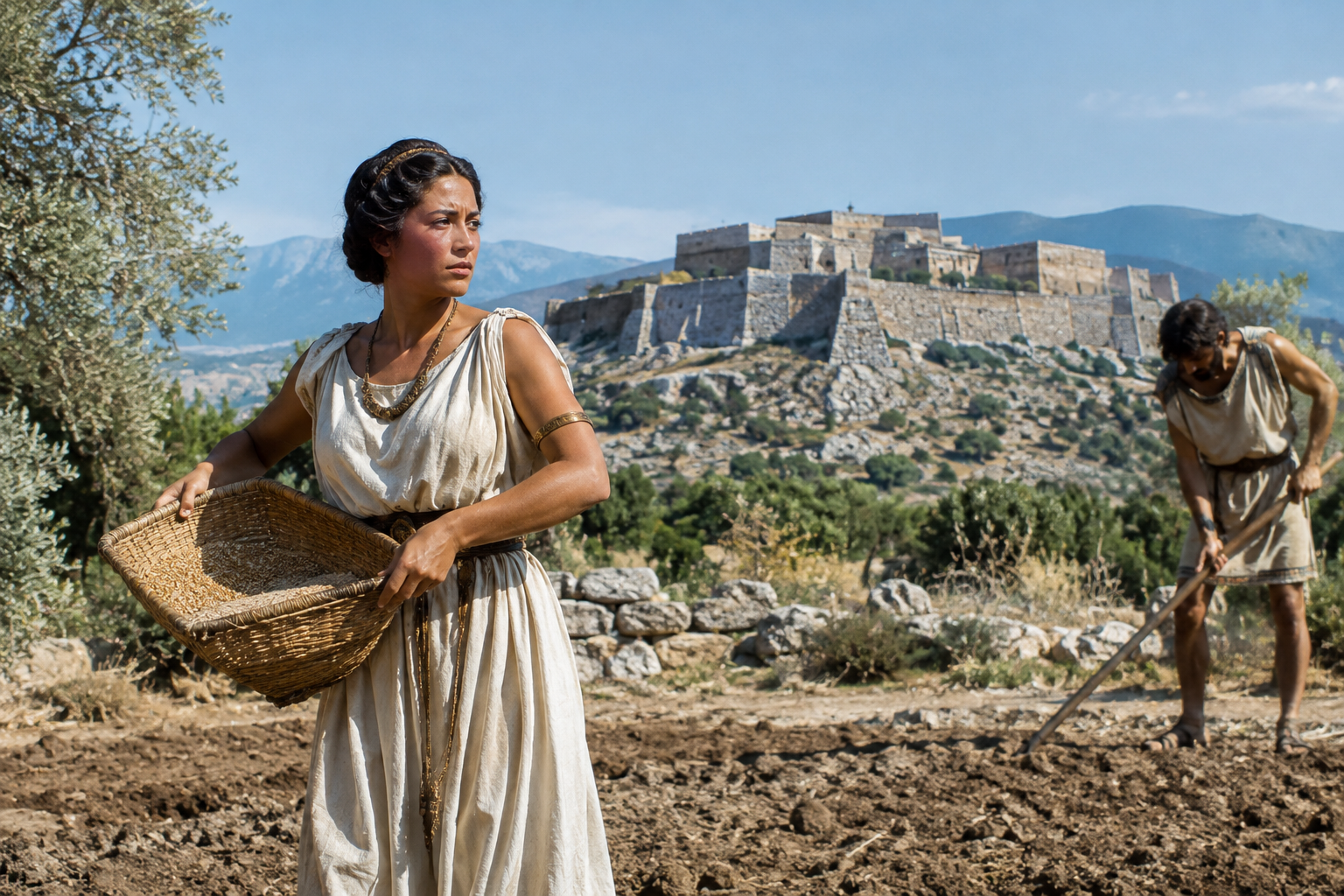
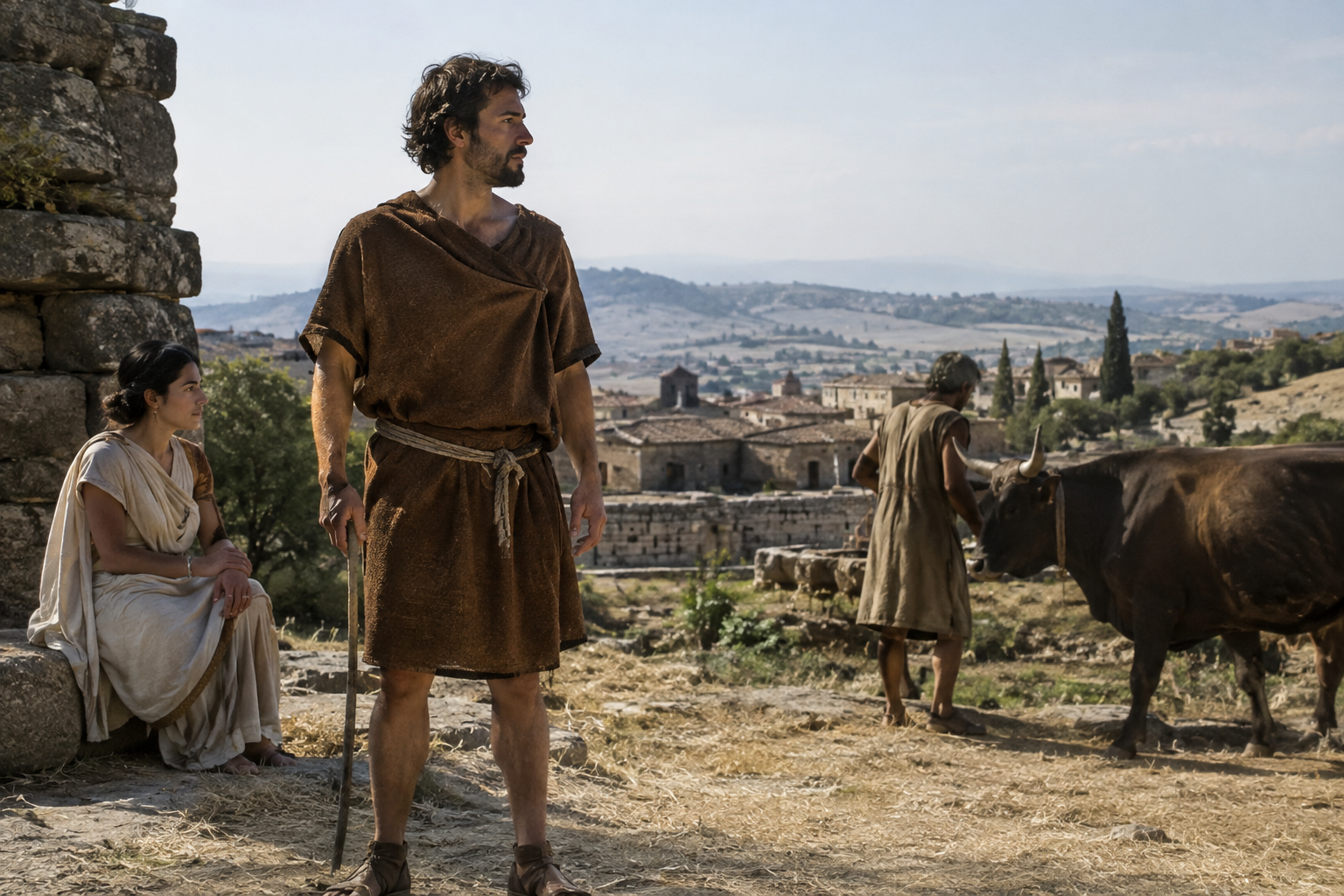
At Mygdalia in Achaean Greece, one ancient male dated to around 1500 BC carries an especially intriguing paternal line: G2a2a1a2b1b. The sample is identified as MYG004, and although a single burial never stands in for an entire people, it does place this branch firmly inside the world we call Mycenaean: the Bronze Age societies of mainland Greece that built palaces, wrote Linear B, and sat at the crossroads of the eastern Mediterranean.
That matters because haplogroup G, in its wider sense, has a very long history in western Eurasia, especially in early farming populations. But this article is about a much narrower twig on that larger paternal tree. G2a2a1a2b1b is not "the Mycenaean haplogroup," nor does one result turn a lineage into an ethnicity. What MYG004 gives us is something better: a real Bronze Age man, from a documented Achaean setting, whose direct paternal line survived within the population that helped shape later Greek history.
The appeal of Mycenaean archaeology is obvious. It is one of those rare prehistoric worlds that feels half-lit by texts and half-buried in earth. We know the broad outlines: fortified centers, regional elites, administrative writing, maritime connections, and a mainland culture in active contact with Crete, Anatolia, Cyprus, and the Levant. Yet the people themselves are still recovered one burial at a time.
That is where MYG004 becomes useful. Even without embellishing the burial beyond what is securely given, the sample anchors G2a2a1a2b1b in Late Bronze Age southern Greece. In practical terms, that means this paternal line was present among the men living in the Achaean sphere during the period conventionally associated with the flourishing of Mycenaean society.
A broader research presentation on ancient DNA from this region can be found here: https://submissions.e-a-a.org/eaa2021/repository/preview.php?Abstract=2323. It is useful as a research lead for the archaeological and genetic setting of these Mycenaean-era burials, even when the public summary does not provide every sample-level detail one might want.
Y-DNA follows one very specific line: father to son to son. So if you belong to G2a2a1a2b1b, you are tracing one narrow paternal inheritance, not your whole ancestry. Still, narrow does not mean trivial. In archaeology, a Y-line can show that a direct male lineage was present in a place and period where written identities are often absent or much later.
For G lineages more generally, the deep background often leads back into the spread of early farmers across parts of Europe and the Mediterranean. But one must be careful here. It would be far too simple to say that MYG004 "was descended from the first farmers" in any straightforward, untouched way. By 1500 BC, mainland Greece was already the product of many centuries of mixture, movement, local continuity, and social change. A Mycenaean burial belongs to that complicated Bronze Age world, not to an earlier Neolithic snapshot.
What makes G2a2a1a2b1b interesting in this setting is precisely that tension between deep antiquity and later historical complexity. A branch with older roots in the wider eastern Mediterranean and European story appears here inside an advanced Bronze Age society better known for palaces and epic legend than for paternal lineage continuity.
Ancient DNA has steadily chipped away at the old habit of imagining famous archaeological cultures as biologically uniform blocks. Mycenaean Greece was culturally recognisable, yes, but recognisable culture does not require identical paternal lines. One reason a result like MYG004 matters is that it adds texture. It reminds us that the men of Mycenaean communities did not all descend from a single recent male founder.
That point is worth lingering over because the Mycenaean world is often flattened into a kind of heroic silhouette: warriors, citadels, and dynasties. Genetics complicates that picture in a healthy way. A lineage such as G2a2a1a2b1b appearing in Achaean Greece suggests that some paternal lines in these communities reached back through local and regional histories that long predated the famous palace age.
In other words, the Bronze Age mainland was not simply populated by newcomers who erased all earlier male lines, nor was it a museum of untouched local ancestry. It was a society built from layers. That is exactly the sort of thing ancient DNA is good at showing.
Neolithic Expansion in the Aegean
There is always a temptation to leap from a Bronze Age Y-haplogroup straight to later named peoples: Dorians, Ionians, Aeolians, Macedonians, or even particular medieval and modern Greek communities. That leap is usually too large for the evidence. MYG004 is securely useful as a Mycenaean-era datapoint; it is not a license to assign the entire later history of Greece to one paternal branch.
Even so, the sample does illuminate a real historical question. How much of later Greek population history involved continuity from Bronze Age mainland communities, and how much came from later demographic shifts? Ancient DNA across Greece increasingly suggests that continuity and change both matter. A lineage like G2a2a1a2b1b in Mycenaean Greece fits that broader pattern well: old roots, later reshaping, and no tidy one-line answer.
This is especially important in the Aegean, where language, political identity, and biological ancestry rarely map neatly onto one another. A man with the paternal line G2a2a1a2b1b in 1500 BC was part of a Mycenaean archaeological world because of where and when he lived, not because haplogroups come with ready-made cultural labels attached.
Some readers understandably want quantity: many burials, many sites, many matching men. But archaeology often advances through modest certainties rather than dramatic heaps of proof. One securely placed ancient individual can matter a great deal when the context is historically rich. MYG004 is one of those cases.
He shows that G2a2a1a2b1b was present in Achaean Greece during the Late Bronze Age. That does not tell us how common the branch was, whether it belonged to a local family established for generations, or whether its carriers had more distant ties elsewhere in the eastern Mediterranean. But it does give this lineage a defensible place in the human landscape behind Mycenaean civilization.
For people researching their own paternal ancestry, that is often the most meaningful kind of evidence: not mythology, not prestige by association, but a real man from a real archaeological setting. If your Y-line is G2a2a1a2b1b, MYG004 does not prove you are "Mycenaean" in any exclusive sense. It does, however, show that your direct paternal branch was already present in Bronze Age Greece at the time of the Mycenaean palaces.
The most distinctive thing we can responsibly say about G2a2a1a2b1b here is simple and solid. Through sample MYG004, this paternal lineage has an ancient foothold in Mycenaean Greece around 1500 BC. That places it inside one of the most historically resonant societies of Bronze Age Europe, while also reminding us that famous civilizations were made up of many different family lines, not a single bloodline marching through time unchanged.

Comments