Haplogroup C2a1a2a2

– 5 min read


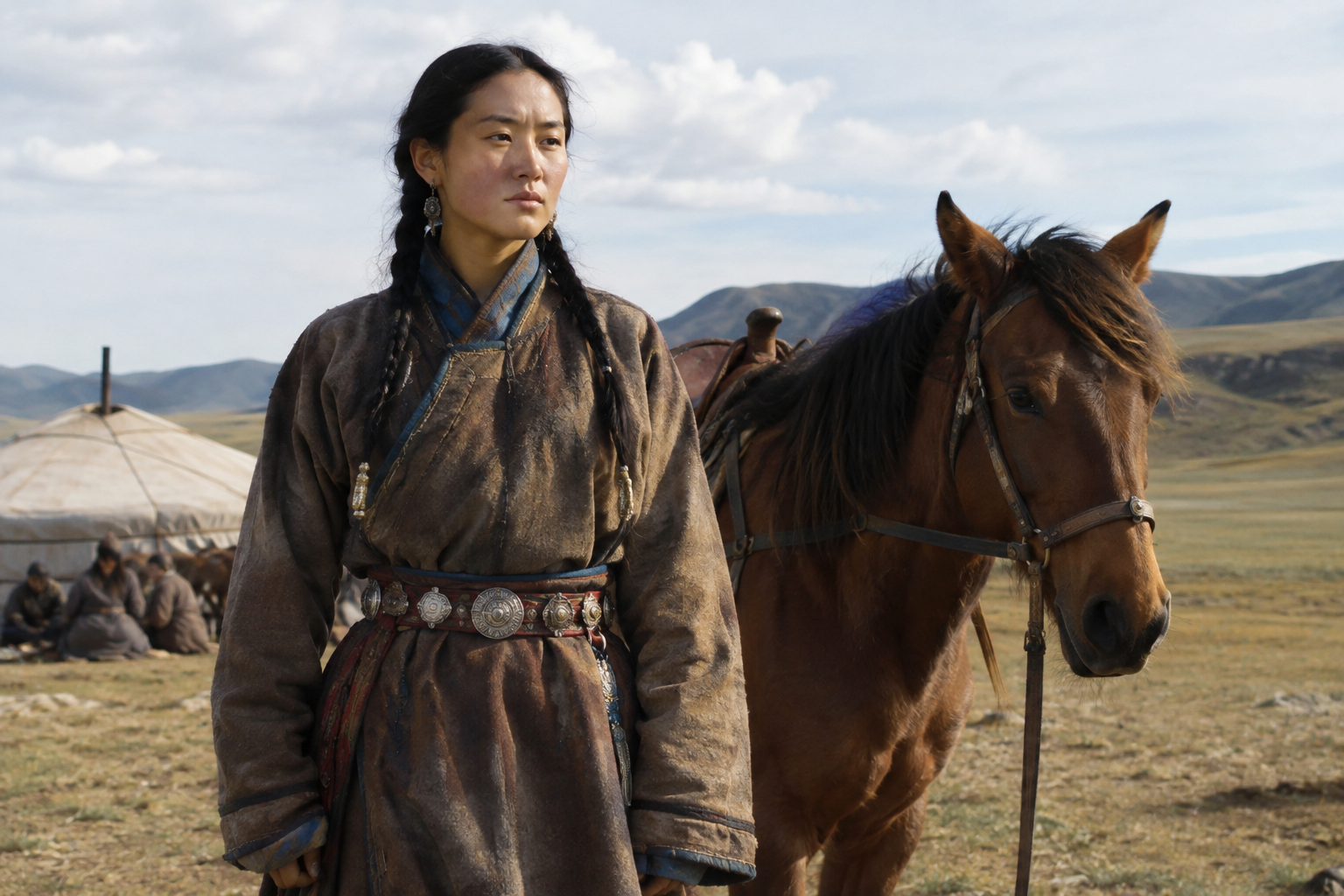
At Tamiryn Ulaan Khoshuu in Mongolia, one ancient man dated to around AD 25 carries the sample ID TUH001. That is a slender piece of evidence, but it is a revealing one. Through him, the Y-DNA haplogroup C2a1a2a2 appears not as an abstract branch on a chart, but as a paternal line present on the eastern steppe in the early centuries of the Common Era.
That matters because Mongolia at this date was not a quiet backwater. It was part of a world of mobile herders, political federations, shifting alliances, and long-distance connections reaching across Inner Asia. A Y-chromosome line such as C2a1a2a2 traces one direct paternal descent line only, not a whole identity or ancestry package, but ancient finds like TUH001 show where that line was living in real historical landscapes.
The key fact here is simple and valuable: TUH001 comes from Mongolia and is dated to about AD 25. Even that bare combination of place, date, and lineage tells us something important. C2-related paternal lines are strongly associated with northern and eastern Inner Asia in both ancient and modern genetic studies, and this sample places the narrower branch C2a1a2a2 within that broad steppe sphere during a formative historical period.
It is easy to overreach with steppe history, so it is worth staying close to the evidence. We should not turn one burial into proof of a dynasty, a tribe, or a famous named confederation. But a securely located male line from Mongolia in the early first century AD is exactly the sort of evidence that helps anchor later population patterns in a real archaeological past.
A broader MyTrueAncestry discussion of this region's evidence can be found here:
Haplogroup C2a1a2a2 is a very specific branch within the larger C2 paternal family. That distinction matters. The wider C2 lineage has a long and complex history across northern Asia, eastern Asia, and parts of the Eurasian steppe, but that does not mean every branch shared the same route, date, or social history.
For someone researching this haplogroup today, the ancient sample TUH001 is best understood as a point of confirmed presence rather than a complete origin story. It shows that one bearer of a line associated with C2a1a2a2 was living in Mongolia around the turn of the era. It does not by itself tell us where the branch first formed, how common it was locally, or whether it belonged to an elite, an ordinary pastoral household, or a recently arrived family line.
That caution is not a weakness. In archaeology, one well-placed data point is often more valuable than a dozen vague claims. Ancient DNA works best when it is tied to a site, a period, and a human being rather than treated as a legend-making machine.
The date attached to TUH001 falls in a period when the eastern steppe sat at the meeting point of political power and ecological mobility. This was an age in which confederations could assemble and dissolve, horses and herds structured daily life, and links stretched from the steppe into northern China and beyond. A paternal lineage surviving in this world was part of a social landscape shaped by movement, marriage, alliance, and local continuity.
That is one reason ancient Mongolian samples matter so much. They help separate fantasy from sequence. Rather than imagining that a lineage suddenly appeared in the Middle Ages or only became important under later empires, we can see that branches within the broader C2 world were already established in Mongolia centuries earlier.
Research on ancient populations of the steppe has steadily sharpened this picture, even when individual supplementary datasets are terse. One of the relevant research leads associated with this material is this ancient DNA study material, which sits within the growing body of work reconstructing population history across Inner Asia.
There is a temptation, when evidence is thin, to fill the gaps with grand narratives. Better to do the opposite. TUH001 does not stand for all ancient Mongolians, and he does not prove that everyone in his community shared the same paternal ancestry. What he does offer is a fixed historical marker for the presence of this Y-chromosome branch in an early historic Mongolian context.
That helps in two directions at once. Looking backward, it supports the idea that this paternal line belongs within the long demographic history of Inner Asia rather than being a very late arrival. Looking forward, it offers a plausible ancestral backdrop for the better-known expansions of steppe-derived populations and lineages in later centuries.
It also reminds us that paternal continuity and cultural identity are not identical things. A man carrying C2a1a2a2 could have belonged to a community whose language, politics, and alliances changed over generations while the Y-chromosome line itself continued down a single father-to-son path.
For another angle on how ancient Y-chromosome data can illuminate East Asian paternal history, this related post is useful:
Ancient East Asian Y Chromosomes
When readers encounter a Mongolian sample from around AD 25, the natural question is whether he should be called Xiongnu, proto-Mongolic, Turkic, or something else. Usually, with evidence this concise, the honest answer is that we should be careful. Archaeological context and historical geography may suggest a broad world of steppe pastoralism and imperial frontier interaction, but Y-DNA alone cannot assign a language or a political badge.
Still, the location is historically weighty. Mongolia was one of the great engines of Eurasian connectivity, and paternal lines found there often sit at the intersection of local persistence and long-range movement. In that sense, TUH001 is valuable precisely because he is not a mythical founder. He is a real individual from a real place, and he shows that the branch C2a1a2a2 belonged to that world.
This fits with the wider archaeogenetic pattern that the Mongolian steppe was never genetically static. Over long periods it saw mixture, replacement, continuity, and regional diversity. A single paternal line can survive through all of that, carried by men whose total ancestry was far more complex than one haplogroup label can capture.
A related regional perspective appears in this MyTrueAncestry article:
For present-day testers, C2a1a2a2 points toward a paternal history with deep roots in northern or eastern Inner Asia, and TUH001 gives that history an archaeological foothold in Mongolia by about AD 25. That is the distinctive insight here: not a royal pedigree, not a guaranteed link to a famous conqueror, but a grounded sign that this paternal branch was already part of the early historic steppe world.
If this is your haplogroup, the most sensible historical picture is one of steppe-connected paternal ancestry embedded in a region famous for mobility, exchange, and durable male-line continuities. The ancient evidence is still sparse, but it is exactly the kind of evidence that turns deep ancestry from abstraction into history.






Comments