Ancient Dogs of Eurasia: from Palaeolithic Caves to Mesolithic Rivers
– 7 min read


Ancient Dogs of Eurasia: From Palaeolithic Caves to Mesolithic Rivers
The research plunges us into a world 16,000 years ago, when western Eurasia was home not just to mammoths and reindeer hunters, but to dogs that were already genetically distinct from wolves. For decades, archaeologists have debated when "dog" truly separates from "wolf" in the archaeological record. This comprehensive study pushes that clear genetic break back into the Late Upper Palaeolithic, long before farming, cities, or even pottery emerged across the landscape.
The story begins with a remarkable set of sites scattered from Britain to central Anatolia. At first glance they are classic Ice Age haunts: deep caves, rock shelters, and riverside camps where humans sought protection from harsh glacial conditions. But among the bones of hunted animals, researchers have tracked down a set of canids whose DNA reveals they are already dogs, not wolves still in the process of domestication.
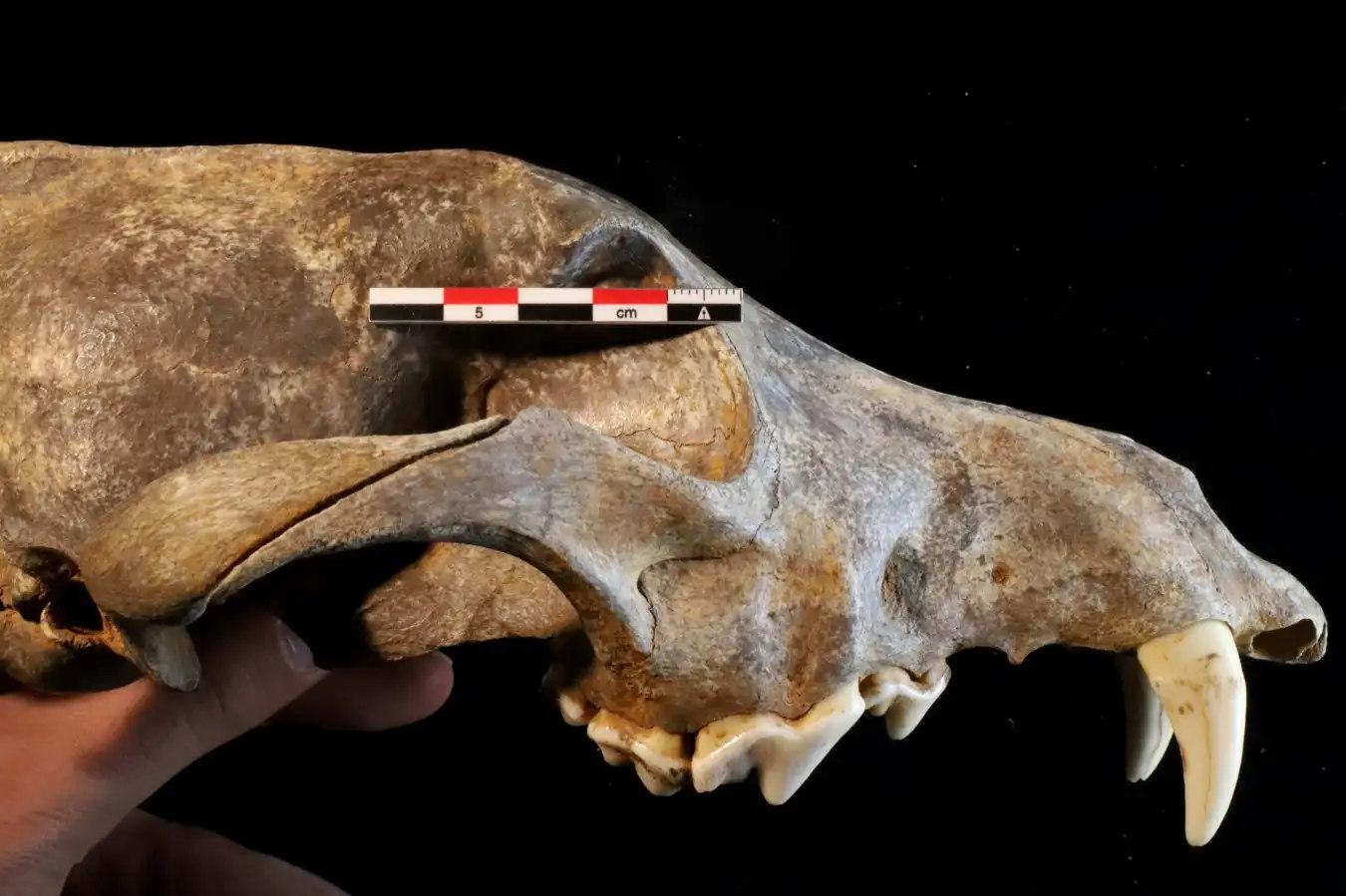
Deep inside Gough's Cave, a famous Late Ice Age site in the Cheddar Gorge, the research team identified both a dog and a wolf from around 14,300 years ago. The dog is not merely a loose jawbone from disturbed sediments: it comes from a carefully excavated Magdalenian layer, the same occupation that produced engraved human bones and skull-cups used in ritual activities. The dog's lower jaw, catalogued as NHMUK PV M 13794, carries a striking human-made perforation in the depression where the chewing muscle attaches. This is not an accidental break or natural damage. It mirrors the deliberate cutting, shaping and piercing seen on human remains from the same archaeological levels.
The study treats this as vivid evidence that dogs were folded into Magdalenian ritual practices, not merely hanging around the camp for scraps or protection. Isotopic analysis of the dog's bone collagen reveals that it ate very much like the humans around it: a mixed, omnivorous diet typical of Late Glacial foragers exploiting a range of animal foods and possibly plant resources. Even the wolf from Gough's Cave occupies a similar "trophic position", suggesting that in this corner of Britain, wolves, dogs and humans were feeding in overlapping ecological niches.
Far to the east, on the Central Anatolian Plateau, the rock shelter of Pınarbaşı produced canid remains dated to about 15,800 years ago. These are perinatal and juvenile animals, some of the very youngest dogs known from any Palaeolithic context worldwide. The research draws attention to the way these puppy bones appear in the same burial zone as human graves, demonstrating that the dead of both species were being treated in parallel ways. This is not a casual discard of animal bones: it represents spatially and symbolically significant behaviour.
Chemical analysis of the amino acids in their collagen suggests that the mothers of these puppies, and the humans around them, drew heavily on aquatic resources, particularly small freshwater fish that are abundant in the site's faunal remains. The implication is both simple and powerful: these Anatolian dogs were either being directly fed fish or indirectly fed on human waste and food remains. Their lives and diets were clearly bound up with human subsistence strategies in ways that go far beyond casual scavenging.
The study does not stop at Britain and Türkiye. Once the Gough's Cave and Pınarbaşı canids are securely identified as dogs using nuclear DNA, the team re-examines other Upper Palaeolithic sites where canids had been suspected to be early dogs, but could not previously be confirmed with confidence. These include the famous burial dog from Bonn-Oberkassel in Germany, animals from Kesslerloch in Switzerland, and remains from Grotta Paglicci in Italy.
The mitochondrial results show that Gough's Cave, Pınarbaşı, Bonn-Oberkassel, Kesslerloch and Grotta Paglicci canids form a tight cluster designated as the "C5" lineage, sitting as a sister group to the main C haplogroup of later dogs. In accessible terms, this represents a distinctive Palaeolithic dog family, spread from Anatolia to the Atlantic, sharing recent common ancestry and forming a coherent population across vast distances.
These dogs do not sit randomly across the European and Anatolian landscape. Each of the Palaeolithic dog finds belongs to a recognisable human culture with its own distinctive material traditions, burial practices, and genetic ancestry. The Gough's Cave dog lived among Magdalenian hunter-gatherers, known for their sophisticated cave art and bone tools. The Bonn-Oberkassel, Kesslerloch, and Grotta Paglicci dogs belonged to Epigravettian communities, who developed their own technological traditions across central and southern Europe. The Pınarbaşı dogs lived with Anatolian hunter-gatherers who had their own unique cultural and genetic heritage.
When the researchers compare the genomes of the Gough's Cave and Pınarbaşı dogs, they find that these individuals, separated by thousands of kilometres and different human cultures, are more closely related to each other than to any later dog. Mitochondrial dating suggests their most recent common female ancestor lived about 16,900 years ago, only a couple of thousand years before the Pınarbaşı puppy died.
Human genomes from these same regions, by contrast, show clear differences between Magdalenian, Epigravettian and Anatolian groups. The dog genomes are comparatively homogeneous while the human genomes display substantial differentiation. The study uses this contrast to argue that dogs were moving between these human groups, being exchanged, gifted or acquired across cultural and genetic boundaries that humans themselves rarely crossed.
This creates a fascinating picture of Late Glacial Europe in which hunter-gatherers might not share much ancestry with their neighbours, but did share a remarkably similar kind of dog, suggesting extensive networks of contact and exchange that left genetic traces in canine but not human populations.
Stepping forward several millennia into the Mesolithic period, the study turns to the Iron Gates region of the Danube, on the border of today's Serbia and Romania. Here two riverside sites, Padina and Vlasac, have yielded elaborate dog burials dated between about 11,500 and 7,900 years ago, representing some of Europe's richest early Holocene cemeteries.
These Danube dogs are clearly domestic in skull and skeletal morphology, and now their genomes confirm that they sit firmly within the dog lineage rather than representing late-surviving wolves. Yet, unlike the earlier Palaeolithic dogs of western Eurasia, they carry a substantial element of ancestry from an "eastern" dog lineage, related to dogs from Arctic Siberia such as the specimen from Zhokhov Island.
Human remains from the same Iron Gates cemeteries show that Mesolithic people there had ancestry linked to eastern hunter-gatherers as well as local European groups. The study dovetails these lines of evidence: as eastern hunter-gatherers moved into Europe during the Mesolithic, they seem to have brought eastern-lineage dogs with them, which then mixed with the established western Palaeolithic dog population. By the time we reach the Iron Gates, a substantial proportion of eastern dog ancestry is already established in European dogs, creating the foundation for all later European dog populations.
The research places particular emphasis on the genetic divide between Palaeolithic dogs and wolves. Earlier claims of very ancient dogs from places such as Goyet in Belgium, Předmostí in Czechia, Razboinichya in the Altai, and Eliseevichi in Russia are revisited in the light of whole genome sequencing. Those canids, once hailed as proto-dogs based on skeletal shape alone, now prove to be members of extinct wolf lineages rather than early domestic dogs.
By contrast, the canids from Pınarbaşı and Gough's Cave sit firmly on the dog side of the dog-wolf genetic divide when nuclear DNA is examined. Coupled with the wider C5 mitochondrial cluster, this establishes a secure population of dogs in western Eurasia by at least 15,800 years ago, pushing back the confirmed presence of domestic dogs by several millennia.
One of the more striking insights is what does not appear in the genetic record: in most of western Eurasia there is very little wolf DNA flowing into dog genomes after this initial domestication period. Over more than 15,000 years of co-existence, dogs and wolves very rarely interbred in ways that left lasting genetic traces, aside from specific Near Eastern contexts. This stands in sharp contrast to domestic cattle and pigs, which seem to have exchanged genes freely with wild aurochs and wild boar when domestic animals entered Europe.
In straightforward terms, by the Late Upper Palaeolithic dogs were already a separate breeding population, both socially and reproductively isolated from wolves, even though they still retained quite wolf-like physical appearance to the untrained eye.
Threaded throughout the study is a powerful sense of how closely dogs were woven into Palaeolithic lifeways and cultural practices. At Bonn-Oberkassel, a dog is buried alongside two humans and shows evidence of being tended through serious illness that would have prevented it from contributing to hunting or other practical tasks. At Pınarbaşı, tiny dog pups lie in the same burial area as human dead, suggesting they held symbolic or emotional significance. At Gough's Cave, dog and human bones bear similar cutting and shaping marks, as if both were being drawn into the same ritual practices involving the modification of skeletal remains.
When isotopic evidence is added to this archaeological picture, the relationship sharpens further: in Somerset, humans, a dog and even a wolf are consuming very similar food resources; in central Anatolia, people and dogs share a diet rich in freshwater fish. The study's findings make it difficult to imagine these animals as mere camp followers or opportunistic scavengers. Instead, they sit firmly inside the social and symbolic worlds of late Ice Age foragers, sharing food, burial space, and ritual significance in ways that speak to deep emotional and cultural bonds that have persisted between humans and dogs for at least sixteen millennia.
 William A. Marsh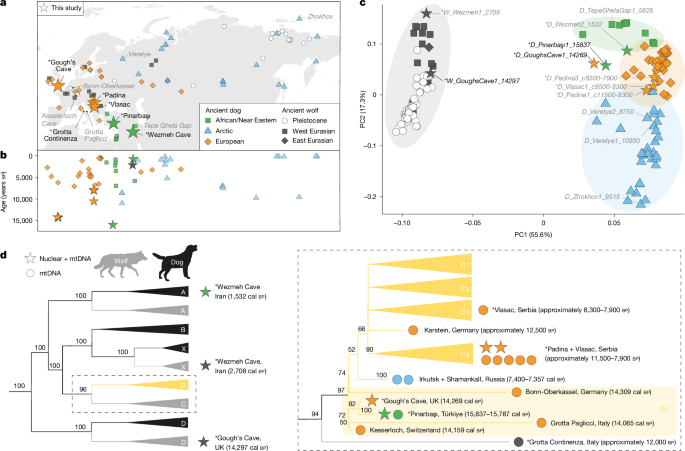


Comments