The Grave that Refused to Die - Neolithic Northern France

– 6 min read


The Bury Gallery Grave: A Monument That Refused to Stay Still
The Bury gallery grave in northern France represents far more than a simple stone tomb. This remarkable monument underwent continuous transformation over nearly fifteen centuries, from approximately 3500 to 1950 BC, serving as a dynamic focal point for changing burial practices, social organization, and community identity. Located about 60km north of Paris on the lower slope of a hill overlooking the Thérain River, this underground chamber was discovered in 1998 beneath a private garden. Unlike six other collective graves within a 10km radius that were destroyed in earlier centuries, Bury survived with its complete stratigraphic sequence intact, allowing archaeologists to reconstruct its entire biographical arc from construction through deliberate closure.
The monument follows the classic gallery grave plan of the Paris Basin: a long, rectangular chamber with a short entrance vestibule, all constructed below ground level. However, Bury's original 20-meter length made it exceptionally ambitious, more than twice the size of typical regional examples that averaged around 9 meters. The chamber floor was carefully paved with flagstones, while dry stone walls combined with earth and timber created a sophisticated underground architecture. Most intriguingly, the entrance featured a porthole slab with an elaborate locking system unique to the area, suggesting careful community control over access to this sacred space.
Modern genetic analysis now allows us to compare our DNA to that of real ancient populations. It’s a striking way to see how deeply intertwined your story might be with the migrations and empires of the past — try it at MyTrueAncestry.com.
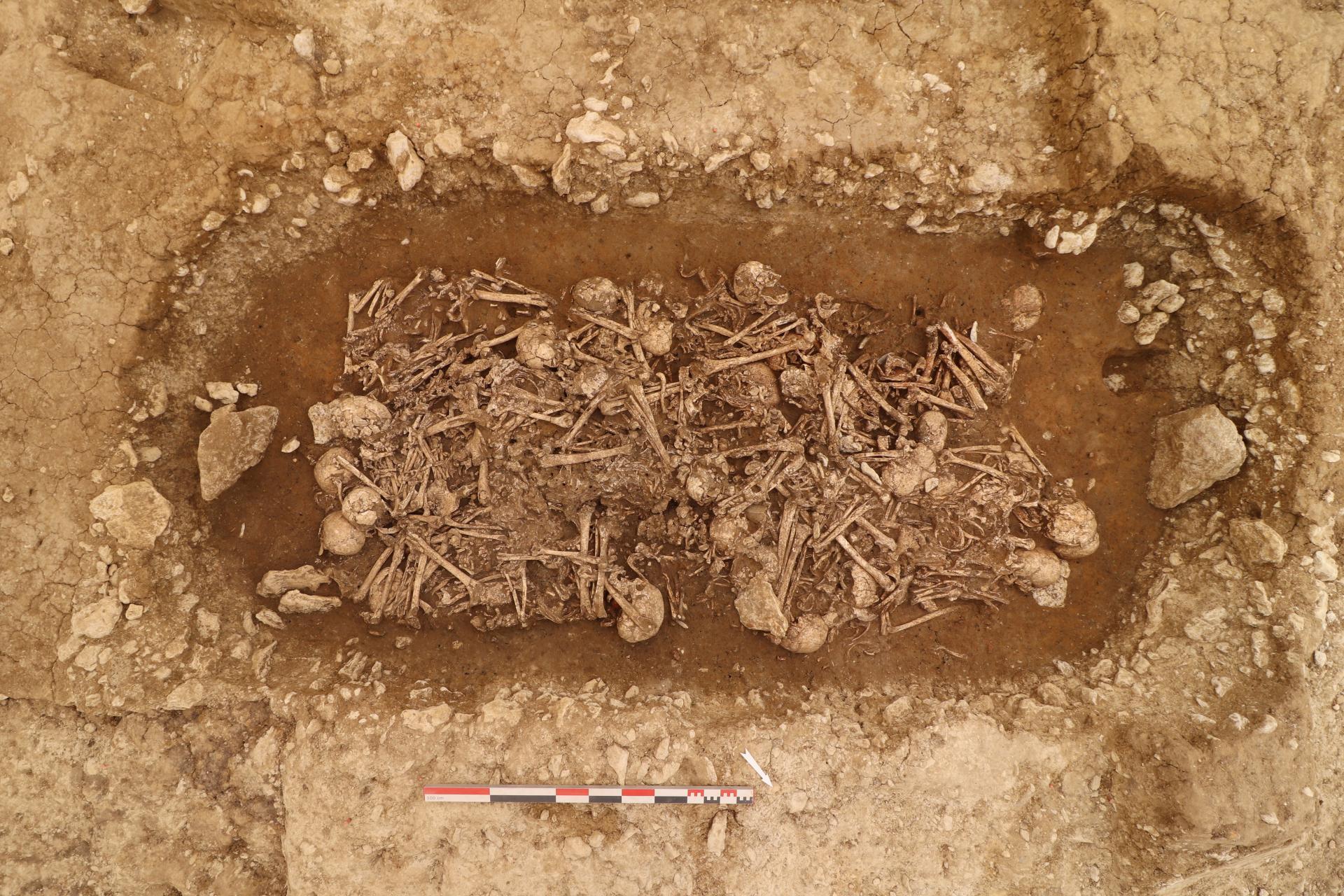
During its initial phase of use in the later fourth millennium BC, Bury functioned as a broad community cemetery. Archaeological evidence reveals the remains of 299 individuals accumulated over the monument's entire lifespan, with the earliest burials representing a demographic cross-section of the living population. Men, women, and children of various ages were interred, though notably, infants under one year old were consistently absent. This pattern suggests specific cultural rules governing infant burial that remained constant throughout the tomb's use.
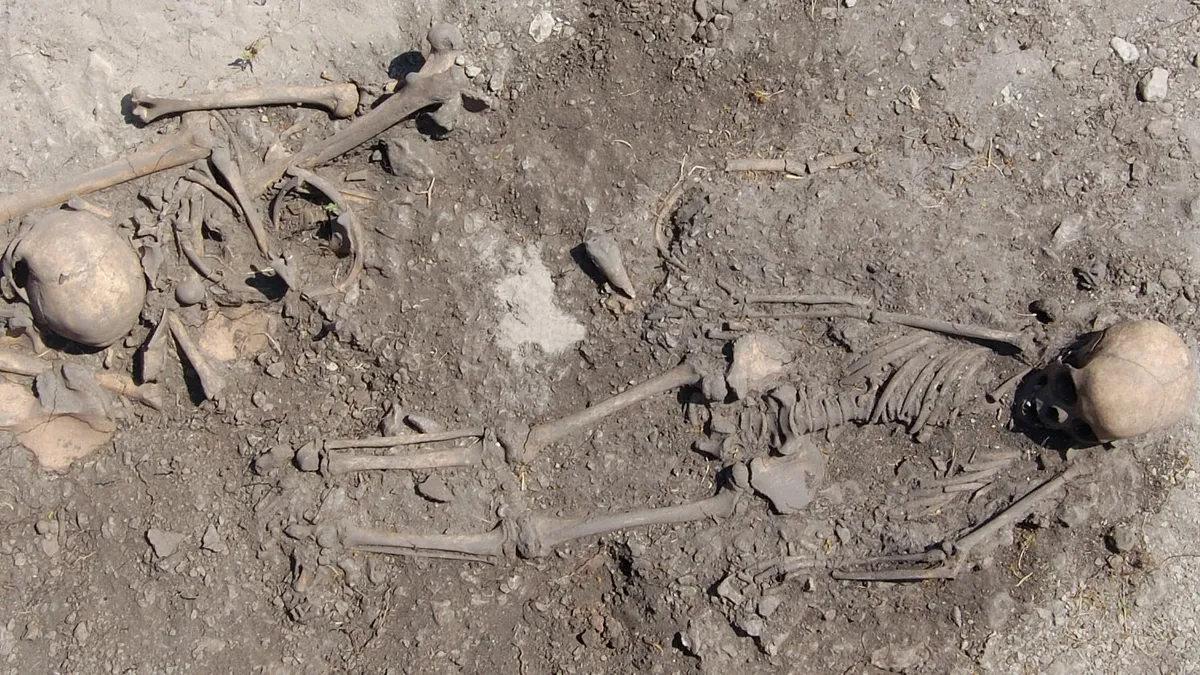
The internal organization of the chamber during this first phase demonstrates careful spatial planning. Bodies were positioned uniformly on their backs with legs extended and arms placed along the sides or gently bent at the elbows. All individuals were oriented with heads toward the entrance, aligned with the monument's long axis. The arrangement created two burial strips along the side walls while maintaining a clear central passage, perhaps allowing the living to move among their ancestors during ritual activities.
Particularly significant was the practice of secondary skull removal. After soft tissues decomposed, adult skulls were carefully extracted while the remainder of each skeleton remained in position. This suggests the heads served specific ritual functions, possibly as ancestral relics or symbols maintained elsewhere in the community. The practice indicates sophisticated beliefs about death, decomposition, and the ongoing relationship between the living and dead.
Grave goods from this period were modest but meaningful. A small collection of flint arrowheads and polished stone axes accompanied some burials, along with fragments of thick-walled, shell-tempered pottery. These ceramic vessels were likely deposited early in the tomb's use and subsequently shifted upward when later stone layers were added. The assemblage suggests collective rather than individual emphasis, with limited displays of personal wealth or status differentiation.
Around the early third millennium BC, Bury underwent dramatic architectural modification that fundamentally altered both its physical form and social function. The chamber was deliberately shortened from its original 20-meter length to approximately 7 meters, with the eastern section almost completely cleared of earlier remains. This represented intentional remodeling rather than gradual decay or accidental damage, suggesting significant changes in how the community conceptualized and utilized their ancestral monument.
The reduced chamber operated under completely different spatial logic. The formerly clear central passage disappeared, with the entire floor area becoming available for burials. Rather than maintaining the orderly arrangement of the first phase, specific locations within the shortened space began serving as focal points for small groups of two to four individuals. This clustering pattern implies the emergence of family-based or lineage-based burial units, marking a shift from community-wide to more restricted social organization.
The second major burial phase, spanning the first half of the third millennium BC, revealed striking changes in both the demographics of the interred and their treatment in death. While osteological analysis suggests the same biological population continued using the tomb, their burial practices underwent revolutionary transformation. Most dramatically, young children virtually disappeared from the burial record. Whereas the first phase included numerous children aged five to nine, the second phase contained almost no individuals under five years old.
This demographic shift signals the tomb's transformation from a community right to an elite privilege. The absence of young children cannot be explained by changes in mortality rates or population size; instead, it reflects deliberate social selection. Only certain individuals or families now qualified for burial within the ancestral monument, suggesting the emergence of more complex social hierarchies and restricted access to sacred spaces.
Body positioning also changed radically. Instead of the orderly, extended burials of the first phase, corpses were now placed in extremely flexed positions with knees drawn tightly toward the torso and no standardized orientation. After decomposition, skeletons were frequently disturbed and rearranged. Bones were gathered into bundles, skulls were positioned along walls, and the neat organization of earlier centuries gave way to complex choreographies of deposition and reorganization.
Significantly, unlike the earlier practice of skull removal, bones remained within the chamber during this second phase. The emphasis shifted to internal curation and rearrangement, transforming the space into a densely layered, carefully maintained repository of human remains. This suggests changing beliefs about the proper location and treatment of ancestral bones.
New categories of grave goods marked this transformation. Flint daggers appeared among the dead - impressive implements capable of traveling long distances and clearly marking individual status. Bone pins, likely used for fastening garments or hair ornaments, indicated attention to personal appearance and costume even in death. These objects represented a fundamental shift from collective symbolism to individual distinction, reflecting broader European trends toward social ranking and personal display during the third millennium BC.
The end of Bury's active use as a burial ground did not mark simple abandonment but rather an elaborate, multi-stage closure ritual extending over several centuries. After the final human interments, the monument's walls and roof were partially destroyed through deliberate action rather than natural decay. Heavy stone layers were systematically spread over the burial deposits, while some of the large construction slabs were intentionally broken in place.
The closure sequence is best preserved at the chamber's rear, where a massive slab prevented later disturbance. Here, archaeologists could document the layered history of decommissioning. At the bottom lay articulated Late Neolithic skeletons with simple grave goods. Above them, a level of scattered human bones mixed with thick red pottery and at least one dog's remains dated to approximately 2890-2640 BC. Two distinct stone covering layers followed, containing increasingly elaborate grave goods including Bell Beaker pottery and Early Bronze Age ceramics.
During these closure episodes, humans were no longer buried within the chamber, yet the community continued visiting to deposit animal remains and pottery offerings. Cattle and pig bones appeared scattered among the stones, along with Early Bronze Age vessels dating to around 2135-1905 BC. Finally, a limestone slab weighing approximately five tonnes was positioned to cap the rear section, effectively sealing the monument's history beneath an impenetrable stone lid.
This elaborate closure process represented ritual activity in its own right, perhaps serving to "lock" the tomb and formally conclude its role as an active burial ground. The breaking of megalithic stones and careful layering of offerings suggests the community was not simply disposing of an old monument but rather transforming it through ceremonial destruction and burial.
 frederique valentin
Discover how your DNA connects to ancient civilizations at www.mytrueancestry.com.


Comments