Modern Human Expansion 300,000 Years Ago as a Driver of Neandertal Origins
– 6 min read


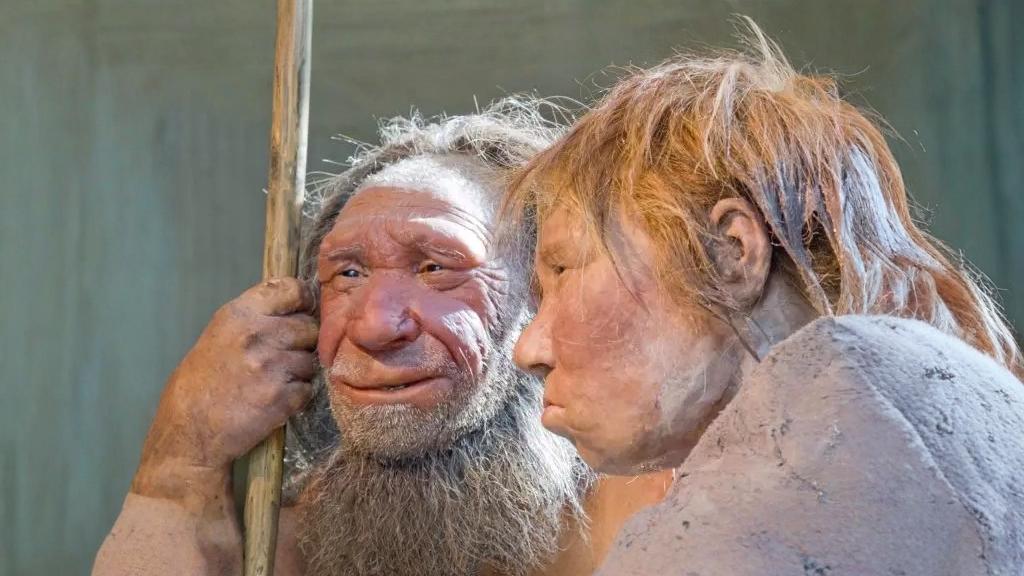
Neandertals Reimagined: Early Modern Explorers, Not Just Cavemen
Recent research proposes a strikingly different picture of where Neandertals came from. Instead of being a completely separate, ancient offshoot, Neandertals may have formed when an early group of modern humans expanded their range roughly 400,000 to 250,000 years ago. As these pioneers moved into new lands, they met and mixed with local archaic populations on a massive scale – so much so that the newcomers ended up carrying mostly local genes, while still keeping their own cultural toolkit.
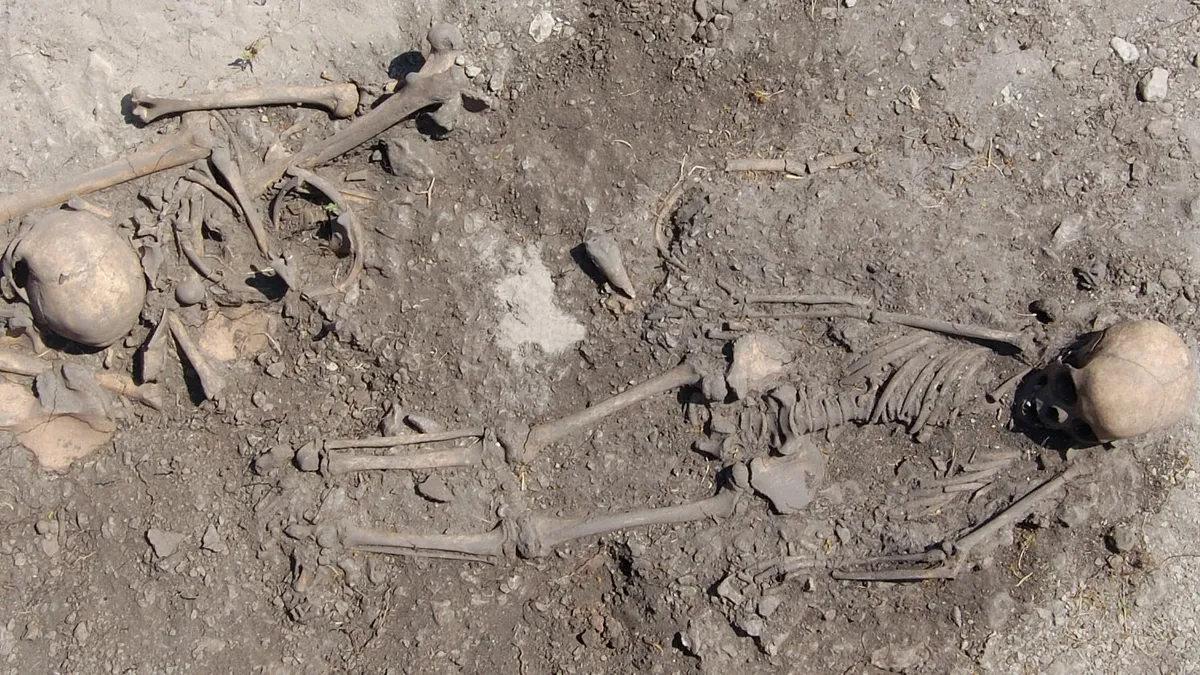
At the heart of this story lies one of Europe's most spectacular archaeological sites: Sima de los Huesos, the "Pit of Bones" in northern Spain's Atapuerca mountains. Deep in a cave system, down a narrow shaft, archaeologists have recovered the remains of at least 28 individuals, deposited there around 430,000 to 300,000 years ago. The site presents an eerie mixture of forensics and ritual, with many bones appearing to have been deliberately placed rather than left where people died.
When we read about vanished civilizations, it’s easy to forget that their descendants still walk among us. If you’re curious which of them you might share roots with, you can explore your own genetic links at www.mytrueancestry.com.
Genetic work on one of these Sima individuals revealed a surprising split personality. The mitochondrial DNA – genetic material passed down through the maternal line – looked closer to that of Denisovans, a mysterious archaic group known mainly from Siberia. The nuclear DNA, which makes up the bulk of the genome, sat firmly on the line leading to later Neandertals. This puzzling mixture supports the idea that Neandertals were not a simple, isolated branch, but rather the outcome of an encounter between people like those at Sima de los Huesos and incoming early modern humans whose genes eventually fused.
One of the most exciting threads tying this story together involves stone tools. Around 400,000 years ago in Africa, and by at least 300,000 years ago in Europe, people began making tools using what archaeologists call Levallois technology. Rather than bashing stones into roughly useful shapes, Levallois craftspeople prepared a core carefully, so they could strike off flakes of predictable size and form. This was the Stone Age equivalent of learning to use a jig in a workshop – planning several steps ahead, shaping the block so that later blows would yield the perfect cutting edge.
Archaeologists give this technology different regional labels: the Middle Stone Age in Africa and the Middle Palaeolithic in Europe and western Asia. The remarkable point is that both early modern humans and Neandertals used Levallois technology, while Denisovans did not, as far as we know. This shared tool tradition suggests that Levallois-making people were the very ones who expanded their range out of Africa and into Eurasia, bringing with them not just their genes, but this ingenious way of working stone.
The spread of Levallois coincides with other advances: better ways to attach stone tips to handles (hafting), and a far more intensive use of fire. These were people who could control heat, plan sophisticated tools, and exploit their environments more fully than many earlier groups. That combination made them powerful colonisers.
Computer simulations help visualize this process: imagine Europe as a grid of small territories, each with its own resident population. In one corner of the map, a group using Levallois technology appears – representing early modern humans. Over generation after generation, this group spreads like a wave of advance across the landscape, growing in numbers and moving into adjacent territories occupied by archaic peoples.
The key point is that in these simulated worlds, the expanding group often ends up with a small fraction of its original ancestry left in the main genome, while local genes take over. Yet the expanding group's language, tools, and ways of life tend to dominate. In other words: ideas travel further and live longer than genes.
Applied to Neandertal origins, as Levallois-using early modern humans pushed into Europe, they would have met groups like those at Sima de los Huesos. Over time, interbreeding would have loaded their genomes with local genes, until the resulting population – what we call Neandertals – was about 95% archaic in ancestry, but still carried the cultural and some genetic marks of the incoming modern humans.
One puzzle that prompted this new model is that Neandertals carry modern-human-like mitochondrial DNA and Y chromosomes, even though the rest of their genome points to a deep split from our own line. The mitochondrial DNA (passed only from mother to child) and Y chromosomes (passed only from father to son) in Neandertals both belong to the modern human family tree, while the bulk of their genome is thoroughly archaic.
Under a simple one-off mixing event, this pattern would be very unlikely by chance: how could just a tiny trickle of modern-human genes replace both the mitochondrial and Y lineages, yet leave almost all the rest of the genome archaic? A range expansion with sex-biased mixing solves this more naturally.
In such a scenario, the expanding group might have brought in local mates mainly of one sex – for example, mostly local women or mostly local men being drawn into the expanding modern-human-based groups. This would preserve either the incoming Y or the incoming mitochondrial lineage. Selection could then help one particular type spread to everyone. The end result matches what is seen in the fossil DNA: Neandertals whose deep genome mostly reflects long-term European archaics like Sima de los Huesos, but whose key maternal and paternal lines trace back to the incoming Levallois-using modern humans.
Africa is not left out of this story. Genetic studies reveal that all modern humans carry ancestry from at least one very deep, archaic lineage that split off over a million years ago, then remixed with a more modern-like population around 300,000 years ago. One recent model suggests that early modern human populations expanded within Africa and mixed with local archaic groups at roughly the same time as the proposed expansion into Eurasia.
This remixture in Africa happens at roughly the same time as the inferred interbreeding between early modern humans and Eurasian archaics that eventually produced Neandertals. A simple, unifying possibility emerges: the same range expansion of a successful, Levallois-using population underlies both events.
In Europe, the newcomers met local populations that were already fairly close to them genetically, leading to massive introgression of local genes and the birth of Neandertals. In Africa, they met populations that had been separate for a longer time, so interbreeding was more limited, leaving a deeper, patchier signal.
 View ORCID Profile
Discover how your DNA connects to ancient civilizations at www.mytrueancestry.com.
Comments