Haplogroup R1b1a1b1a1a2c1a1a1a1a1a3a

– 5 min read


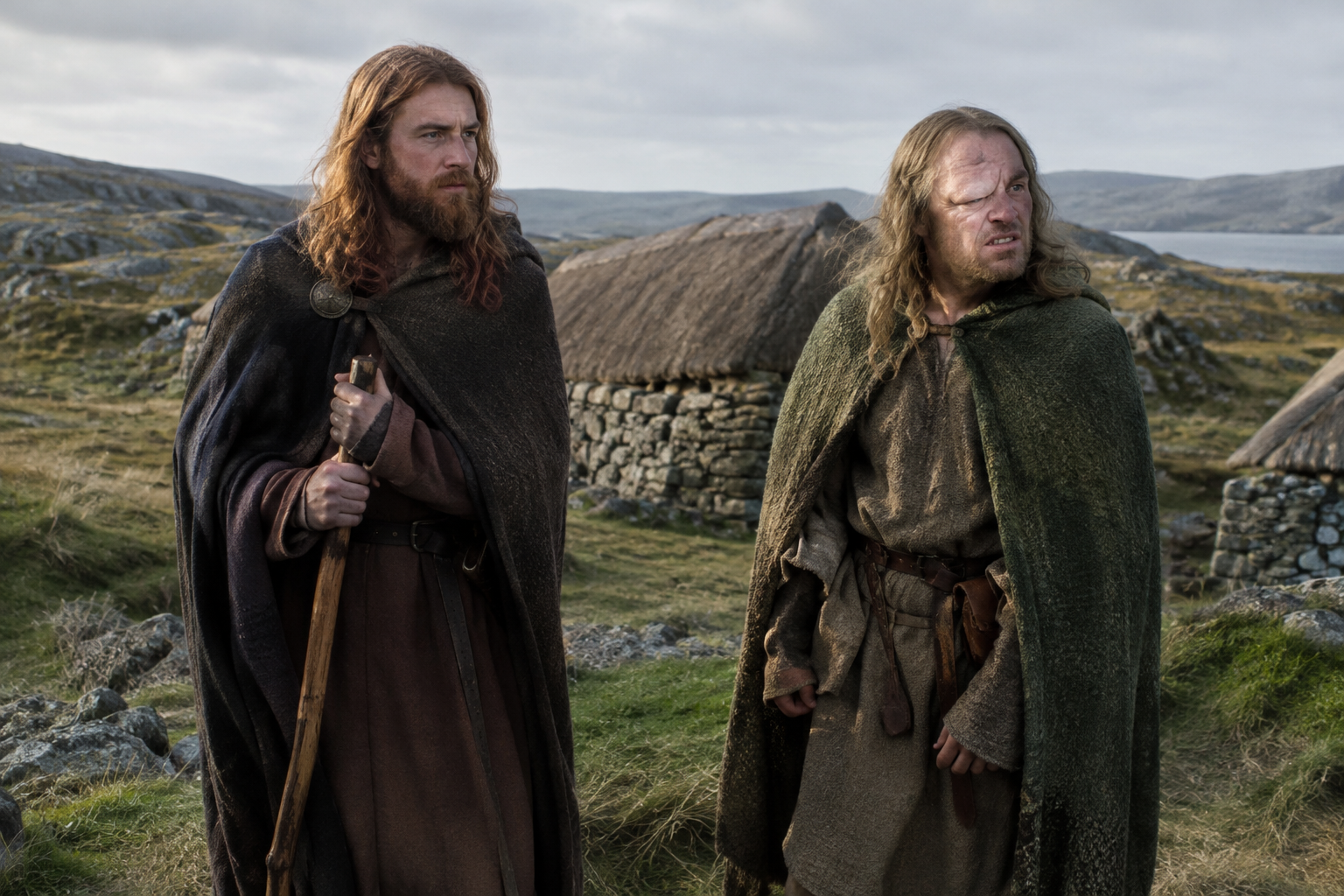
At Ballyhanna in County Donegal, archaeologists uncovered a medieval burial ground used for centuries by a local Gaelic community. Among the men identified through ancient DNA were two individuals separated by roughly three hundred years: HAN331x, dated around AD 840, and HAN331, dated around AD 1145. Both have been associated with the Y-DNA haplogroup R1b1a1b1a1a2c1a1a1a1a1a3a, a remarkably specific paternal branch showing up not in some grand royal tomb, but in an ordinary cemetery of medieval Ireland.
That is exactly what makes Ballyhanna so interesting. Y-DNA traces one direct paternal line only, not a person's whole ancestry, yet in the right archaeological setting it can show continuity that written records never captured. Here, the significance is not imperial conquest or famous dynasties. It is the long life of a local community, and the survival of one paternal line across the early and high medieval periods in the northwest of Ireland.
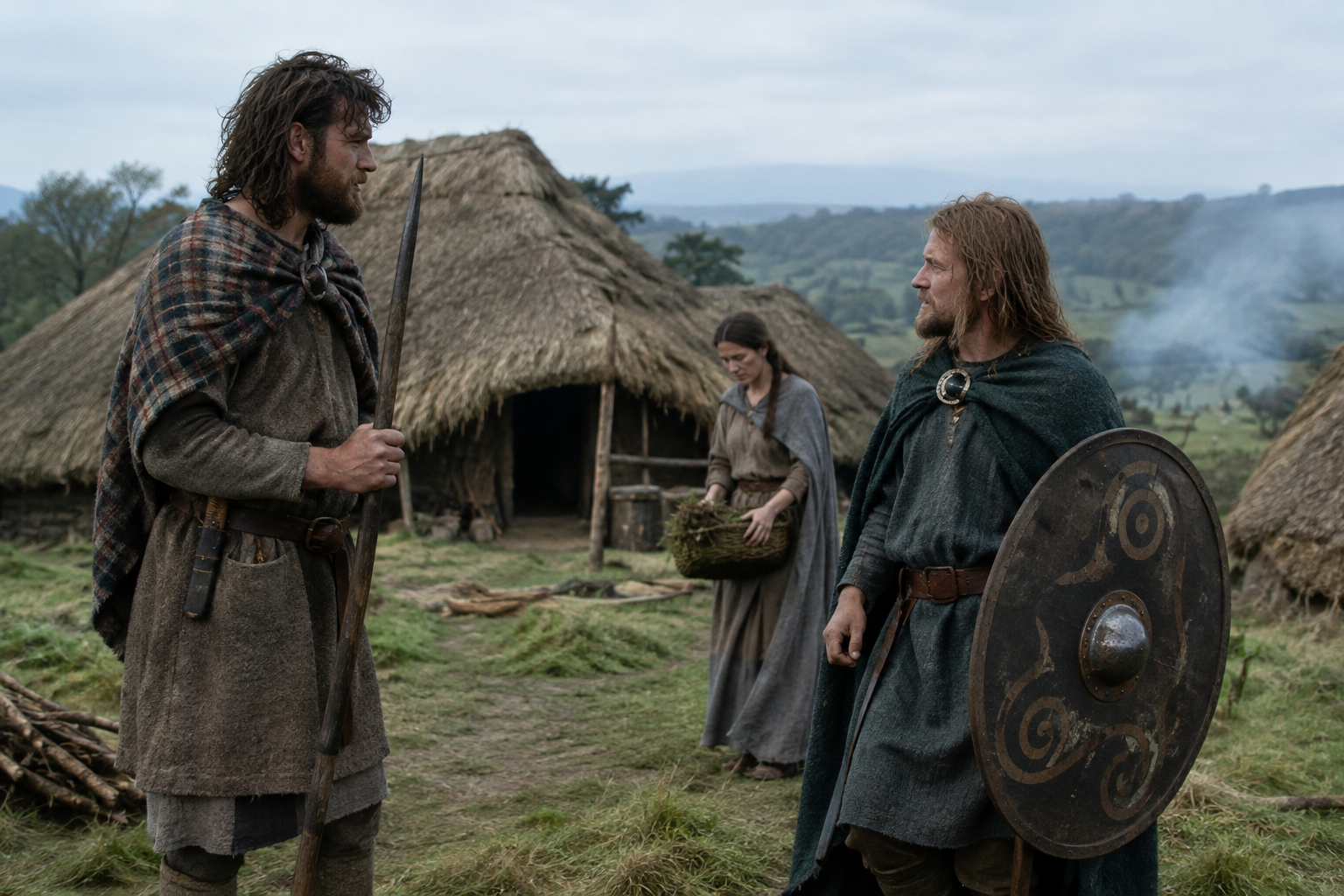
Ballyhanna lies near Ballyshannon, close to the Erne estuary, in a region that sat at the edge of several overlapping worlds: Gaelic lordships inland, seaborne contacts across the North Atlantic, and later Norse and Anglo-Norman pressures around the Irish coast. Medieval graveyards like this one are easy to romanticize, but their real value is more solid. They preserve evidence of repeated burial in one place, across generations, allowing genetics, osteology, and archaeology to be read together.
In this case, the pair HAN331x and HAN331 offer a simple but powerful observation. A man buried around AD 840 and another buried around AD 1145 were both linked to the same narrow paternal lineage. That does not prove they were close relatives, nor does it mean every man at Ballyhanna belonged to the same branch. But it does suggest that this lineage was present in the local male population over a long stretch of medieval Irish history.
An ancient DNA study examining these Irish burials is associated with research on medieval population history in Ireland. Even without forcing the evidence further than it will go, the Ballyhanna material shows how genetic continuity can emerge from an ordinary community cemetery rather than a courtly pedigree.
The haplogroup name here is extremely detailed: R1b1a1b1a1a2c1a1a1a1a1a3a. That places these Ballyhanna men inside the very broad and well-known R1b family, a major Y-chromosome lineage in western Europe. But it is important not to smudge the levels together. The history of a huge parent branch cannot simply be copied onto a tiny terminal twig.
So what can responsibly be said? First, this is a paternal marker found in medieval Donegal. Second, because it appears in two men from the same cemetery but from different centuries, it looks like a line that endured locally. Third, that endurance matters precisely because medieval Ireland was not static. Political alliances, church structures, maritime connections, and shifting lordships all changed around communities such as Ballyhanna. A paternal line that remains visible through that change gives us a glimpse of local continuity within a wider world of movement.
It is also worth stressing that a narrow Y-DNA branch is not the same thing as ethnicity, language, or clan identity. A man carrying this lineage in Donegal may have spoken Irish, lived within a Gaelic social order, and been buried in a Christian cemetery, but the lineage itself is only one line of descent among thousands in his family tree.
The dates attached to HAN331x and HAN331 span a fascinating stretch of Irish history. Around AD 840, the island was experiencing both entrenched regional kingship and intensifying Viking activity. By around AD 1145, Ireland had not yet entered the Anglo-Norman period, but it was already a politically layered landscape shaped by church reform, dynastic competition, and coastal exchange.
County Donegal in particular was hardly isolated. It was connected by sea to western Scotland and the Hebrides, and by land to the shifting power structures of Ulster. A burial ground used over centuries in this setting becomes more than a local parish matter. It is a place where one can ask whether paternal lines endured through wider social disruption, and Ballyhanna seems to answer: at least in some cases, yes.
That matters for readers with deep-rooted Irish paternal ancestry. Not because it proves descent from a named medieval family, and not because every modern bearer of a related line must trace back to Donegal, but because it anchors this branch in a documented medieval community rather than leaving it as an abstract string of letters.
Ancient DNA often dazzles when it turns up in elite burials or in dramatic migration horizons. But archaeologically, repeated evidence from one ordinary site can be just as revealing. Ballyhanna offers a small-scale test of social persistence: did the same paternal lines remain in one district across centuries, or was the male population constantly replaced? Two matching associations do not settle the matter by themselves, but they point clearly toward persistence rather than total turnover.
This is one reason community cemeteries are so valuable. They let us move beyond the exceptional dead. A king's tomb tells us about a dynasty; a graveyard like Ballyhanna tells us about a population. In that sense, HAN331x and HAN331 are modest finds with large implications. They suggest that highly specific Y-lineages could remain rooted in place through the changing centuries of medieval Irish life.
The wider pattern also fits an increasingly important lesson from archaeogenetics: continuity and change often exist side by side. A region may absorb cultural influences, political pressures, and even new people, while some local family lines continue quietly in the background.
Although the Ballyhanna evidence is local, the setting was anything but parochial. Medieval Donegal belonged to an Irish Sea and Atlantic zone where people, goods, and ideas circulated constantly. That does not mean HAN331x or HAN331 were migrants, and it would be reckless to assign them some dramatic voyage. But it does remind us that continuity in Donegal existed within a world of contact, not in splendid isolation.
This broader frame helps explain why medieval Irish genetics are so historically useful. They speak to communities that were Christian, Gaelic, regionally distinct, and still connected to neighboring coasts. If a precise branch like R1b1a1b1a1a2c1a1a1a1a1a3a appears across centuries in such a place, it suggests the survival of a paternal line through a period when the social map of the islands was being constantly renegotiated.
Readers interested in how these sea-linked regions could preserve both mobility and continuity may also find it useful to compare work on other island and coastal populations.
The strongest insight from this haplogroup is not grandeur but staying power. At Ballyhanna, two medieval men - HAN331x around AD 840 and HAN331 around AD 1145 - connect the branch R1b1a1b1a1a2c1a1a1a1a1a3a to a real Irish community over several centuries. For anyone researching this paternal line today, that is a valuable kind of anchor: evidence that this branch was present in medieval Donegal, embedded in the life of an enduring local population.
Comments