Haplogroup R1b1a1a2a1a2c1c

– 6 min read


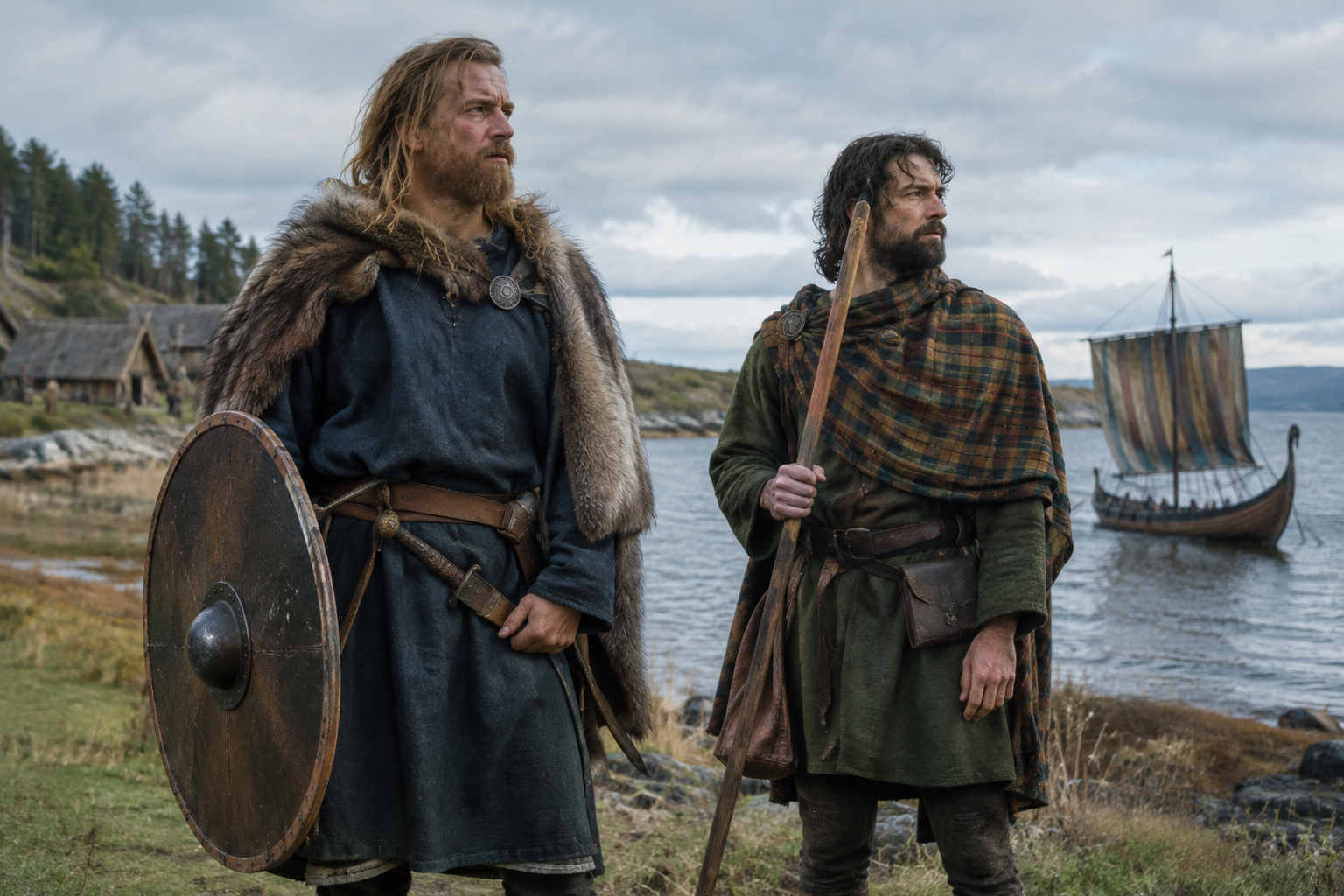
Some Y-DNA haplogroups are so broad that they cover enormous stretches of Eurasian history. R1b1a1a2a1a2c1c is not one of those broad umbrellas but a much narrower branch inside the large and historically important R1b family. That is precisely what makes it interesting. A lineage this specific can bring us closer to real historical settings: particular regions, particular burials, and sometimes particular social worlds rather than a vague continental backdrop.
As ever, a note of genetic housekeeping is needed. Y-DNA traces one direct paternal line only: father to father to father. It does not describe a person's whole ancestry, culture, language, or identity. Nor does sharing a haplogroup prove close kinship. But when a rare or distinctive paternal branch turns up in ancient graves, it can help us map how lines of descent moved across landscapes and through political worlds that written history only partly records.
In this case, the supplied evidence places our attention firmly in Scandinavia during the Viking Age, while one of the later historical associations points us toward Scotland and a smaller noble landscape of lairds, tower houses, and family memory. That is an intriguing combination in itself: a paternal lineage seen in Viking Age Sweden, then considered in the context of the North Sea world that linked Scandinavia, the British Isles, and later noble society.
This lineage belongs within the wider R1b tree, one of the major Y-chromosome groupings found across western Eurasia. The broader R1b family has a deep and complicated history, and its many branches spread in very different ways at different times. For that reason, it would be careless to pour the whole history of R1b directly into the much narrower subclade R1b1a1a2a1a2c1c. What we can say more responsibly is that this branch represents one specific paternal thread within that larger western Eurasian story.
For historical interpretation, narrow branches matter because they can show regional persistence or movement within already mixed populations. By the Viking Age, Scandinavia was not genetically sealed off from the rest of Europe. It was a place of trade, raiding, migration, intermarriage, slavery, conversion, and settlement. A paternal branch found there may reflect older local ancestry, earlier movements into the region, or lineages carried by men whose families had already been woven into Scandinavian society for generations.
If you want broader background on how ancient DNA transformed our understanding of deep European ancestry and movement, the MyTrueAncestry community has an excellent overview.
The clearest anchors here are two ancient individuals from Sweden. They do not give us a complete history of the haplogroup, but they do give us something better than abstraction: real men, buried in a real historical period, whose DNA now lets us glimpse paternal continuity and diversity in Viking Age Scandinavia.
The first is fjk363, listed as Ancient Individual: Viking Age Fjalkinge Sweden Year: 975 AD ID: fjk363. The dating places him in the later Viking Age, a period when Scandinavian societies were changing rapidly. Christianity was advancing, royal authority was consolidating unevenly, and the old networks of travel and exchange remained lively. Fjalkinge, in southern Sweden, sits in a region with strong connections across the Baltic and the Danish straits. A paternal line found here belongs to a world that was unmistakably Scandinavian, but also anything but isolated.
The second is nuf002, listed as Ancient Individual: Viking Celtic Mix Sweden Year: 935 AD ID: nuf002. Even the label is suggestive. It points to a person in Sweden connected, in some sense, to Viking and Celtic worlds together. That should not surprise us. By the 10th century, Scandinavian contact with Ireland, the Scottish islands, western Britain, and other North Atlantic zones had already been intense for generations. Raiding was only part of it. There were trading settlements, political alliances, enslaved captives, fosterage, migration, and family formation across the sea.
What makes nuf002 especially interesting is not that he proves any simple ethnic category, but that he reminds us how mixed historical communities could be. Viking Age identities were social and political, not mere genetic labels. A man in Sweden with links described as Viking and Celtic fits perfectly well into a North Sea world in which ancestry, language, and allegiance did not always line up neatly.
Readers interested in the broader picture of Scandinavian burials and mobility may enjoy this related piece on Viking Age genetics.
These Swedish samples do not prove a march of this haplogroup into any particular later family. But they do place the lineage in a historical zone that mattered enormously for the making of medieval Britain and Ireland. The Viking Age was not just an episode of Scandinavian expansion. It created a durable North Sea and Atlantic network linking Norway, Denmark, Sweden, the British Isles, the Irish Sea, the Hebrides, the Isle of Man, Normandy, and beyond.
That is where a lineage like R1b1a1a2a1a2c1c becomes historically evocative. A paternal branch found in Viking Age Sweden may have traveled west, or it may mark men whose ancestors had already moved around the North Sea long before burial. Equally, similar paternal lines in later western regions may reflect older shared ancestry rather than a single medieval migration. Ancient DNA helps us pose better questions, but it does not magically turn every shared haplogroup into a family tree.
For readers interested in how Scandinavian-linked movements shaped Britain more broadly, this article is a natural companion.
The later historical setting supplied for this haplogroup brings us to Riddarshuset Belfrage and to Aldie Castle in Perth and Kinross, Scotland. Here, the scale shifts beautifully. We move away from large migration maps and into the intimate geography of local lordship.
Aldie Castle began as a tower house, probably built in the late 1500s or early 1600s. It belonged to the Mercers of Aldie, a local lairdly family whose roots reached further back. That matters, because smaller Scottish castles are often better witnesses to everyday noble life than the grander royal strongholds. They speak of a world in which status depended not only on high politics, but on landholding, kinship, local authority, and the ability to defend and display one's place in the countryside.
The building was later enlarged and altered as tastes changed, which is exactly what one would expect of a residence adapting from defensive practicality toward domestic fashion. Then came the long decline familiar to so many lesser castles. As patterns of country living shifted and fortified homes lost their purpose, Aldie became a ruin. Yet enough survived to preserve its outline and significance. Today it remains valuable as a historic monument because it keeps visible the world of minor Scottish nobility and the long afterlife of their houses in the landscape.
That is where genetics and history can productively meet, though cautiously. A noble family's association with a haplogroup is not proof that every man of that surname or house carried that lineage, still less that every later descendant did. Families branch, adopt, inherit through women, absorb non-paternal events, and reinvent themselves. Castles preserve memory and status far more reliably than they preserve chromosomes. Even so, when a paternal lineage appears in northern European ancient DNA and later turns up in the orbit of Scottish noble tradition, it offers historical context worth exploring.
For readers curious about the family named in the supplied material, the related Belfrage article is the obvious next stop.
Read About the Belfrage Family
So what can we say, responsibly, about R1b1a1a2a1a2c1c? First, it is a direct paternal lineage within the wider R1b family. Second, the supplied ancient evidence places it in Viking Age Sweden through fjk363 and nuf002, with the latter sample especially suggestive of the mixed social world created by Scandinavian contact with Celtic-speaking regions. Third, the later historical association with Aldie Castle and the Mercers of Aldie places our thinking in a Scottish setting where North Sea connections, noble memory, and regional continuity all matter.
What it does not tell us is that a Viking in Sweden was the direct ancestor of a laird in Perth and Kinross, or that a ruined tower house can certify a paternal lineage. Ancient DNA and genealogy work differently. One reconstructs population history from burials and genomes; the other traces named lines through documents, inheritance, and family tradition. When they align, they can be wonderfully illuminating. When they do not, that is illuminating too.
The real excitement lies in seeing how a narrow Y-DNA branch can connect archaeology, migration, and later historical landscapes without flattening them into fairy tale descent. This is history at its most interesting: partial, material, cross-checked, and full of human movement.
If your own Y-DNA or autosomal results point toward northern Europe, Scandinavia, or the British Isles, comparisons with ancient individuals like fjk363 and nuf002 can offer a fascinating new perspective. They may reveal similarities to ancient populations and historical regions, though not proof of direct descent from any one Viking or noble family. That is exactly what makes ancient DNA so useful: it opens windows onto the deeper human setting behind surnames and pedigrees.
Upload your DNA to MyTrueAncestry and see whether your results connect with ancient samples, historic populations, and the wider story behind lineages like R1b1a1a2a1a2c1c.






Comments