Haplogroup G2a2b2a1a1a1b1
– 5 min read


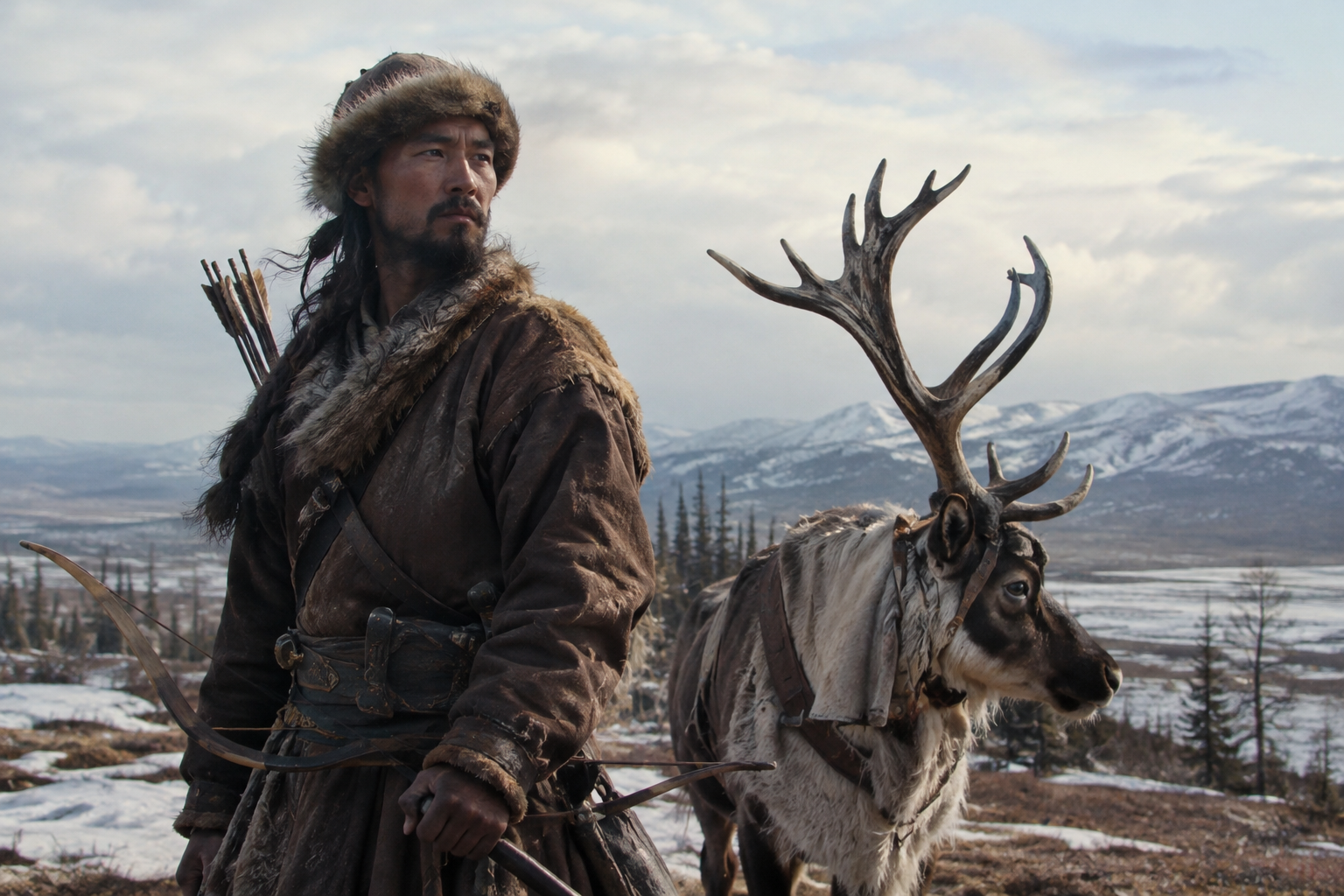
At Uyelgi in the Trans-Ural region of Russia, one medieval male sample stands out for anyone following the paternal trail of haplogroup G2a2b2a1a1a1b1: Uyelgi4, dated here to around AD 900. That is already an intriguing setting. The Trans-Urals were not a quiet backwater in the early medieval period, but part of a wider contact zone linking forest, steppe, and the routes that fed into the world of the early Hungarians and their neighbours.
The value of a find like Uyelgi4 is not that one skeleton can explain an entire people. It cannot. But a direct paternal lineage can sometimes mark the presence of a particular male line within a historically important community. In this case, G2a2b2a1a1a1b1 belongs to the broader Y-DNA haplogroup G, a lineage with a long and complicated history across western Eurasia. What matters here is that this very specific branch appears in an early medieval Trans-Ural context, giving us a firmly archaeological glimpse of one paternal line moving within a frontier world of mobility, exchange, and population mixture.
Uyelgi has become important in archaeogenetic discussions because the cemetery sits in a region often drawn into debates about populations east of the Volga and around the southern Urals in the centuries before and during the Hungarian conquest period. The cemetery's chronology places it in exactly the sort of landscape historians and archaeologists care about when asking how communities formed between Europe and the steppe.
Uyelgi4 does not, by himself, prove a migration route, a language, or a tribal identity. But he does provide something more solid than later legend: a datable ancient male line from the Trans-Urals. Research on this regional material, including a study published in Scientific Reports, has helped make Uyelgi part of the wider conversation about eastern connections in early medieval Eurasia.
That is the real historical force of the evidence. It anchors a branch of haplogroup G not in abstract prehistory alone, but in a lived early medieval setting where different ancestries and cultural affiliations could meet in the same burial ground.
Southern Urals and early Hungarians
It is worth being careful here. G2a2b2a1a1a1b1 is a very narrow paternal branch, while haplogroup G as a whole is much older and much broader. The wider G family is well known in ancient DNA because branches of G2a were prominent among some early farming populations of Neolithic Europe and also appear across the Caucasus and adjacent regions in later periods. But that broad background should not be lazily projected onto this exact subclade.
What Uyelgi4 shows is not "the Neolithic farmer lineage turns up unchanged in medieval Russia" - that would be far too simple. Rather, it shows that one descendant branch within that immense paternal family was present in the Trans-Ural world around AD 900. Over the many millennia between the first spread of G-related lineages and this burial, countless population movements, bottlenecks, local expansions, and social changes would have reshaped where particular sub-branches were found.
For family historians, this distinction matters. Y-DNA follows one direct paternal line only: father to father to father. It is powerful for tracing that line, but it is not a full portrait of a person's ancestry, language, or identity. In archaeology, that means a man with haplogroup G2a2b2a1a1a1b1 might have belonged to a community whose genome, culture, and historical affiliations were far more mixed than the Y chromosome alone suggests.
The Trans-Ural region in the early Middle Ages was a hinge zone. To the west lay the Volga-Ural world and, beyond it, eastern Europe. To the south and southeast stretched the steppe networks. To the north were forested zones linked to Uralic-speaking populations and other northern communities. A cemetery in such a place cannot be read in one cultural direction only.
This is one reason ancient DNA from the region has attracted so much attention in studies of early Hungarian origins and wider Eurasian population history. The question is not whether every burial belongs to one neat ethnic block. It is how communities in this zone were assembled, maintained, and transformed. Uyelgi4 contributes to that question by showing that a branch of G was among the paternal lines present there.
That matters because popular history still tends to imagine early medieval movements as if whole peoples marched about carrying single, uniform genetic signatures. The archaeology and genetics of the Urals usually show the opposite: layered populations, mixed ancestries, and local histories that resist tidy labels.
With only one named ancient sample here, caution is not just polite; it is essential. Uyelgi4 should not be inflated into the founder of a people, the marker of an elite clan, or proof that all men at Uyelgi shared the same paternal ancestry. Ancient cemeteries often contain several male lines, and even when one branch appears repeatedly, that does not automatically mean political dominance or close kinship unless the evidence says so.
Nor should this lineage be tied too quickly to a later nation or royal house. No noble family or dynastic evidence has been provided for this article, and that is just as well, because the archaeological story is already strong enough without forcing prestige into it. The point is the historical texture of the site itself: an early medieval burial ground in a region central to debates about eastern European and Uralic-borderland population history.
What makes Uyelgi4 especially useful, then, is precision of context rather than grandeur of interpretation. We have a sample ID, a place, and an approximate date in a region of major historical interest. That is often how responsible archaeogenetics begins: not with certainty about everything, but with one securely placed individual who helps narrow the field of possibilities.
Broader haplogroup G has a deep history stretching across different parts of western Eurasia, and that long background may help explain why a descendant branch could appear in the Trans-Urals by the early medieval period. Over time, male lines from the G family are documented in very different settings, from early agricultural societies to later populations around the Caucasus and beyond. That does not map a single straight road to Uyelgi, but it does remind us that this was never a purely local or isolated lineage family.
In practical terms, G2a2b2a1a1a1b1 at Uyelgi may reflect older movements from regions further south or southwest, later incorporation into steppe-edge communities, or complex regional admixture over many centuries. Several of those scenarios are plausible; none should be treated as proven from one sample alone. The sensible conclusion is narrower and more useful: by around AD 900, this paternal branch was part of the human landscape of the Trans-Urals.
If your paternal line falls under G2a2b2a1a1a1b1, Uyelgi4 offers a rare and concrete signpost: this branch, or a reported association with it, appears in an early medieval Trans-Ural burial around AD 900. That does not make every present-day carrier "Hungarian," "steppe," or "Uralic." It does something better. It places your direct paternal line within a documented archaeological world where eastern Europe and inner Eurasia met, mixed, and reshaped one another.
For many readers, that is the real excitement of ancient DNA: not a fantasy pedigree, but a genuine human context. In the case of G2a2b2a1a1a1b1, the clearest ancient glimpse so far is not a palace or a legend, but a man from Uyelgi, buried in a frontier region whose history was anything but simple.






Comments