Genetic Traces of a 1348 Catalan Pogrom: Medieval Iberian Jews Revealed by Ancient DNA
– 7 min read


Medieval Iberian Jews and the 1348 Tàrrega Pogrom
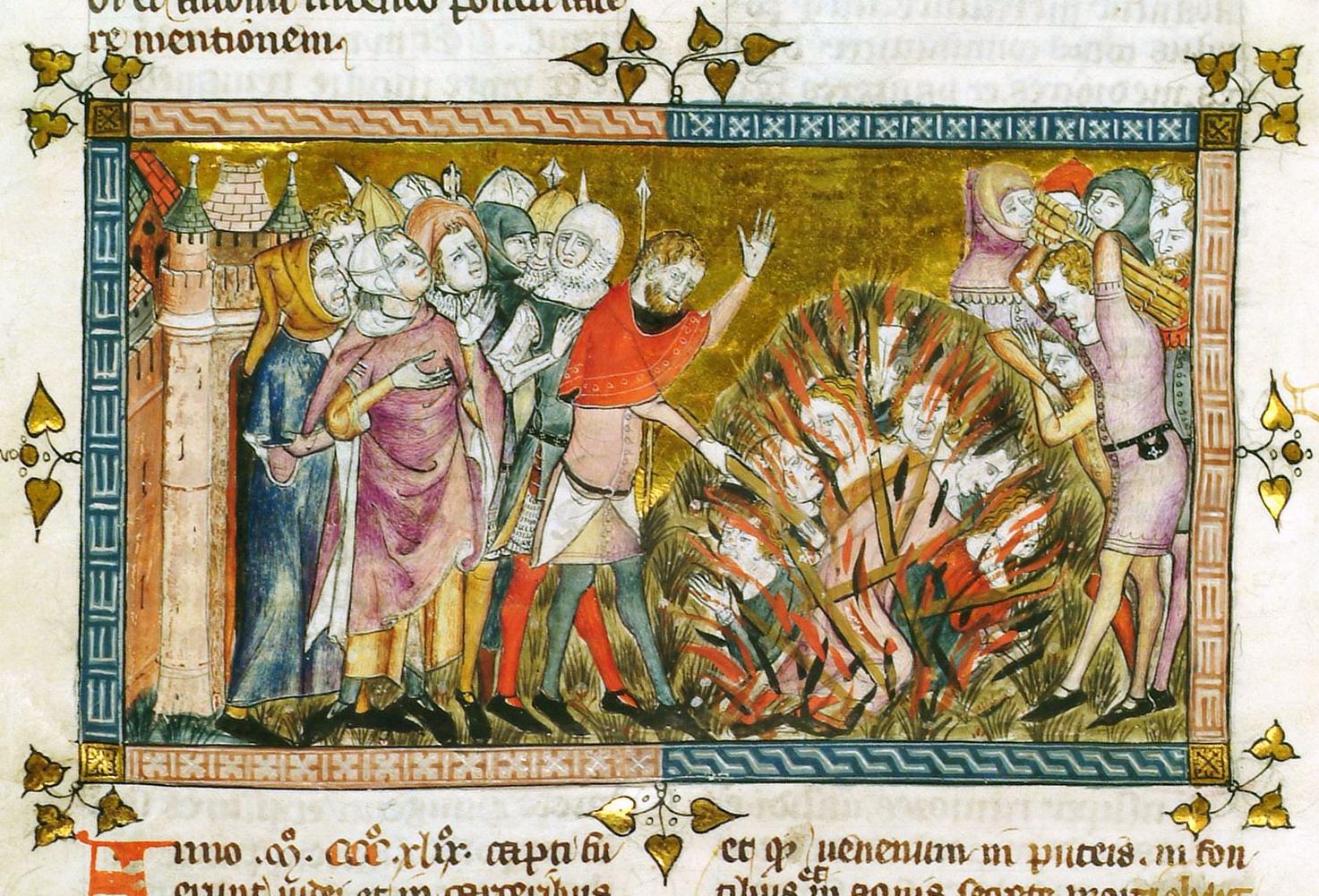
In the summer of 1348, as the Black Death raged across Europe, the small Catalan town of Tàrrega saw one of the most violent anti-Jewish attacks in the Crown of Aragon. Chronicles speak of armed men storming the Jewish quarter, destroying documents, and killing perhaps 300 people. For centuries this was a story told on paper. Now, thanks to archaeology and ancient DNA, the victims themselves have begun to speak.
Advances in archaeogenetics have made it possible to trace our DNA back thousands of years, linking us to cultures long lost to time. You can see where your lineage fits in this vast human map at MyTrueAncestry.com.
In 2007, rescue excavations on the outskirts of Tàrrega uncovered the Roquetes necropolis, identified as the medieval Jewish cemetery of the town. Among the orderly individual burials typical of a long-used cemetery, archaeologists found something far more dramatic: six packed communal graves, each filled with jumbled, overlapping bodies.
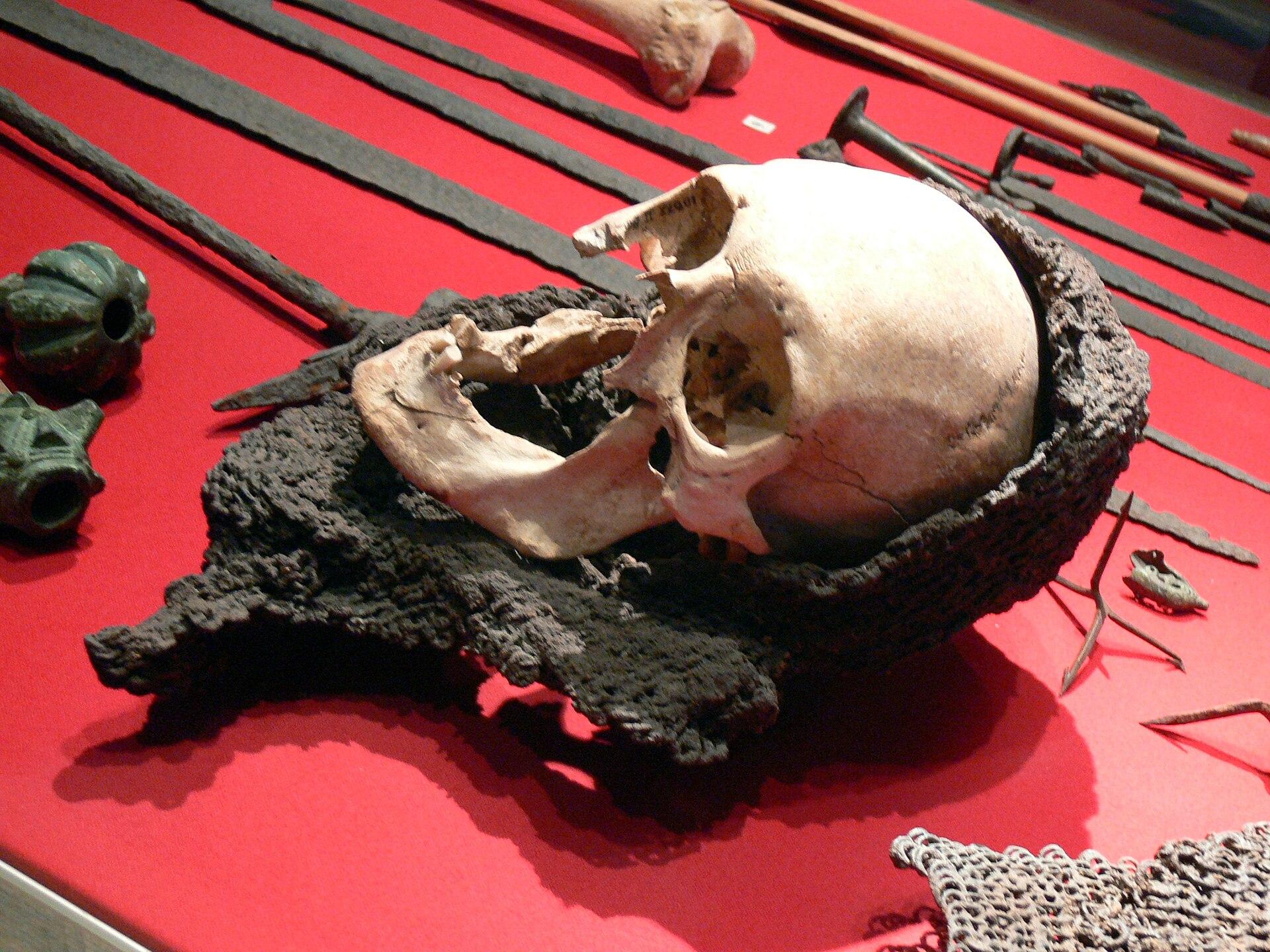
These six mass graves contained at least sixty-nine individuals. The way they were buried was striking in its departure from normal Jewish burial customs. Bodies were crowded together with little ceremony, many showing clear signs of violent blows to the head inflicted around the time of death. The archaeological evidence pointed unmistakably to a catastrophic event, not gradual accumulation over time.
All this matched the written accounts of a sudden, violent massacre in 1348. The cemetery offered a rare chance to connect text, bones, and genetics in understanding this pivotal moment in medieval Jewish history.
From these mass graves, sixteen individuals were chosen for detailed genetic study, representing both sexes, different ages, and all six communal pits. They are referred to in the study by codes such as ROQ1, ROQ2, ROQ4, and so on – a reminder that, for now, their names are lost, but their lives are not.
Eleven of these individuals yielded enough ancient DNA for full analysis. Four were genetically male, seven female. Remarkably, there were no close family relationships detected among any of the victims – no parent-child pairs, no siblings, no first cousins. This suggests the pogrom swept up people from across the Jewish community, not just individual families.
This picture fits with what is known from medieval sources: Tàrrega's Jewish community was a close-knit minority within the town, but the 1348 pogrom swept up victims across households and families, throwing unrelated members of the community together in hurried mass burials.
The Roquetes necropolis was used over a long period as the Jewish community's formal cemetery. Most graves followed Jewish funerary customs: individual interments and respect for body orientation and placement. The six mass graves broke that pattern dramatically.
The study underlines several key archaeological observations that distinguish these mass burials from normal cemetery practice. Bodies were oriented roughly east-west, maintaining some connection to traditional Jewish burial orientation toward Jerusalem. However, the hurried nature of the interments, the overlapping placement of corpses, and the evidence of violent trauma created a stark contrast with the careful individual graves found elsewhere in the cemetery.
Despite the chaotic circumstances, the absence of grave goods remained consistent with Jewish burial customs, which discouraged placing valuables with the dead. In this way, the graves themselves become a material echo of the 1348 attack on the community: a Jewish burial ground, Jewish bodies, Jewish funerary space – but an emergency manner of burial forced by catastrophe.
The researchers paid particular attention to mitochondrial DNA, the genetic material passed down the maternal line. In Jewish tradition, Jewish identity is traced through the mother, so these lineages have special cultural as well as biological significance.
The Roquetes individuals showed strikingly high mitochondrial diversity. Among twelve unrelated individuals, ten distinct maternal lineages were identified, suggesting a community that maintained connections across the wider Jewish world rather than becoming isolated in Catalonia.
Some of these specific lineages are especially telling. One woman, ROQ12, carries K1a1b1a – a lineage famous for being one of the classic founder maternal lines in Ashkenazi Jews, also found in medieval Jewish remains from Erfurt, Germany. Another individual, ROQ15, belongs to U5a2b, a lineage seen both in medieval Erfurt Jews and in some modern Ashkenazi communities in Eastern Europe.
ROQ4 shows M1a1b1c, a branch with deep connections to the eastern Mediterranean and North Africa, today found among Jewish communities across Europe. Two different people share a rare subtype, H1bo, seen among both Ashkenazi and Sephardic Jews across Europe and in descendants of Iberian conversos – though these two Roquetes individuals are not close kin, hinting at the spread of this maternal line within the community.
Unlike the rather narrow range of maternal lines found in some medieval Ashkenazi communities, Tàrrega's Jews look much more varied. This pattern resembles Sephardic-descended communities in the Mediterranean, where multiple maternal lines survived rather than being squeezed by strong founder effects.
The four males with usable Y-chromosome data also carried lineages familiar from Jewish and eastern Mediterranean contexts. One man belongs to a branch of J2a2a1, a lineage with deep roots in the Levant and Near East, common in Jewish populations. Another carries E1b1b, previously observed in medieval Jewish communities at Norwich and Erfurt. A third belongs to G1a1a, seen in Bronze Age individuals from Iran and early modern Turkey. The fourth carries the rare E2a lineage, better known today in East Africa.
Taken together, these paternal lines fit a pattern of a community rooted in the eastern Mediterranean and Near East, but linked across a long history of movement into Europe and around the Mediterranean basin.
To place the Roquetes individuals within a wider human landscape, the study compared their genomes with ancient and modern populations from across Europe, the Mediterranean, and beyond. In principal components analysis, the Roquetes individuals fall neatly among modern Ashkenazi and Sephardic Jewish populations, medieval Jews from Erfurt and Norwich, and show clear relationships to Bronze Age Levantine populations.
They do not cluster with contemporary medieval Christian or Islamic Iberian populations, nor with more distant Jewish communities in Yemen or India. Another set of analyses confirms the same story: the Roquetes individuals share the strongest genetic connections with other Jewish populations and with ancient Near Eastern groups, while maintaining some relationship to medieval Iberian Christians.
The Roquetes community looks like a distinctively Jewish group in medieval Iberia, yet one that had absorbed some local ancestry over time through intermarriage and conversion.
The most striking formal modelling result comes from analysis asking whether this population can be explained as a mixture of known ancestral groups. The best-fitting model for the Roquetes Jews involves approximately 70 percent ancestry from Bronze Age Canaanite-like populations and about 30 percent from medieval Iberian Christians.
This represents, in effect, a genetic map of the life of a medieval Iberian Jewish community: deeply rooted in Levantine Jewish ancestry dating back to the Bronze Age emergence of Judaism itself, yet meaningfully connected through centuries of coexistence to the Christian population of medieval Catalonia.
The lack of close kin among those in the mass graves supports the archaeological and historical conclusion that these pits preserve a catastrophic event, not a family cemetery. People from across the Jewish community of Tàrrega – men and women, young and old, related and unrelated – were thrown together in death, victims of violence that struck the community as a whole rather than targeting specific families.
The technical achievement behind these discoveries required careful laboratory work to extract and authenticate ancient DNA from bones buried for over six centuries. Working in specialized clean rooms, researchers focused on the petrous portion of the temporal bone, known for superior DNA preservation. Each bone was carefully documented with 3D photography before sampling.
The extraction process involved removing contaminated outer surfaces and grinding protected inner bone to powder. DNA was extracted using methods optimized for ancient, degraded material, with extensive controls to prevent modern contamination. Special library preparation techniques captured even the most fragmented ancient DNA molecules.
Authentication relied on multiple criteria: characteristic ancient DNA damage patterns, consistent sex determination from genetic and osteological evidence, clean mitochondrial sequences, and successful negative controls. Only samples passing all authentication tests were included in the final analysis.
For most individuals, initial sequencing showed very low human DNA content, requiring targeted enrichment using commercial panels designed for ancient samples. This enrichment concentrated sequencing effort on the most informative parts of the human genome for ancestry analysis.
The Roquetes necropolis allows the 1348 Tàrrega pogrom to be seen from three angles at once: through historical documents describing the attack, through archaeological evidence of mass burial and violent trauma, and through genetic data revealing the ancestry and community structure of the victims.
The study shows that the Jews of Tàrrega were not a vague "other" in the documents, but a community with its own internal diversity, complex origins, and long, intertwined history with the Iberian Peninsula. Their remains, recovered from the Roquetes cemetery, reveal a medieval Jewish world in Catalonia that was both fully local and unmistakably part of the wider Jewish Diaspora.
From Bronze Age Canaan to medieval Catalonia, the genetic threads weave together a story of continuity and adaptation. The maternal and paternal lineages carried by these individuals connect them to Jewish communities across Europe and the Mediterranean, while their mixed ancestry reflects centuries of life in Iberia. When violence struck in 1348, it destroyed not just individual lives but a complex community that had successfully balanced Jewish identity with Iberian residence for generations.
The Roquetes necropolis thus becomes more than a silent witness to medieval violence. Through the integration of archaeology, history, and genetics, it offers a unique window into the lived experience of medieval Iberian Jews – their origins, their community structure, their connections to the wider Jewish world, and ultimately, their tragic destruction during one of the darkest chapters of medieval European history.
https://www.mdpi.com/2073-4425/17/3/358
Discover how your DNA connects to ancient civilizations at www.mytrueancestry.com.
Comments