Genetic encounters at San Marcial de Rubicón: early colonial mixing of European settlers and North African Moriscos in 15th‑century Lanzarote
– 6 min read


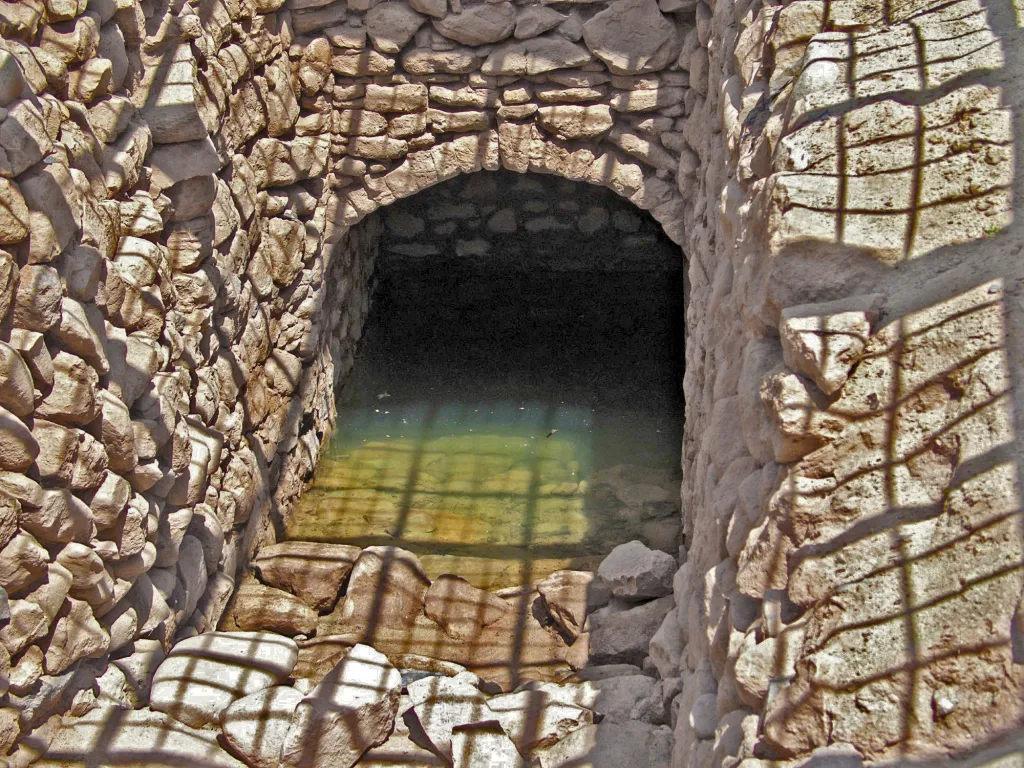
European Atlantic Expansion and the First Colonial City at San Marcial de Rubicón
The study of San Marcial de Rubicón, situated on the southern tip of Lanzarote, places this remarkable settlement at the sharp edge of European Atlantic expansion. In the early 1400s, long before caravels headed regularly for the Caribbean, this wind-beaten cove became the first European city in the Atlantic world beyond the continent itself. This comprehensive examination reveals how archaeology, bioanthropology, and ancient DNA analysis have uncovered the extraordinary story of the earliest Atlantic colonial community.
In 1402, the Norman lord Jean de Béthencourt and his partner Gadifer de La Salle chose a small, sheltered bay on Lanzarote's south coast as their base of operations. The location offered everything a medieval conqueror might want: a protected anchorage, reliable freshwater sources, defensible terrain, and proximity to the African coast for further expansion. Here they raised a fortified camp that quickly expanded into a settlement known as San Marcial de Rubicón.
Within two years, in 1404, a papal bull elevated this outpost to the status of a city, with its modest church of San Marcial transformed into the cathedral of the new Rubicón diocese. On this barren shore, Europe planted one of its earliest durable colonial cities, serving as a prototype for later Atlantic and American ventures. San Marcial de Rubicón functioned not merely as a military camp, but as an administrative and religious centre, a staging post for voyages, a node in new trading routes, and a control point for the exploitation of island resources and people.
The establishment of Rubicón occurred within a longer history of contact between Europe and the Canary Islands. During the 14th century, Genoese, Majorcan and Portuguese sailors had already begun probing the archipelago, seeking exotic products such as dragon's blood resin, animal hides, livestock, and above all enslaved people. Missionaries, especially from Majorca, briefly established themselves in Gran Canaria, while European slave raids took a heavy toll on the Indigenous islanders.
The Normans arrived to find Lanzarote's Indigenous Maja population already weakened by decades of raiding. Medieval chronicles speak of an island that had been very populated but reduced to only about three hundred people by slave hunters by the time Béthencourt landed. Under these conditions, opposition was limited, and the island's Indigenous leaders quickly made terms with the newcomers.
Rubicón thus became the first stable European foothold in the Canaries, though its glory proved short-lived. In 1418, Béthencourt's successor Maciot de Béthencourt moved the island's capital inland to Teguise, an Indigenous settlement transformed into a new colonial centre. By the later 1400s the bishop's seat also shifted away, and San Marcial declined. Archaeological evidence shows only one main period of intense occupation in the 15th century, after which the living city faded, though its wells continued in use for centuries.
The ruins of San Marcial de Rubicón still overlook the sea: fragmentary walls on a low ridge, the footprint of a small church, and until recently, very little in the way of clearly documented burials. Nineteenth-century excavator René Verneau recorded three skeletons near the church. In 1960, the Serra i Ràfols brothers cleared two simple sand-cut graves, oriented north-east to south-west, seeking to prove there had been a medieval Christian cemetery beside the church.
At the time, archaeologists did not yet realise that Indigenous Canarians also used sand-pit burials, so the graves were simply assumed to belong to the colonial cemetery. No grave goods were recorded, and the bones were stored with little documentation. Over the decades, these remains were mixed with other finds from across Lanzarote; labels were lost, boxes muddled, and the city itself, along with its dead, became almost anonymous.
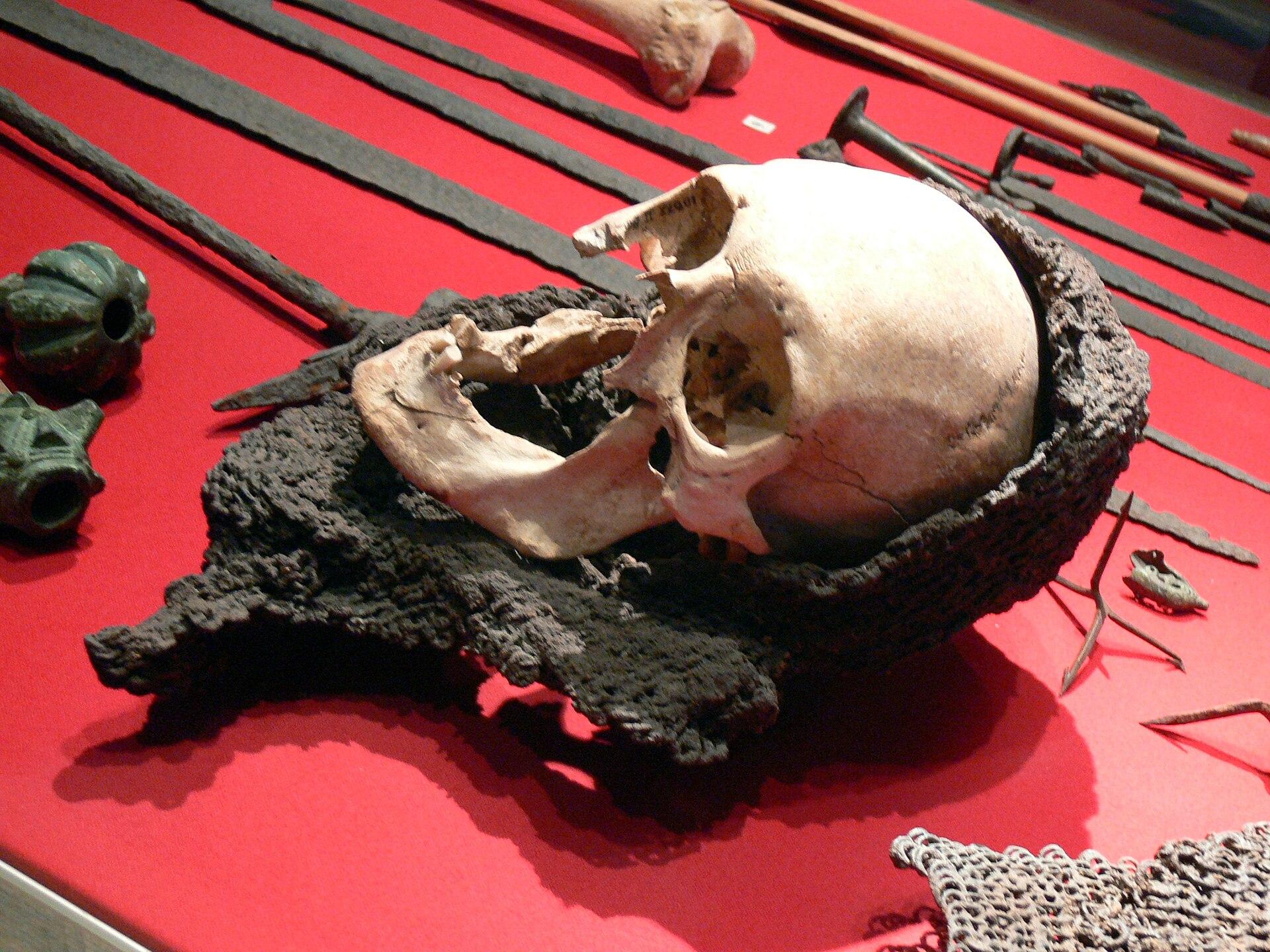
Recent research has worked to untangle this confusion. Investigators painstakingly sorted the human collections held by the island's authorities, reassembling skull fragments like three-dimensional jigsaw puzzles and cross-checking old inventory notes. Through this process, they identified five skulls linked to the 1960 Rubicón excavations. These five individuals, labelled SMR-1 to SMR-5, became the focus of a comprehensive multidisciplinary investigation combining radiocarbon dating, bioanthropological analysis, and ancient DNA studies.
Radiocarbon dating of the five skulls demonstrates that all belong to the colonial period. When these dates are combined with historical knowledge about the founding of Rubicón in 1402, the shift of the capital to Teguise in 1418, and archaeological evidence for brief occupation, a clearer chronological framework emerges. Statistical modelling places their deaths firmly within the 15th century, making them members of the very first colonial community that developed on Lanzarote's south coast.
These are not random later burials in an abandoned churchyard, but rather members of the earliest Atlantic colonial settlement that grew up in the decades immediately following conquest, at the precise moment when European expansion in the Atlantic was beginning to crystallise into permanent overseas territories.
The bioanthropological study reveals that the sample includes at least two men and two women, all adults. The men, SMR-1 and SMR-2, died in their twenties or thirties, while the women, SMR-3 and SMR-4, were younger, probably in their late teens to mid-twenties. The fifth individual is represented only by a frontal skull fragment and could not be definitively sexed.
These individuals were buried without obvious grave goods in simple pits cut into sand, consistent with modest Christian burial practices at a frontier settlement. What makes them remarkable is not what they were buried with, but who they were and what their genomes reveal about the human composition of this earliest Atlantic colonial city.
Ancient DNA analysis demonstrates that the two male individuals possess overwhelmingly European genetic ancestry. When their genomes are compared with those of medieval Europeans, they cluster with populations from the Iberian Peninsula, including both Christian and Islamic-period groups, and with present-day southern Europeans.
SMR-2 carries a mitochondrial lineage (H3o) found today in the Iberian Peninsula, and a Y-chromosome lineage (J-M172, specifically J-L70) with a Mediterranean distribution; his closest modern genetic relatives are in Italy, Spain and the wider Iberian world. SMR-1 possesses a Y-chromosome in the R-M269 family (R-S116), now the dominant male lineage in western Europe, especially in Iberia and France. His maternal line (U5b1b1e) is associated with North Africa, which is not surprising given the millennia of genetic exchange between Europe and North Africa in this region.
SMR-2 might represent one of the earliest European foreigners to die and be buried in the Canaries, perhaps part of the Norman group that accompanied Béthencourt, or an Andalusian settler arriving in the first waves of colonisation. SMR-1, slightly later in date, fits well with the influx of Andalusian colonists after 1418, when the focus of island life shifted toward Teguise but Rubicón still functioned as a coastal administrative centre.
The two women at Rubicón show dramatically different ancestry patterns. Their genomes fall squarely within the range of North African populations, clustering particularly closely with Saharan and Maghrebi groups and with present-day North Africans, rather than with Indigenous islanders. Their genetic profiles contain components typical of later North African populations, including elevated eastern Mediterranean and sub-Saharan African ancestry associated with Islamic-period migrations and long-distance trade networks.
Their maternal lineages reinforce this continental North African origin. SMR-4 carries a U6a5a1 mitochondrial type, a branch of a haplogroup that is characteristically North African in origin and concentrated there today. SMR-3 possesses a T2c1 lineage, found in both Europe and North Africa, but her overall genetic composition points toward a continental North African background rather than a local island origin.
Analysis of long, shared genetic segments between these women and other ancient individuals with North African ancestry reveals that SMR-3 shows connections to an Upper Palaeolithic North African individual and to two medieval people from Andalusia, one historically identified as a Morisco. Significantly, neither Rubicón woman shares close genetic segments with Indigenous Canarians, supporting the interpretation that they themselves, or their immediate ancestors, came from the continent rather than from established island communities.
The most plausible interpretation is that these women belonged to the Morisco population in the broad sense used for the islands: people from the Atlantic coast of what is now Morocco and Mauritania, captured in raids, enslaved, baptised, and subsequently integrated into colonial society. Many such individuals, or their descendants, remained in the Canaries after manumission, forming large and tightly-knit North African-origin communities, especially on Lanzarote. By the late 15th century, Moriscos comprised approximately half of Lanzarote's population.

Comments