The “Beachy Head Woman”: Ancient DNA Shows a Local Romano-Briton
– 6 min read


Beachy Head Woman: A Romano-British Life Revealed
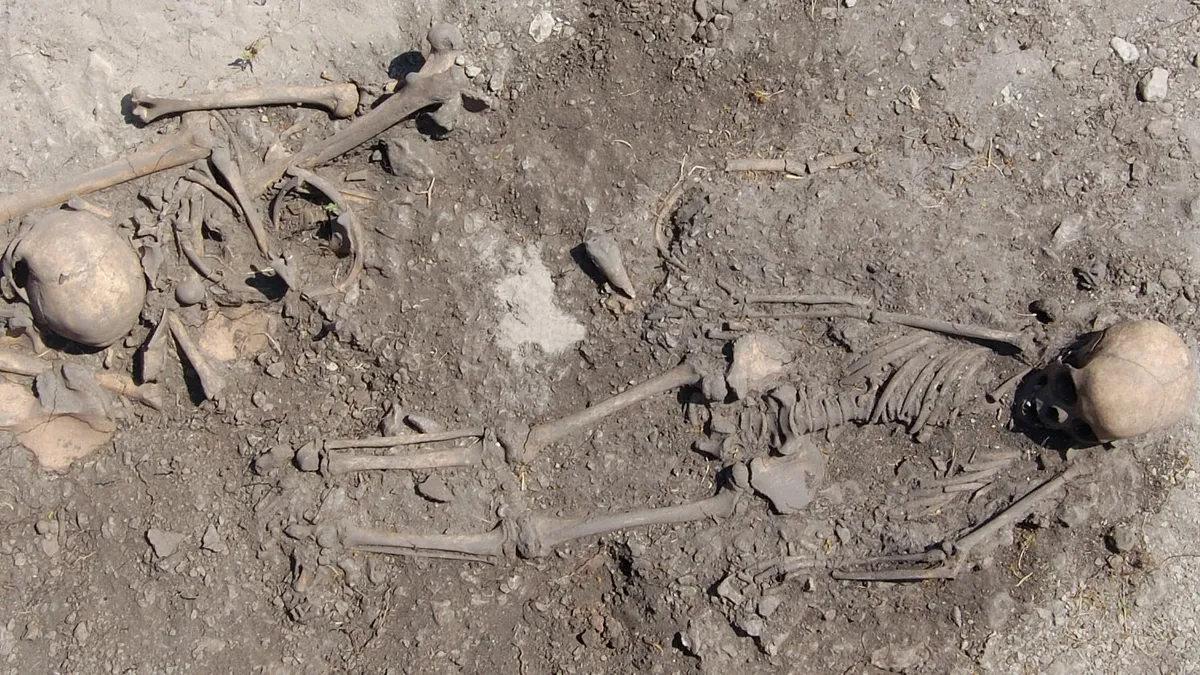
In 2012, a forgotten skeleton emerged from a dusty box in Eastbourne Town Hall, bearing only a simple label: "Beachy Head (1959)". This discovery would spark more than a decade of scientific investigation, transforming our understanding of life in Roman Britain. The young woman whose remains lay in that box would become the subject of groundbreaking research combining archaeology, isotope analysis, and cutting-edge ancient DNA techniques to reveal the story of an individual who lived and died on England's south coast nearly two millennia ago.
The case of Beachy Head Woman demonstrates how modern scientific methods can breathe life into ancient remains, moving beyond traditional approaches that relied heavily on skull measurements and archaeological assumptions. Through careful analysis of her bones, teeth, and genetic material, researchers have reconstructed not just her physical appearance, but her childhood origins, diet, lifestyle, and place within the complex world of Roman Britain.
Her DNA is now available on MyTrueAncestry - you can discover how your DNA compares and possibly if she is your long lost ancestor!
For centuries, history has been told through artifacts and chronicles. Now, DNA gives us a different kind of evidence — one that speaks from within. Learn how your genetic story connects to the ancient world at MyTrueAncestry.com.
Beachy Head Woman lived during the height of Roman occupation, between 129 and 311 CE, as confirmed by radiocarbon dating. The spectacular chalk headland where she was found was not an isolated backwater, but part of a thriving coastal region integral to the Roman Empire's British frontier. This landscape was densely populated with Roman infrastructure: roads, forts, villas, and farmsteads that reshaped the Sussex countryside and connected it to the wider Mediterranean world.
The immediate vicinity of Beachy Head contained numerous Roman sites that would have formed part of her daily world. To the west, archaeological evidence at Birling and East Dean reveals scattered Romano-British occupation, suggesting networks of small farmsteads and rural plots. The substantial Roman villa at Eastbourne, complete with elaborate mosaics and high-status architecture, demonstrates the presence of wealthy elites enjoying luxurious lifestyles along this coast. Further east, the massive late third-century Roman fort at Pevensey formed part of the "Saxon Shore" defensive system, guarding the Channel approaches with its imposing stone walls.
Perhaps most significantly, the long-lived rural settlement at Bullock Down stretched throughout the entire Roman period, from conquest to withdrawal, providing evidence of continuous habitation and agricultural activity. This was a landscape where local farms, elite villas, and imperial garrisons coexisted within a few miles of each other, creating a complex social and economic web that would have shaped every aspect of daily life for inhabitants like Beachy Head Woman.
Osteological analysis revealed that Beachy Head Woman was a young adult, probably between 18 and 25 years old at the time of her death. She stood approximately 1.52 metres tall, relatively short by modern standards but typical for her era. Her skeleton showed no clear cause of death, but it did preserve evidence of earlier trauma: an ossified haematoma on her right thigh bone indicated she had suffered a significant injury to her leg at some point in life, survived it, and carried the resulting bone formation as a permanent marker of that experience.
The burial evidence from the Beachy Head area is unfortunately sparse, though tantalising glimpses exist. Late nineteenth-century archaeological work uncovered at least seven Romano-British inhumations in the region, complete with grave goods that were subsequently donated to Eastbourne Museum. Tragically, these artefacts were likely destroyed during the Second World War, and no records survive of the skeletons themselves being preserved. This makes Beachy Head Woman's remains particularly precious as one of the few surviving physical human remains from this coastal Roman landscape available for detailed study.
Chemical Signatures: Isotope Analysis Reveals Local Origins
The chemistry locked within Beachy Head Woman's teeth and bones tells a compelling story of local origins and coastal living. Isotope analysis of her tooth enamel, which forms during childhood and remains largely unchanged throughout life, provides a chemical "postcode" of where she grew up. Strontium isotopes, derived from local rocks and soils, and oxygen isotopes, reflecting the water she drank, both point strongly toward origins on Britain's south coast.
When her strontium and oxygen values are compared with those of other ancient skeletons from the Eastbourne area and elsewhere in Britain, she clusters comfortably among individuals known to be local to the southern English coast. The isotopic signatures match expectations from the chalk and coastal geology of the region, suggesting she most likely grew up in or very near the landscape where her bones were eventually found.
Analysis of carbon and nitrogen isotopes from her bone collagen reveals important details about her diet and lifestyle. Her nitrogen levels are significantly higher than those typical of inland Iron Age farmers and Anglo-Saxon communities, indicating a stronger marine component in her diet – more fish, shellfish, or other sea-derived foods entirely consistent with coastal living. Her carbon values show slight unusual characteristics compared to some other British individuals, possibly reflecting imported foods, specific crops with different photosynthetic pathways, or other dietary elements tied to Roman-era food systems.
This chemical evidence paints a picture of a woman whose food and water sources were characteristic of the Sussex shore during Roman times, someone whose community regularly exploited both terrestrial and marine resources in the rich ecosystem between the chalk downs and the English Channel.
The most transformative aspect of recent research into Beachy Head Woman has been the successful extraction and analysis of high-quality ancient DNA from her remains. Using well-preserved genetic material from the dense bone of her inner ear, researchers were able to compare her genome with tens of thousands of ancient and modern individuals from around the world, providing unprecedented insight into her ancestry and genetic relationships.
The DNA analysis reveals that Beachy Head Woman clusters most closely with people from Roman-era rural Britain and with modern British populations. Detailed statistical tests demonstrate that she shares significantly more genetic history with local Romano-British communities than with populations from the Mediterranean heartlands of the empire, North Africa, or sub-Saharan Africa. Crucially, the analysis finds no evidence of recent African ancestry in her genome. Instead, her genetic makeup closely resembles that of Iron Age and Roman-period populations in Britain and northern continental Europe.
Even her mitochondrial DNA, the genetic material passed down through the maternal line, belongs to a haplogroup commonly found in northern Europe and the British Isles, and already documented in other Iron Age British burials. This genetic evidence strongly indicates continuity with pre-Roman British populations rather than recent migration from distant provinces of the empire.
You can compare your DNA to hers directly on MyTrueAncestry as a Sample Match, Deep Dive Match or via the DNA Spotlight. She has a fascinating story that may tie directly into your DNA.
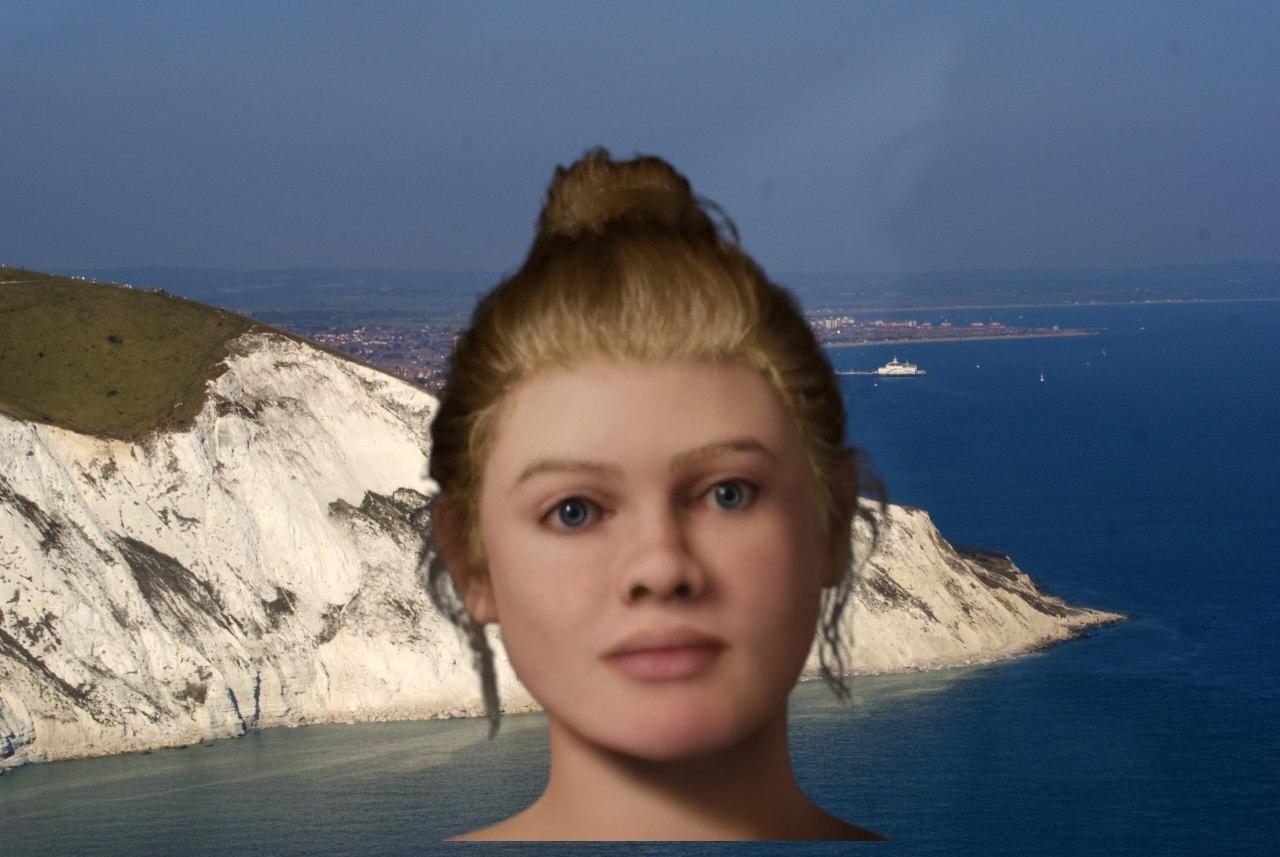
The DNA also enables reconstruction of her likely physical appearance through analysis of genetic markers linked to pigmentation and other visible traits. The results suggest she most probably had blue eyes, light brown or blonde hair, and intermediate to light skin pigmentation – characteristics that would not have distinguished her from many other Romano-British individuals or modern inhabitants of southern England.
The evolving scientific understanding of Beachy Head Woman is perhaps most dramatically illustrated through changes in her facial reconstruction. The original 2013 reconstruction, created using traditional forensic techniques based on her skull, depicted her with dark brown eyes, mid-brown skin, and dark wavy hair, reflecting the initial assessment of sub-Saharan African ancestry based on craniofacial analysis.
Following the genetic analysis, researchers revisited this reconstruction using modern digital techniques. They created a high-resolution three-dimensional scan of the original model and developed a new digital version using sophisticated visualization software. The underlying bone-based facial structure remained identical, but the pigmentation was updated to reflect her genetically predicted appearance: blue eyes, light hair, and intermediate skin tone.
This transformation illustrates both the power of new scientific methods and the importance of remaining open to evidence that challenges initial interpretations. The same individual, reconstructed from the same skull, appears dramatically different when informed by genetic rather than morphological ancestry assessments.
Beachy Head Woman's story has profound implications for understanding diversity and population movement in Roman Britain. Her case demonstrates the limitations of traditional approaches that relied heavily on skull measurements and nineteenth-century concepts of "racial types." Modern research reveals that human physical variation is continuous rather than neatly categorized, and that skull traits often vary as much within populations as between them.
The Roman Empire was indeed cosmopolitan, with extensive evidence for people moving across vast distances for military service, trade, administration, and other purposes. Inscriptions, tombstones, and official documents record individuals from North Africa, the eastern Mediterranean, and other distant provinces living and working in Britain. However, the empire also incorporated millions of local people who remained in their ancestral territories while adapting to Roman rule, taxation, and cultural influences.

Discover how your DNA connects to ancient civilizations at www.mytrueancestry.com.

Comments