Goths as a Multi‑Ethnic Community: Ancient DNA

– 6 min read


Gothic Ethnogenesis: Identity Without a Single "Gothic" Bloodline
This article dismantles the old idea of the Goths as a single, biologically unified "tribe." Instead, it shows, with striking detail, how Gothic identity in the Balkans was a cultural and political label carried by people of very different biological backgrounds. Two key burial grounds in modern Bulgaria – Aquae Calidae and the Aul of Khan Omurtag (AKO) – provide the stage for this remarkable study of ancient DNA and cultural identity.
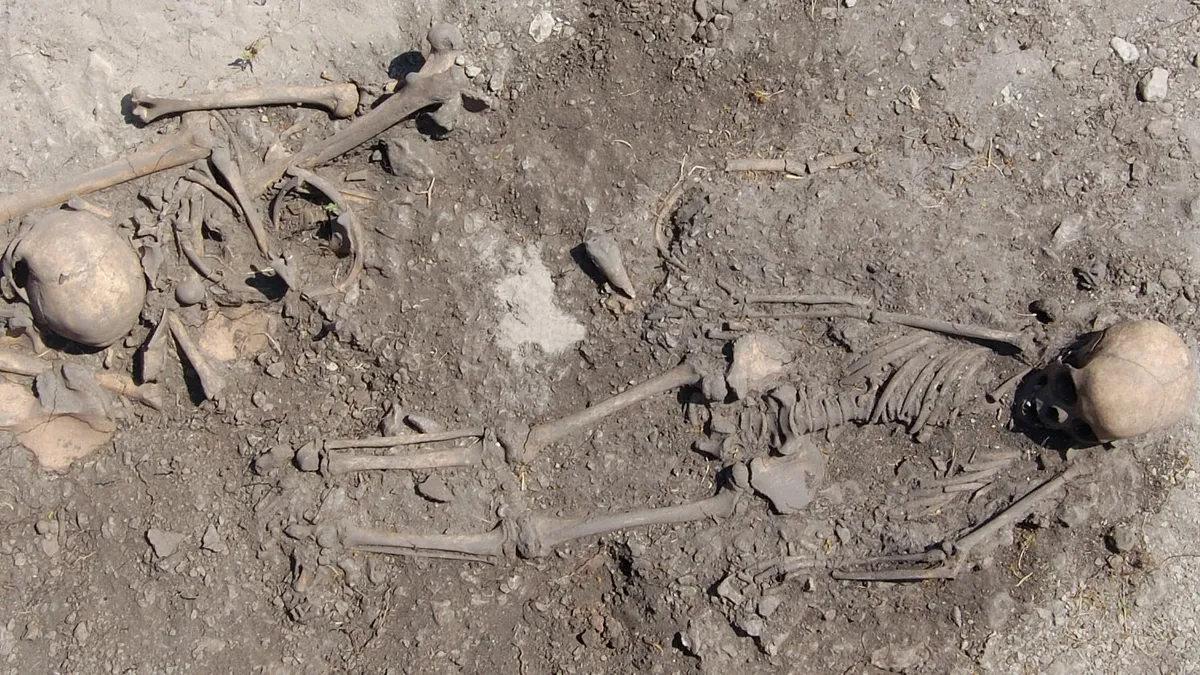
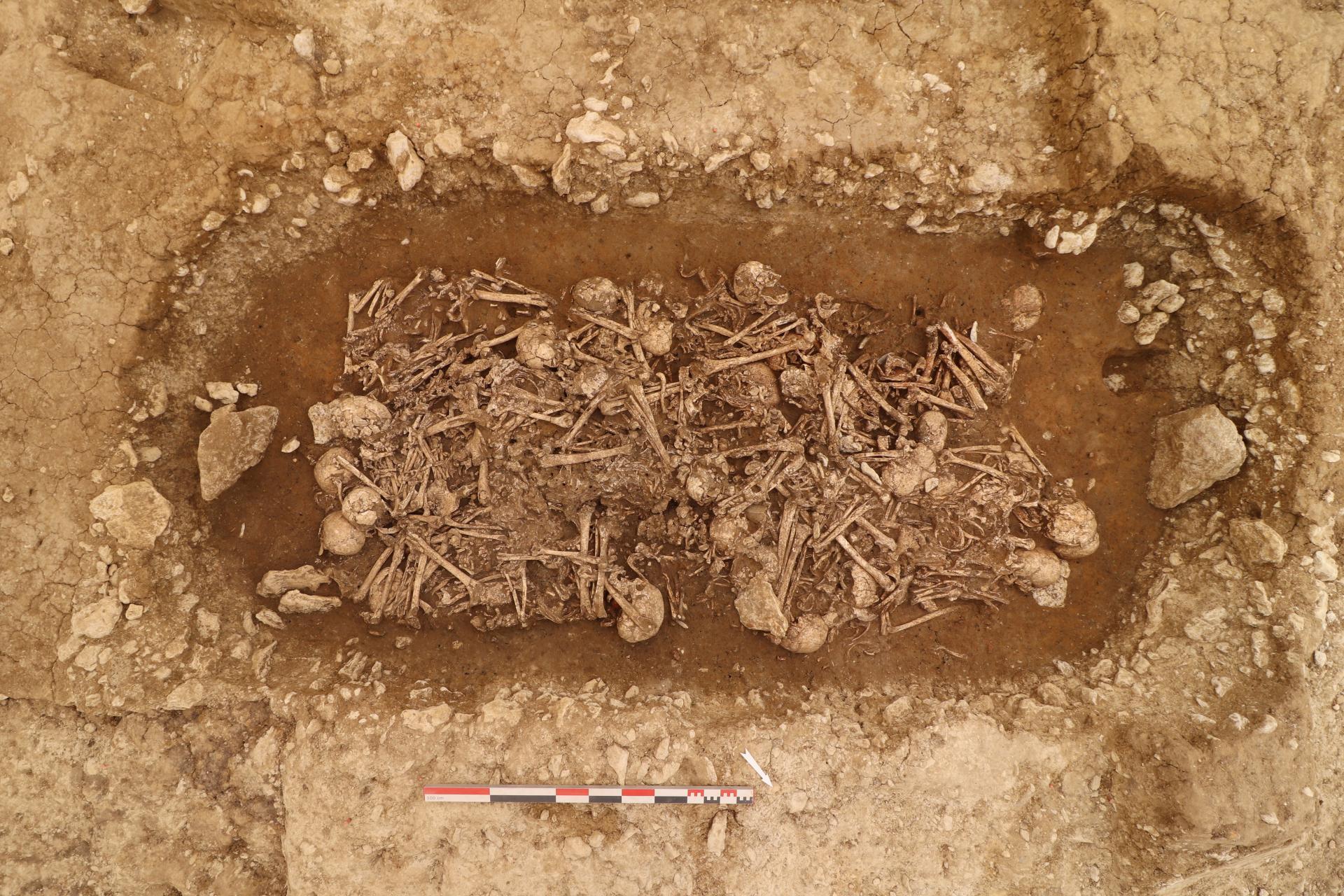
Aquae Calidae was a famous Roman spa complex in Thrace, known in antiquity for its healing hot springs. Between about 320 and 375 CE, a small cemetery grew up beside the ruined bath buildings. The graves cut straight through earlier Roman structures, as if the new community had little regard for old provincial layouts.
The burial ground is heavily male (17 men to 3 women among sexed skeletons), which fits either a military garrison or a religious community. Yet these men were buried with recognisably "Gothic" kit: characteristic fibulae (brooches), beads, and graves aligned in the fashion associated with Arian Christian Goths rather than mainstream Roman practice.
Written sources already hinted that "barbarians" occupied the site: Jordanes mentions Gothic raiders in the 3rd century; Procopius later complains that non-Roman villagers controlled the baths until Emperor Justinian drove them out. The DNA from 23 individuals now adds a far richer, and far stranger, picture.
The second site, AKO, lies in the province once known as Moesia Secunda. Here, archaeologists uncovered an Arian Christian religious centre with four basilicas and associated cemeteries used between about 350 and 489 CE. Later, early medieval Bulgars reused the place as a royal camp – the "aul" that gives the site its modern name.
The graves at AKO can be sorted into several chronological phases (C1–C5). Early phases (C1/C2) look like classic north-Pontic "Gothic" material culture, closely related to the Chernyakhov culture. Mid-phases (C3/C4) coincide with Hunnic domination and introduce skull deformation and a sprinkling of East Asian ancestry. The latest phase (C5) shows Pannonian-style grave goods and a heavily "Romanised" provincial flavour.
Unlike Aquae Calidae, AKO has a nearly equal mix of men and women. This looks more like a settled, multi-generation community than a passing warband.
Across both sites, every signal of material culture shouts "Gothic": Arian Christian burial customs, the same types of jewellery and dress fittings, and links to known Gothic centres in Pannonia and the north Pontic region. Yet when the genomes are plotted, the people fall into very different clusters.
Even within Aquae Calidae, the article identifies two sub-groups: A "North" cluster whose ancestry links to Byzantine Marmara (around Iznik) and local Balkan populations. A more extreme "South" cluster that demands a strong Central Anatolian component – the best proxy available is Bronze Age DNA from Kalehöyük in Cappadocia.
These sub-groups use the same burial rite and the same "Gothic" artefacts – but carry very different genetic histories. The article stresses that no single ancestry model fits all "Gothic" burials. People who look nearly 100% "local Balkan" lie next to others with deep northern roots or strong Anatolian ancestry.
A few individuals stand out like characters from a historical novel – and they blow apart any notion of a tidy "Gothic race." One man carried a Y-chromosome lineage most common today in Inner Asia, with unmistakable East Asian ancestry. Yet he is buried in an Arian Gothic setting, apparently part of the same community. Another individual shows Anatolian paternal origins but carries a maternal lineage rooted in sub-Saharan Africa. His genome tells of African ancestry within a Late Antique eastern Mediterranean context, but his grave is resolutely "Gothic" in form. A third man sits far off the main genetic cloud for the site, with roughly half his ancestry best matched by ancient Egyptian DNA and a Y-chromosome line with strong ties to the Arabian Peninsula. On any genetic map, he belongs to the Nile and the Levant rather than to Thrace, yet he is buried in the Aquae Calidae "Gothic" cemetery, treated as one of the group.
These striking biographies show how far Gothic identity could stretch. It was not about having the "right" ancestry; it was about belonging to the right community, speaking the language, following Arian bishops, and sharing law and custom.
Among 19 men whose Y-chromosomes could be typed, only about a quarter carry lineages typically associated with northern Germanic populations – especially the I1 group, which was so common in the Wielbark culture of Iron Age Poland. These "Germanic" lines are visible at both sites but are far from dominant.
Other lines point in very different directions: J2a and G2a lineages common in Anatolia, R1a types familiar from eastern Europe, and even exotic markers like C2a from Inner Asia. When the article zooms in on individual men, the contrast is even sharper. I1-carriers at the two sites show mixed ancestry: they do indeed carry a Wielbark-like component, but it is blended with large amounts of Anatolian and Roman/Byzantine-style ancestry. The supposed "Scandinavian core" is real but already heavily diluted.
Mitochondrial DNA tells a complementary story. At Aquae Calidae, 20 individuals yield 20 different maternal haplogroups – not a single shared female line. Their mothers' lines span haplogroups common in the Balkans and Aegean, types associated with the steppe, Near Eastern variants, and even rare markers from East Eurasia and sub-Saharan Africa.
The complete lack of maternal duplication, combined with the absence of close kinship within the cemetery, suggests that Aquae Calidae was not a local clan burial ground but a gathering point for men drawn from many different backgrounds – soldiers, dependants, perhaps slaves and freedpersons – bringing their own maternal histories with them.
Identity-by-descent analysis reveals small clusters of relatives – parents, siblings, and more distant kin – inside each site. These are true, local family groups buried together over several generations. Yet there are no close kin links between Aquae Calidae and AKO, despite their shared "Gothic" culture, and no close relatives connecting either site to surrounding non-Gothic Roman communities.
Intriguingly, the "Gothic" burials share more genetic segments with very ancient prehistoric Balkan populations and with later medieval Balkans than with contemporary Late Antique provincials. The authors read this as a sign that mixing with local Balkan people happened earlier in the migration process, before the groups settled in these Bulgarian sites – and that once established, these Gothic communities maintained some social boundaries against their provincial neighbours.
The article deploys admixture-dating methods to ask a simple but powerful question: When did the northerners and southerners whose ancestry fills these graves first start having children together?
Using northern sources closely related to the Wielbark culture and southern sources that blend Balkan and Anatolian ancestry, the best-fitting models point again and again to mixing around 11–13 generations before the burials. If one assumes about 29 years per generation, that places the main wave of mixing roughly in the 1st century BCE to early 2nd century CE.
Both Aquae Calidae (4th century burials) and AKO (mainly 4th–5th century) share this timing. The signal is strongest when the northern side is specifically modeled on Polish Wielbark-like groups, not on a general northern European mix. Critically, Roman-period Balkan groups with no Gothic archaeological link do not show this same ~12-generation admixture pattern, despite often having Anatolian ancestry themselves.
This combination suggests that the key mixing event did not occur inside these Bulgarian communities, but earlier – probably in the lands north of the Danube where Wielbark-related groups rubbed shoulders with Roman provincial settlers.
The article points especially to the province of Roman Dacia, founded after Trajan's conquest in 106 CE. Epigraphy and archaeology show that Dacia received colonists from the Balkans and Anatolia, creating exactly the kind of mixed Balkan–Anatolian provincial population that appears in the genomes here.
North of the new frontier lived a patchwork of "barbarian" groups – Dacians, Sarmatians and others – among whom early Germanic-speaking communities from the Wielbark culture were expanding. This frontier zone is a prime candidate for the initial encounter that produced the blended ancestry now seen in Bulgarian "Gothic" graves.
When Dacia was evacuated in the late 3rd century, and when Gothic groups later crossed the Danube as foederati in the 4th century, people already carrying this mixed ancestry could easily have ended up buried in Thrace and Moesia under Gothic bishops – as at Aquae Calidae and AKO.
Are YOU related to these Ancient Goths? Upload your DNA to MyTrueAncestry and find out!
https://www.biorxiv.org/content/10.64898/2026.03.03.709317v1
Comments